Nagasaki Travel Guide: History, Culture and Visiting Japan’s Western Port
Nagasaki sits on the north-west coast of Kyushu, overlooking a deep natural harbour that helped make it one of Japan’s most outward-looking cities. Known for both its international trading past and the memorial sites that mark the events of 1945, it remains one of the country’s most historically significant destinations. With The New York Times naming Nagasaki among its “52 Places to Go in 2026”, we share some of the key highlights from our visit in 2023.
Where is Nagasaki?
Nagasaki sits on the north-west coast of Kyushu, Japan’s southernmost main island. The city is built around a long natural harbour with steep green hills rising behind it, giving many parts of Nagasaki dramatic views over the water.
Its position facing the East China Sea made it one of Japan’s most outward-looking cities. For centuries this harbour was the country’s main gateway for foreign trade, long before modern ports such as Yokohama developed.
Today Nagasaki feels different from many Japanese cities. European influences, Christian heritage and maritime history all remain visible in its streets.
Why Nagasaki is Famous
Nagasaki is best known internationally for two very different reasons.
First, it was Japan’s historic trading port during the Edo period. While most of the country was closed to foreign contact, Nagasaki remained the single point where limited trade with Dutch and Chinese merchants was allowed.
Second, Nagasaki was the site of the second atomic bomb dropped in 1945, three days after Hiroshima. The city today hosts one of the most important peace memorials in the world.
These two threads define Nagasaki. One tells the story of international exchange and cultural influence. The other reflects on the consequences of war and the long commitment to peace.
A Brief History of Nagasaki
Nagasaki grew rapidly during the 16th and 17th centuries as European traders and missionaries arrived in Japan. Portuguese merchants first established contact, followed later by the Dutch.
Japan
Edo Period: 1603 – 1868
1603 ───────────────────── 1868
United Kingdom
Civil War → Expansion of Empire → Industrial Revolution
United States
Colonial settlements → Independence → Westward expansion
During Japan’s long period of isolation under the Tokugawa shogunate, foreign trade was restricted to a small artificial island in Nagasaki harbour called Dejima. Dutch merchants lived and traded here under strict supervision, creating one of the few channels through which Western science, medicine and knowledge entered Japan.
By the late 19th century Nagasaki had become an important industrial port, with shipbuilding yards and international shipping routes connecting Japan with the wider world.
Nagaski’s vast natural harbour
On 9 August 1945 an atomic bomb was detonated above the northern part of the city. Large areas were destroyed and thousands of people lost their lives. In the decades since, Nagasaki has rebuilt itself while preserving the sites that now form the city’s peace memorial district.
What Visitors Can See in Nagasaki
Nagasaki offers a number of historically significant places within a relatively compact area.
Nagasaki Peace Park and Atomic Bomb Museum
The Peace Park marks the hypocentre of the atomic explosion and honours the victims of the bombing. Nearby, the Atomic Bomb Museum provides a detailed and often moving account of the events of August 1945 and their aftermath.
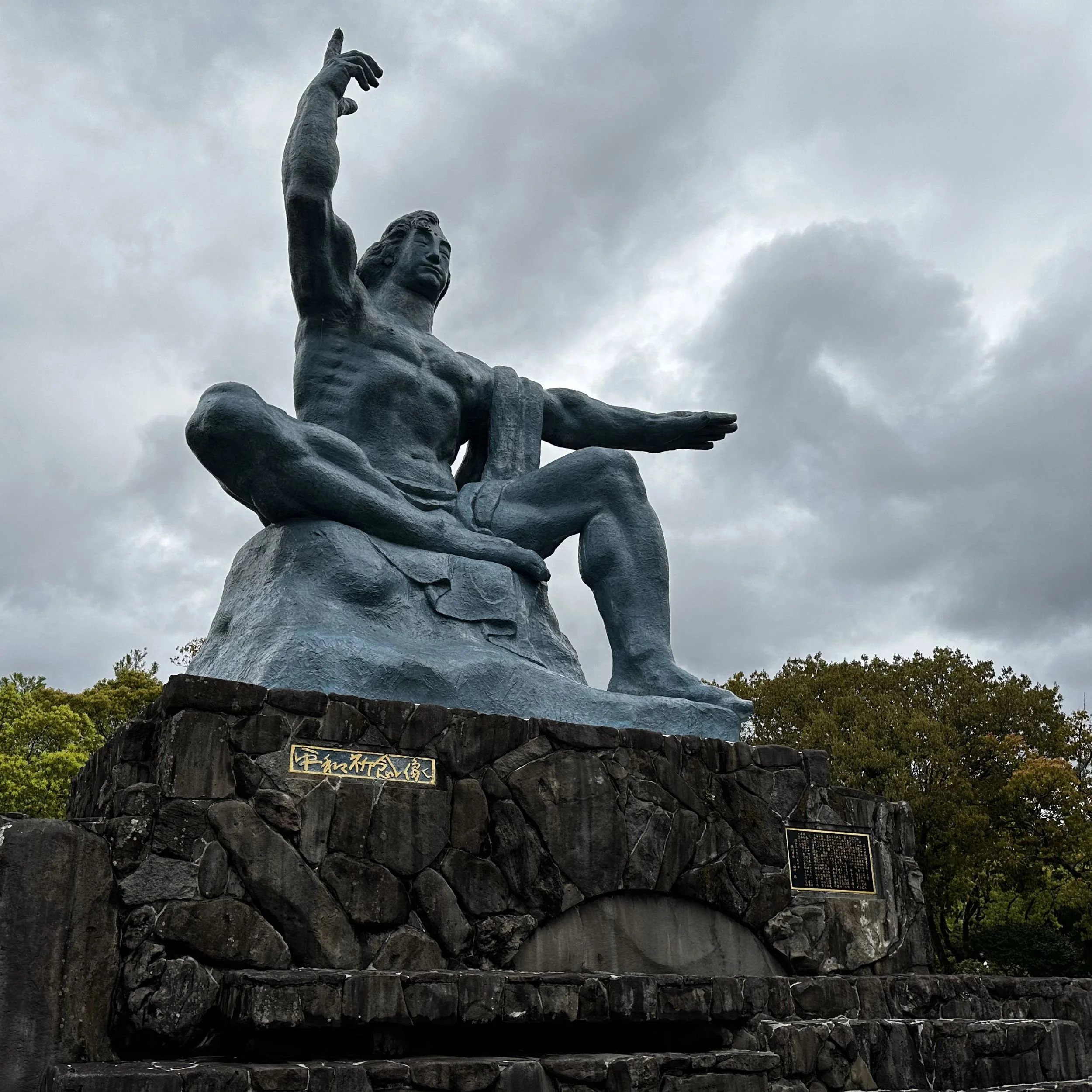
The Peace Statue in Nagasaki Peace Park stands close to the hypocentre of the 1945 atomic bombing and has become a powerful symbol of remembrance and peace.
The Hypocentre Memorial
A simple black monument marks the exact point where the bomb exploded roughly 500 metres above the ground. It is one of the most powerful locations in the city.
Dejima
This reconstructed trading post sits in the harbour where Dutch merchants were once confined during the Edo period. The restored buildings now explain how this small island became Japan’s window to the outside world.
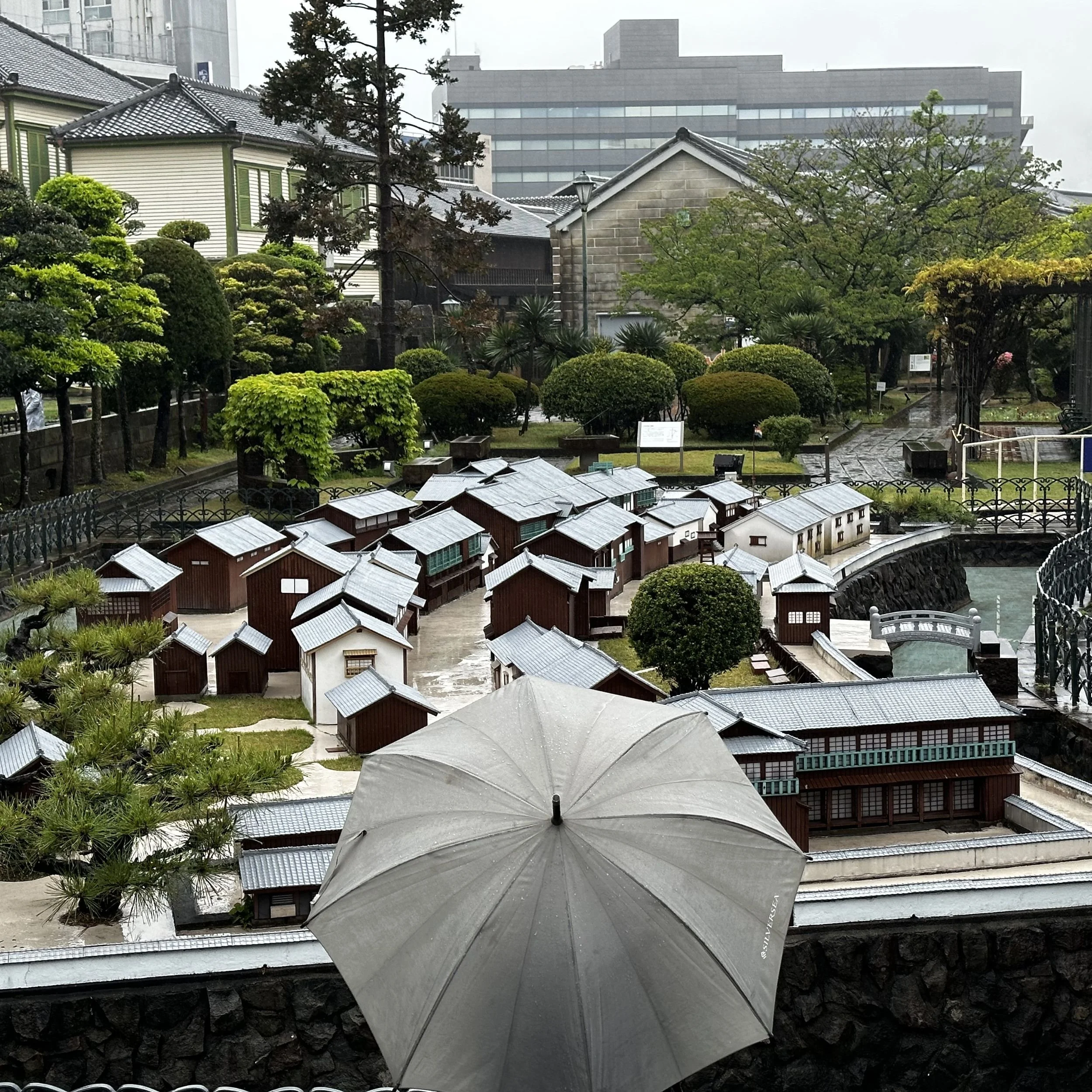
A model of Dejima, the small artificial island where Dutch merchants were confined during the Edo period, allowing Nagasaki to remain Japan’s limited gateway to international trade.
Glover Garden
High on the hillside above the harbour sits a collection of preserved Western-style houses from the late 19th century. These residences once belonged to foreign traders and industrialists who helped modernise Japan during the Meiji era.
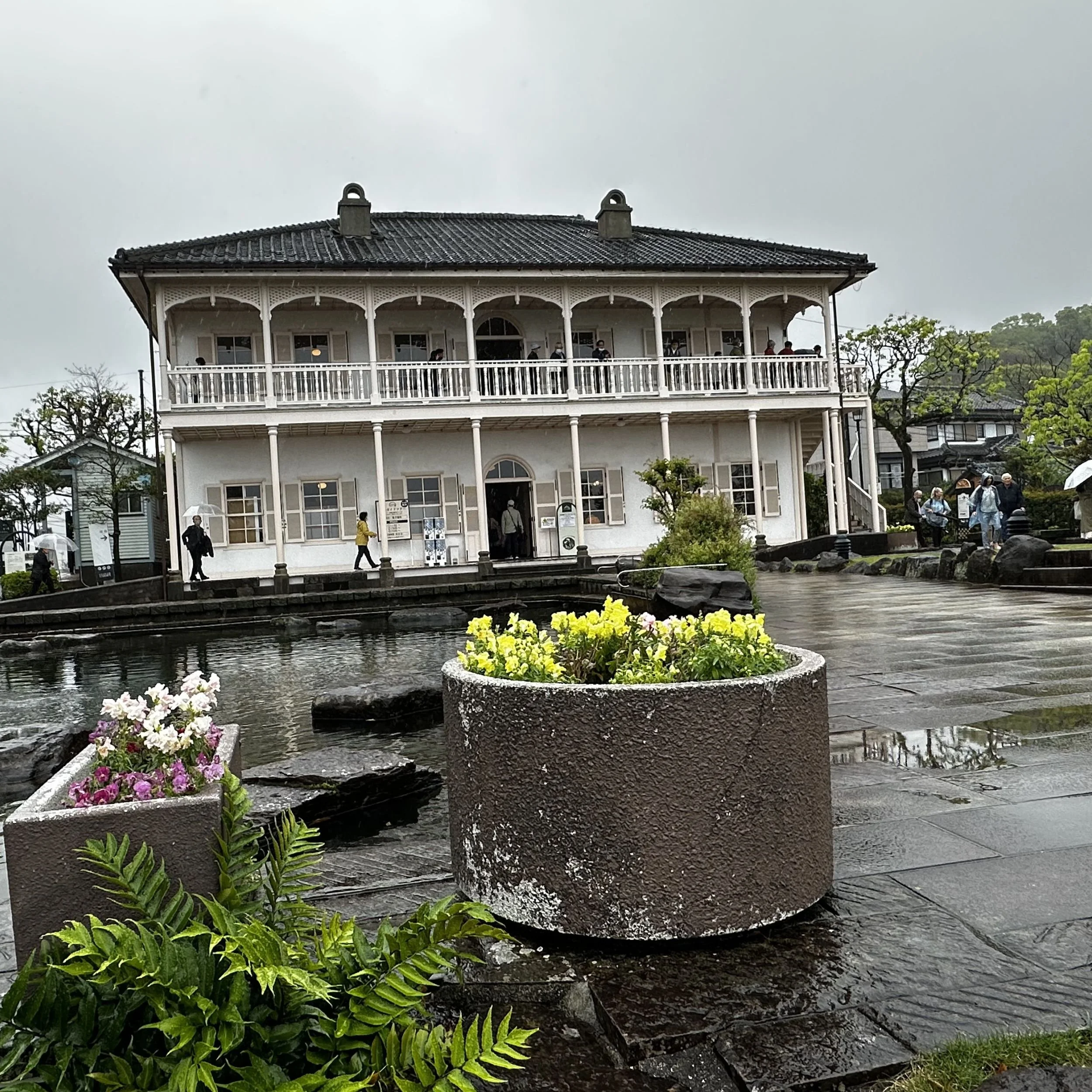
Glover Garden preserves several Western-style homes built by foreign traders in the late nineteenth century, reflecting Nagasaki’s role in Japan’s opening to the outside world. Click to read more about the gardens.
Together these sites tell the story of Nagasaki’s international past and its role in modern history.
Reflections on Visiting Nagasaki
While Nagasaki carries its history with quiet dignity, it is far from a place frozen in time. The busy port, vibrant Chinatown and thriving industries show how fully it has rebuilt itself, not only as a place of remembrance but as a lively modern city. In truth, it was far more than I had expected. The greenery and beauty were striking, but so too was the warmth of the welcome we received as Western visitors. Perhaps I should have known that before I went, but that is one of the pleasures of a cruise: arriving somewhere with an open mind and leaving with far more than you expected.
Visiting Nagasaki on a Cruise
Nagasaki is a regular stop for cruise itineraries exploring Japan and the Korean peninsula. Ships dock close to the city centre, allowing visitors to reach the main attractions with relatively short journeys.
Many travellers begin with the Peace Park and museum district, before returning towards the harbour area to explore Dejima and the historic waterfront.
The city’s hills mean viewpoints are never far away. Even a short visit provides a strong sense of place, particularly when looking back across the harbour that once connected Japan with the outside world.
How to Get to Nagasaki
Nagasaki is well connected to the rest of Japan through the Kyushu Shinkansen and regional rail network.
High-speed trains run between Fukuoka (Hakata Station) and Nagasaki, making the journey in around 90 minutes. From Fukuoka travellers can connect to the wider Shinkansen network linking Osaka, Kyoto and Tokyo.
The city is also served by Nagasaki Airport, located about 40 minutes away by bus.
For many international visitors however, Nagasaki is first encountered as a port of call on Japan cruise itineraries, where its compact historic districts and powerful memorial sites make it one of the most memorable stops on the route.