Nagasaki Atomic Bomb Museum and Peace Park: A First-Hand Visit
The Nagasaki Atomic Bomb Museum and Peace Park are among the most important places to visit in the city, not simply because of what happened here on 9 August 1945, but because they help explain so much about Nagasaki itself. Located in the northern part of the city, the memorial district marks the location of the atomic bombing and stands today as a place of remembrance, reflection and peace.
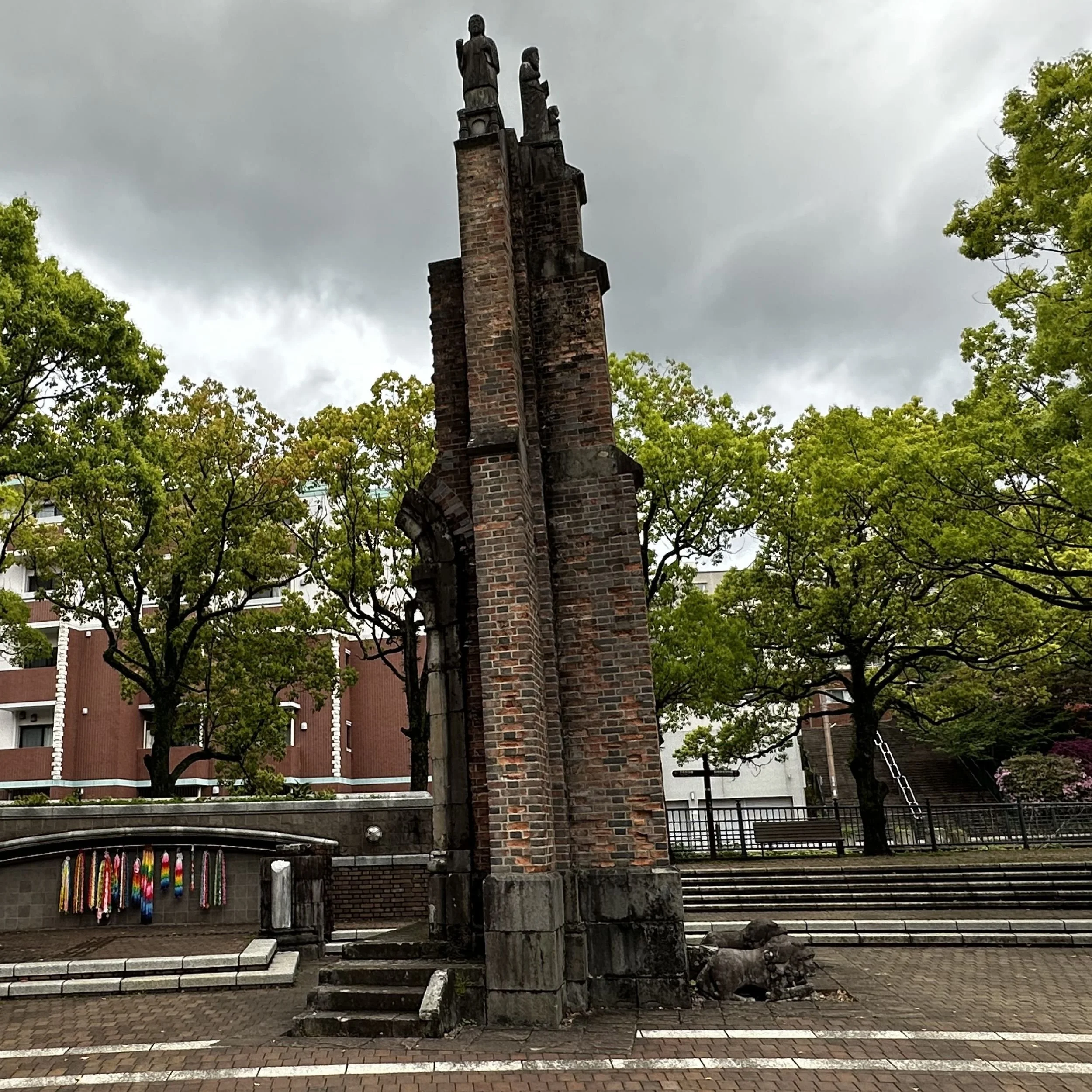
A surviving section of Urakami Cathedral has been preserved as a reminder of the destruction near the hypocentre, reflecting Nagasaki’s long Christian history and the scale of the blast. Modern Nagasaki continues to develop around it.
For many visitors, this will be one of the most serious and affecting stops in Nagasaki. The museum does not rely on spectacle or opinion. Instead, it presents the facts with clarity and restraint, allowing the objects, photographs and personal stories to speak for themselves.
What Happened in Nagasaki at 11:02?
At 11:02 on the morning of 9 August 1945, an atomic bomb detonated approximately 500 metres above the Urakami Valley in Nagasaki. To put that in perspective, the explosion took place lower than the top of the Burj Al Arab, or around the same height as the Sears Tower in Chicago, not miles up in the sky. The blast destroyed large parts of the surrounding districts and caused immense loss of life.
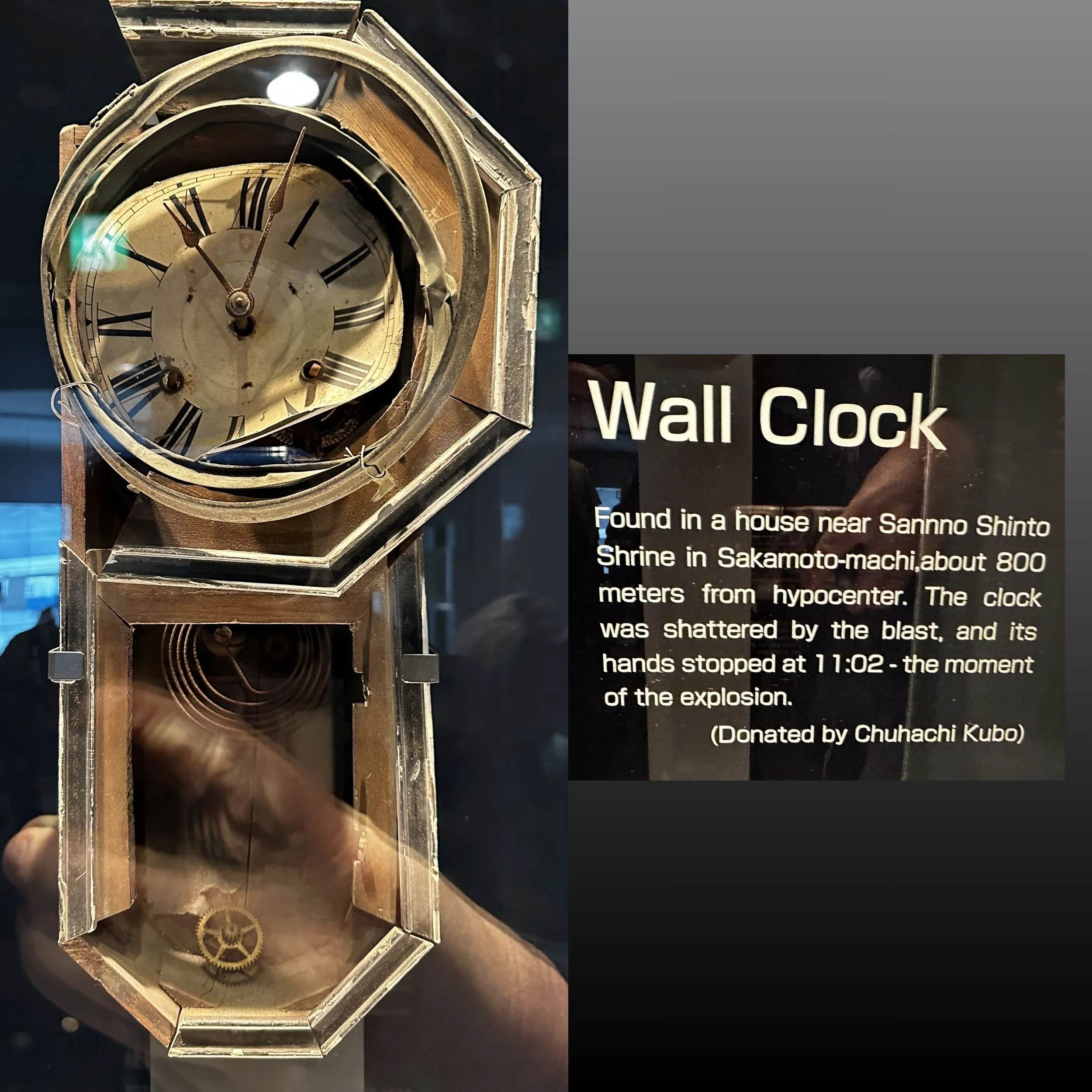
The Nagasaki Wall Clock, stopped at the time of explosion
Today, the hypocentre is marked by a simple black monument close to the museum and Peace Park. The surrounding area has long since been rebuilt, but standing here makes clear that this is not a separate historical site on the edge of the city. It is part of Nagasaki itself, woven into the streets and neighbourhoods that continue around it.
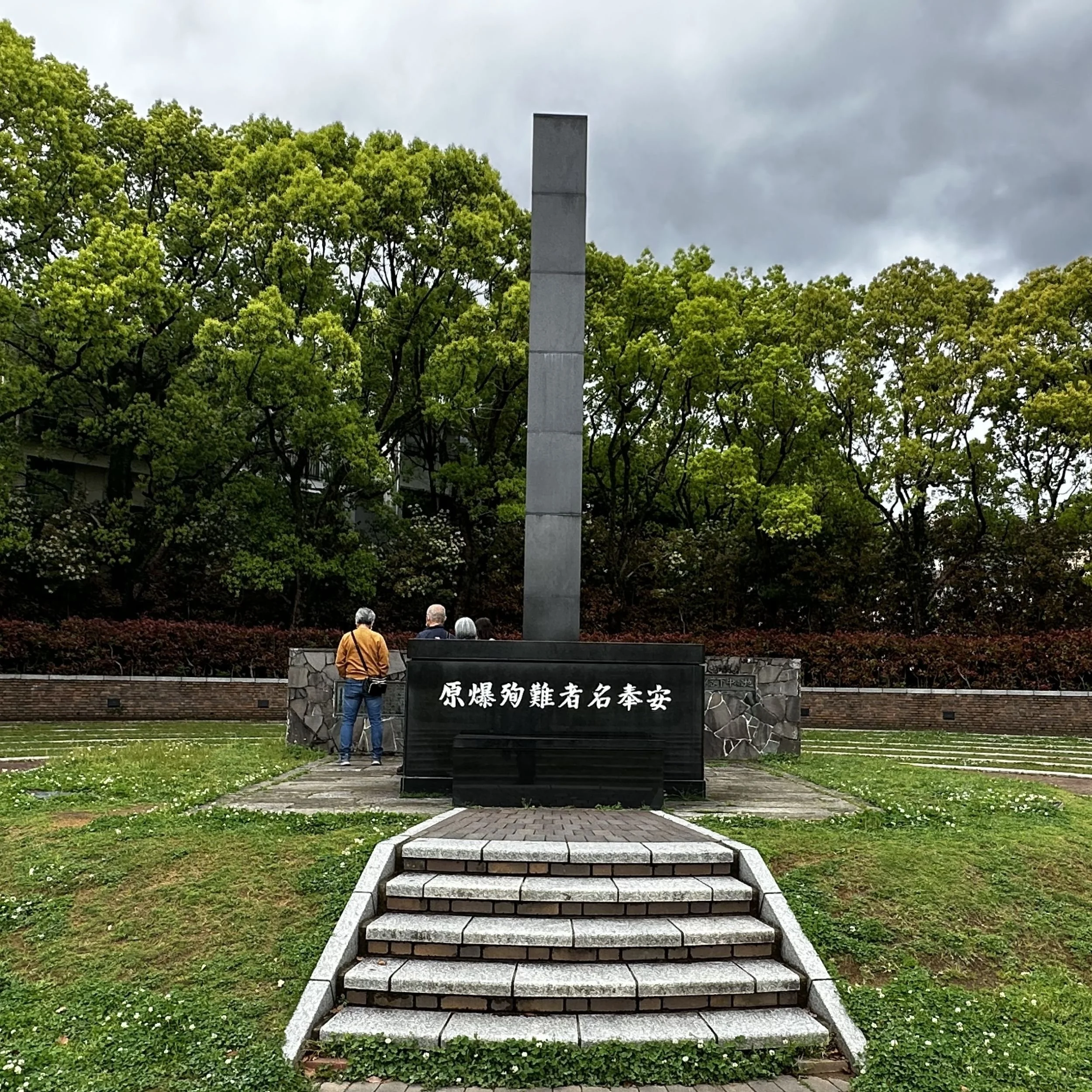
The Hypocentre Memorial marks the point directly beneath the atomic explosion, which detonated around 500 metres above Nagasaki at 11:02 on 9 August 1945. The caption reads, “Place where the names of the atomic bomb victims are enshrined.”
Inside the Nagasaki Atomic Bomb Museum
Visiting the Nagasaki Atomic Bomb Museum was always going to be difficult. I even questioned whether I should write about it at all. But a simple sign at the entrance made it clear that this story needs to be told.
The experience begins with a quiet descent down a spiral ramp, where a series of key dates lead you towards 9 August 1945. At the base, a large concave map sets the scene, placing Nagasaki within its surrounding landscape and showing the reach of the explosion and its aftermath.
Nagasaki Peace guides are on hand, some sharing personal stories of family life after the war, bringing a human dimension that extends beyond the displays.
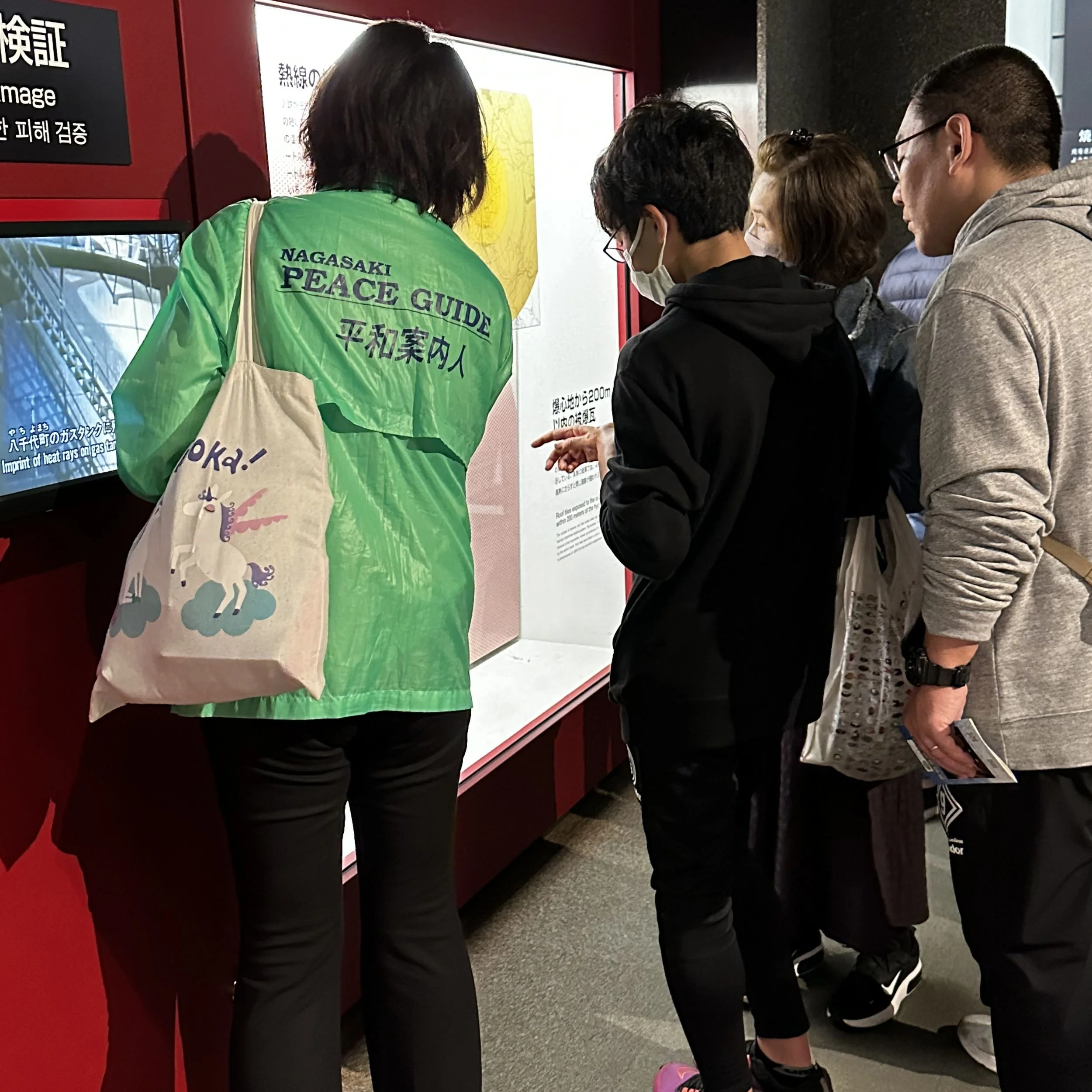
A local Nagasaki Peace Guide talks visitors through one of the museum exhibits, offering context and, in some cases, personal connections to the events of 1945.
The exhibits are harrowing but necessary. Melted bottles fused by intense heat, twisted remnants of everyday objects and photographs from the aftermath bring the scale of the destruction into sharp focus. It is impossible to walk through the galleries without feeling the weight of history, yet the museum never feels sensational. Its impact comes from its restraint.
The museum does not avoid the wider context, nor does it attempt to assign blame. There is no embellishment, only the reality of what happened and the human cost that followed.
From the Museum to Peace Park
Just a short walk from the museum stands Nagasaki Peace Park, a wide open space created to honour the victims and promote a message of peace. The shift in atmosphere is immediate. After the enclosed galleries and the difficult evidence inside, the open air of the park gives visitors more space to absorb what they have seen.
At the centre of the park stands the Peace Statue, created by sculptor Seibō Kitamura in 1955. The raised right hand points toward the sky, reminding visitors of the threat of nuclear weapons, while the outstretched left arm symbolises peace.
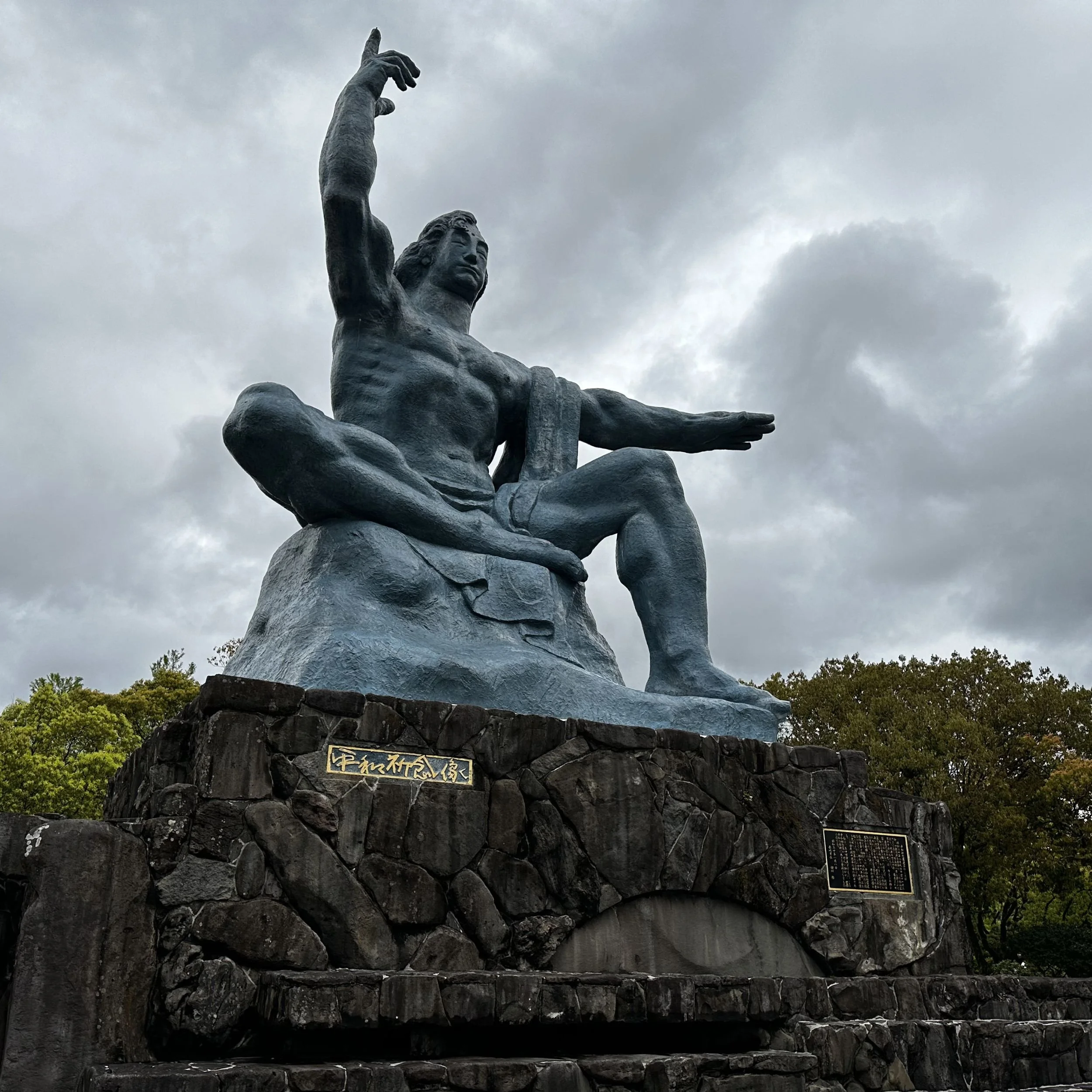
The Peace Statue in Nagasaki
The surrounding park contains memorials donated by countries from around the world, reflecting a shared hope that such events should never be repeated. Nearby, a memorial plaque records the number of victims honoured at the site. The figure is updated each year on the anniversary of the bombing, as additional names are identified and remembered.
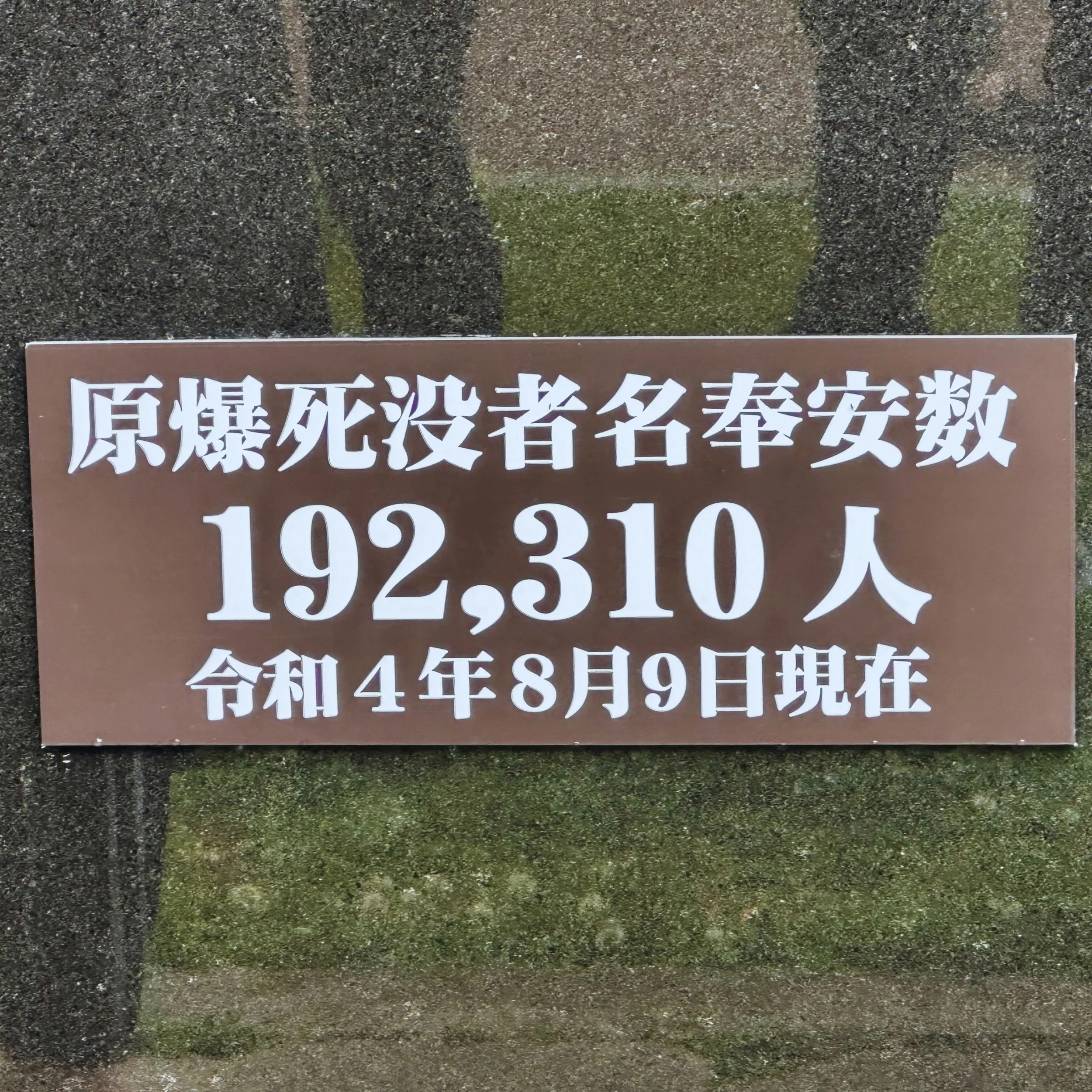
A plaque at the Nagasaki Hypocentre Memorial records 192,310 victims of the atomic bomb, updated as of 9 August 2022 (Reiwa 4). The inscription honours those whose names are enshrined and continues to grow as more are identified.
Around the park, strands of brightly coloured origami cranes hang in quiet clusters. Left by visitors, school groups and communities from around the world, they bring a striking contrast to the stone and memorials that surround them.
In Japan, the paper crane is a symbol of peace and longevity. Here, each one feels personal. Hundreds of small, careful folds carried across countries and placed here as a simple act of remembrance. In a place defined by loss, these small additions add welcome colour, movement and sense of hope.
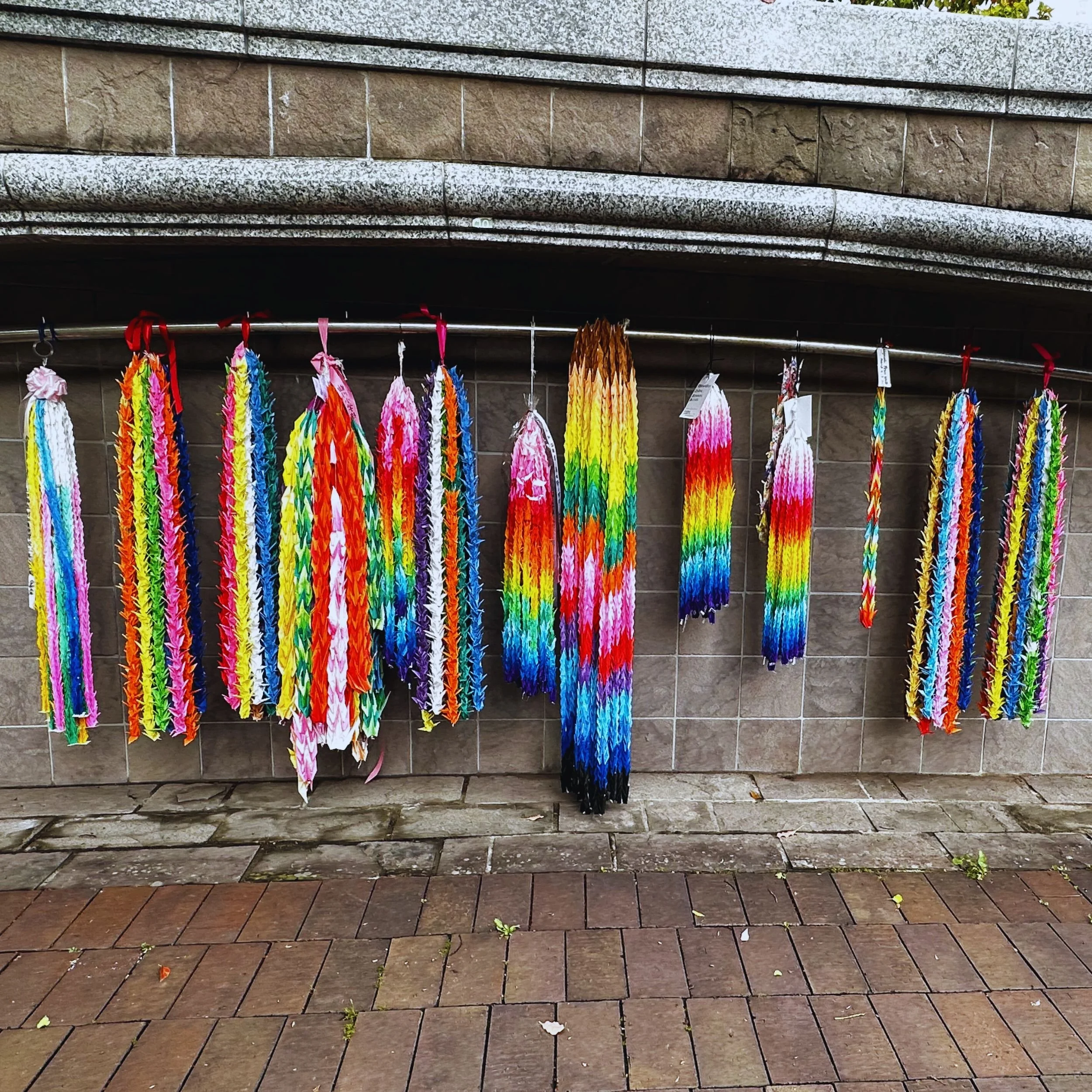
Colourful Origami Cranes
Nagasaki Beyond the Memorial District
Nagasaki has many stories to tell. It is a city shaped by international trade, Christian history, hillside neighbourhoods and one of Japan’s most distinctive harbours. But to visit Nagasaki without coming here would be to miss something central to its modern identity.
What becomes clear over the course of a day in the city is how these stories sit alongside one another. The memorial district speaks to the events of 1945, while places such as Dejima, where Dutch merchants were once confined during the Edo period, and Glover Garden, with its Western-style houses overlooking the harbour, reflect Nagasaki’s earlier role as Japan’s gateway to the outside world.
But the city is not defined by its past. It continues to grow and thrive as a modern Japanese city. Luxury Hotels like Hotel New Nagasaki showcase the continued evolution of this place.
We arrived here as part of a cruise around Japan, where Nagasaki stands out as one of the most layered and thought-provoking ports on the itinerary. The city is compact enough to move between these sites in a single visit, yet each location adds a different perspective to the whole.
For those travelling independently, Nagasaki can also be reached via the Kyushu rail network, connecting through Hakata Station on the Shinkansen before continuing on to the city.
What struck me, perhaps naively, was how green the city felt. The parks were verdant, the trees and planting full, and the wider city was very much alive. To stand in a place so closely associated with devastation and find it full of growth and everyday life was humbling. Nearly 80 years after the events of 9 August 1945, Nagasaki felt neither frozen nor defined only by tragedy.
The author at the Nagsaki Peace Park. I didn’t think smiling was appropriate. x