What to Know Before Taking Japan’s Bullet Train
A journey on Japan’s Shinkansen is high on many visitors’ lists, and with good reason. Yet the reality of travelling on the bullet train felt rather different from much of what I had read before we went. You can eat on the Shinkansen, large luggage needs planning, and stations are often easier to navigate than they first appear. If you are taking the bullet train for the first time, here is what to expect from first-hand experience.
Travelling around Japan by Shinkansen
The Shinkansen is one of the easiest and most enjoyable ways to travel between major cities in Japan. It links places such as Tokyo, Yokohama, Osaka and Hiroshima, and for many visitors it becomes part of the trip rather than just a way of getting from one place to another.
If you are moving between cities, connecting to a port, or building a wider Japan itinerary, there is a good chance you will use it at least once.
Is the Shinkansen easy for tourists to use?
Yes. Much easier than many first-time visitors expect.
English signage is common, station boards are clear, and announcements on board are made in Japanese and English.
Train departure boards in Japanese and English
In some Shinkansen stations, there are even coloured lines on the floor to follow towards the right platform or boarding point, which is very helpful when everything still feels unfamiliar.
The main thing to know is that some stations are enormous. Tokyo Station is the obvious example. Even with clear signs, it can take time to get where you need to be. If this is your first journey, give yourself more time than you think you need.
Booking Tickets for the Bullet Train
Booking Shinkansen tickets is one of the less straightforward parts of the journey, as there is no single central website covering the whole network. Instead, tickets are sold through different JR (Japan Rail) operators depending on the route, so the right place to book will vary. It is manageable once you know that, but for first-time visitors it can feel more complicated than it should.
The Trainline now sells some Japanese rail tickets, including the Japan Rail Pass, but that does not necessarily mean it covers every Shinkansen route or booking.
Shinkansen Lines and Cities
Japan’s bullet train network is made up of several main Shinkansen lines rather than one single route. These are the names and main stops most first-time visitors are likely to come across.
Railway Stations
The Shinkansen station is not always the same as the city’s main station. In some places, the bullet train uses a separate station or a station with a different name, often with Shin at the front, meaning “new”. That is why you will see names such as Shin-Yokohama or Shin-Kobe rather than simply Yokohama or Kobe. These modern stations will have all of the modern amenities you would expect and many are small shopping malls, so you can stock up before you leave.
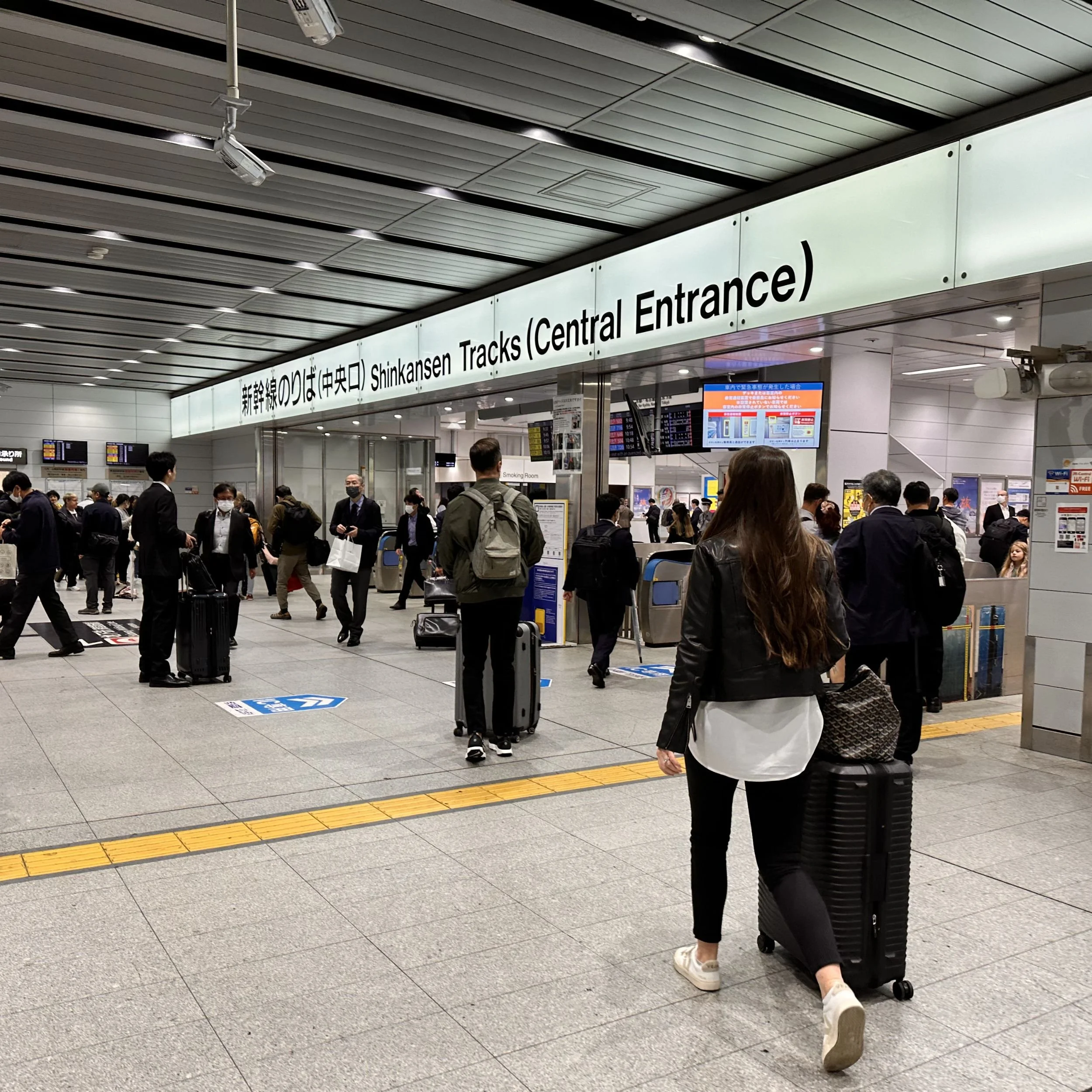
Entrance to the Shinkansen Tracks at Shin-Osaka
Ticket offices are usually staffed, so if you need help with your booking or want to change tickets, it is often easier than you might expect. We exchanged ours without any trouble. If the person helping you does not speak much English, Google Translate can bridge the gap surprisingly well.
Tips Before you board the bullet train
Check your carriage number before you reach the platform
Your ticket tells you which carriage you need, and platforms are clearly marked so you can stand in the right place before the train arrives. In some stations, lines on the ground guide you to the correct area.
You need to stand at your allocated door as the train will stop for 90 seconds, so you need to hop straight on. Boarding is orderly and efficient, if you are standing in the right place!Allow extra time at larger stations
This is one of the simplest ways to make your first Shinkansen journey less stressful.
The trains are easy to use, but the stations can be vast. If you are finding your platform, keeping an eye on luggage, buying food and checking tickets all at once, a tight connection can start to feel unnecessarily rushed. A bit of extra time makes all the difference.
Large luggage needs to be booked in advance
This is one of the details that caught us out most.
Small bags can go on the overhead rack, but oversized luggage usually needs a reserved storage space. On some services, that means booking the seats by the space behind the last row.
If you don’t book the luggage space you may struggle to get it on board as luggage racks are often full or locked and you may get fined.
What it is like on board?
The trains are designed more like planes with small windows and narrow carriages. However there is room to walk around, plenty of headroom and the seats are comfortable, Like the French TGV, the train is clean, quiet and efficient, and the whole experience feels well managed from start to finish.
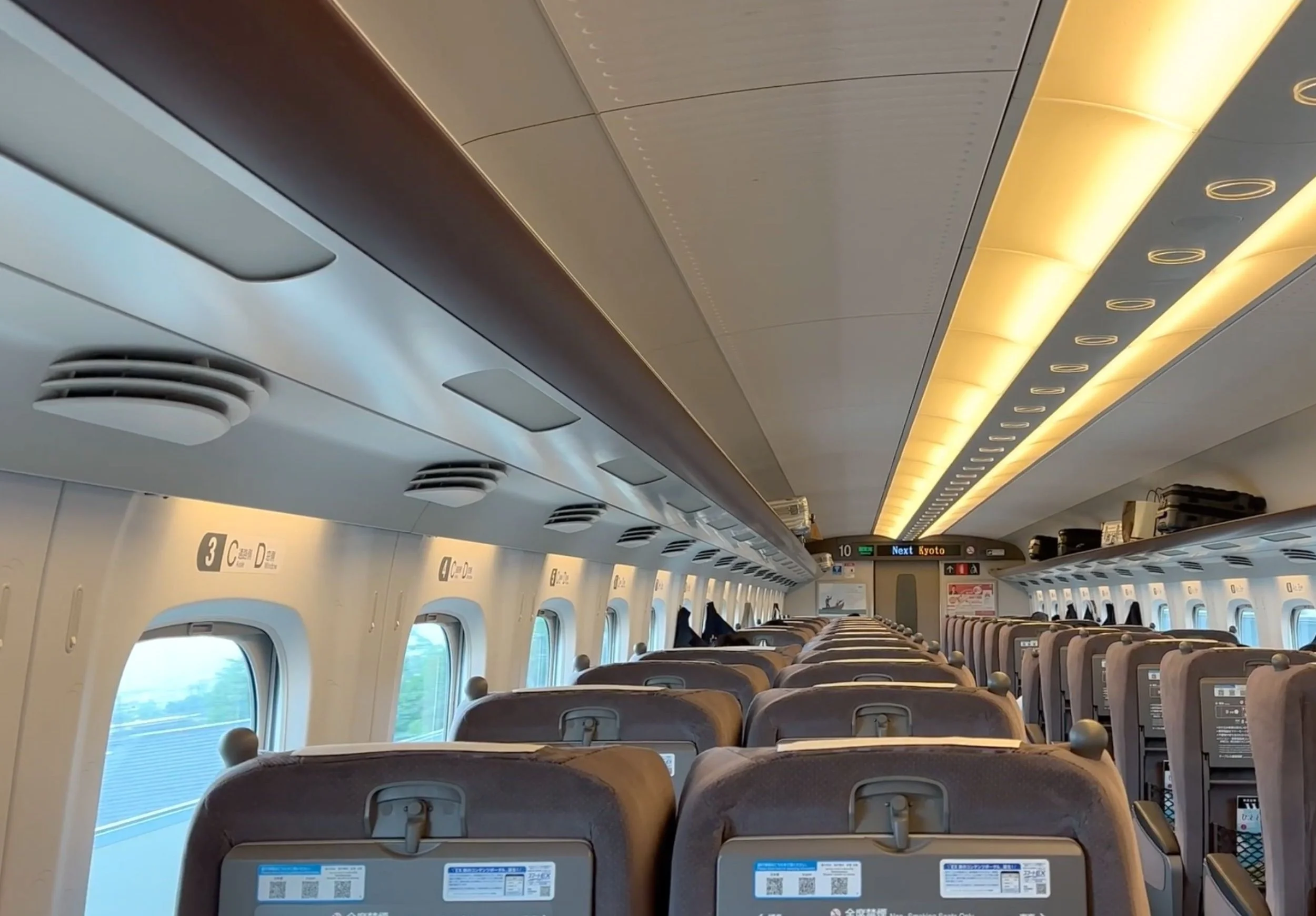
On board the Shinkansen
Power sockets and Wi-Fi
Power sockets are available on board, which is useful if you want to charge your phone during the journey. If you are travelling from the UK, bring an adaptor.
Wi-Fi may also be available, depending on the service, but I would not rely on it for anything important. Think of it as useful if it is there, rather than something guaranteed.
Toilets on the Shinkansen
Not the most glamorous subject, but useful to know! The toilets on the Shinkansen were clean, modern and far better than many travellers may be used to on trains. There are even separate urinals for the chaps.
Smoking on the Shinkansen
You can smoke on some trains, but check in advance. Some carriages have dedicated smoking ‘rooms’ but you may need to book a specific place. Best check before you board!
Can you eat on the Shinkansen?
Yes, absolutely!
Eating on the bullet train is completely normal, and for many people it is part of the pleasure of the journey. You can buy food on the train (try the egg sandwiches!) or you can bring food, or just a Tully’s Coffee with you. There will be space (or staff) to help you with rubbish once you have eaten.
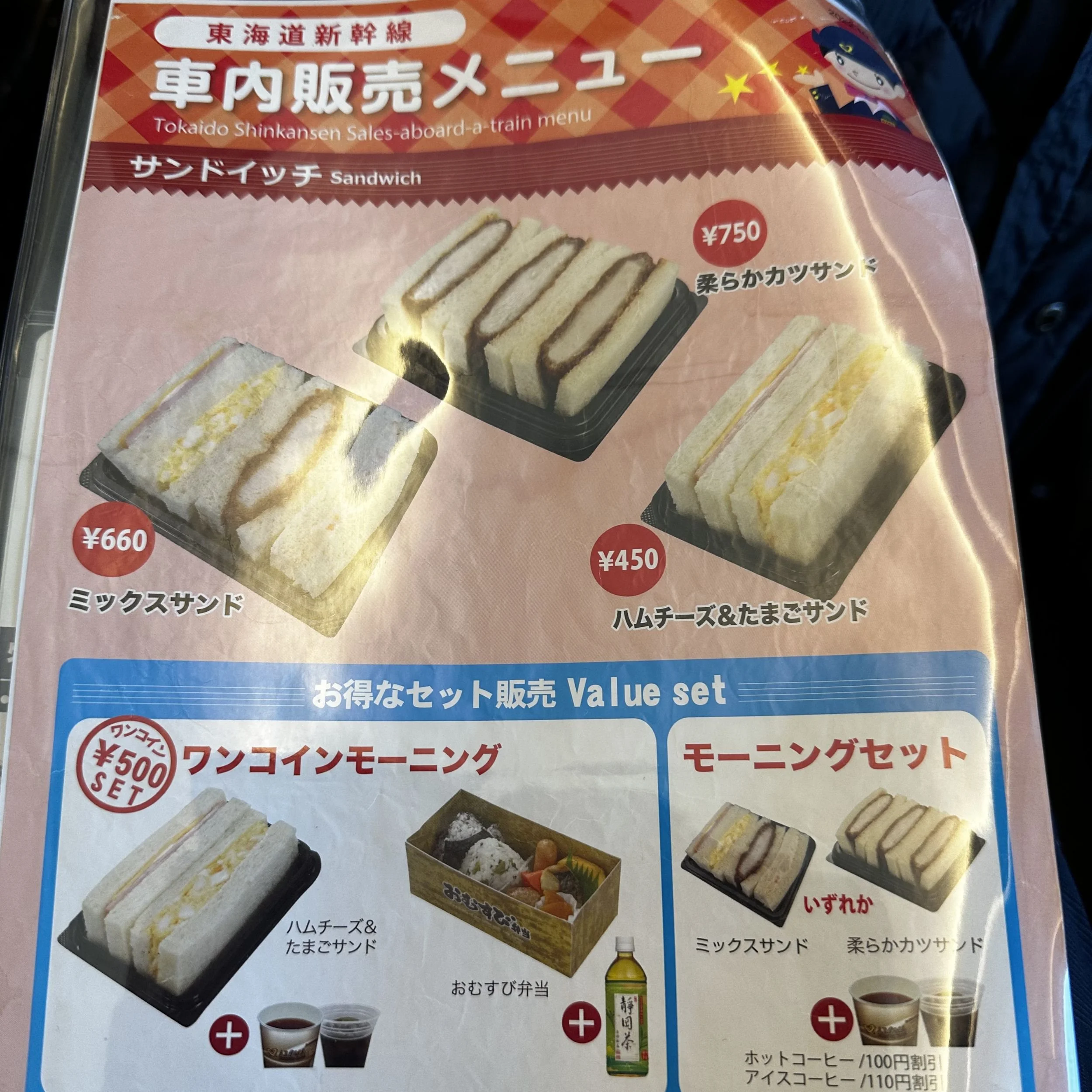
An on-board menu from the Tokaido Shinkansen, showing the kind of light food available from the trolley service during the journey. The options pictured here include sandwiches and breakfast sets, with prices listed in yen.
Small details to look out for
One of my favourite moments was seeing the conductor bow as they entered or left the carriage. It is a small thing, but it says a lot about the courtesy and care built into the experience.
That is what stayed with me most. Not just the speed of the train, but the calm atmosphere, the orderly boarding, the precision of the stops and the sense that everything has been thought through properly.
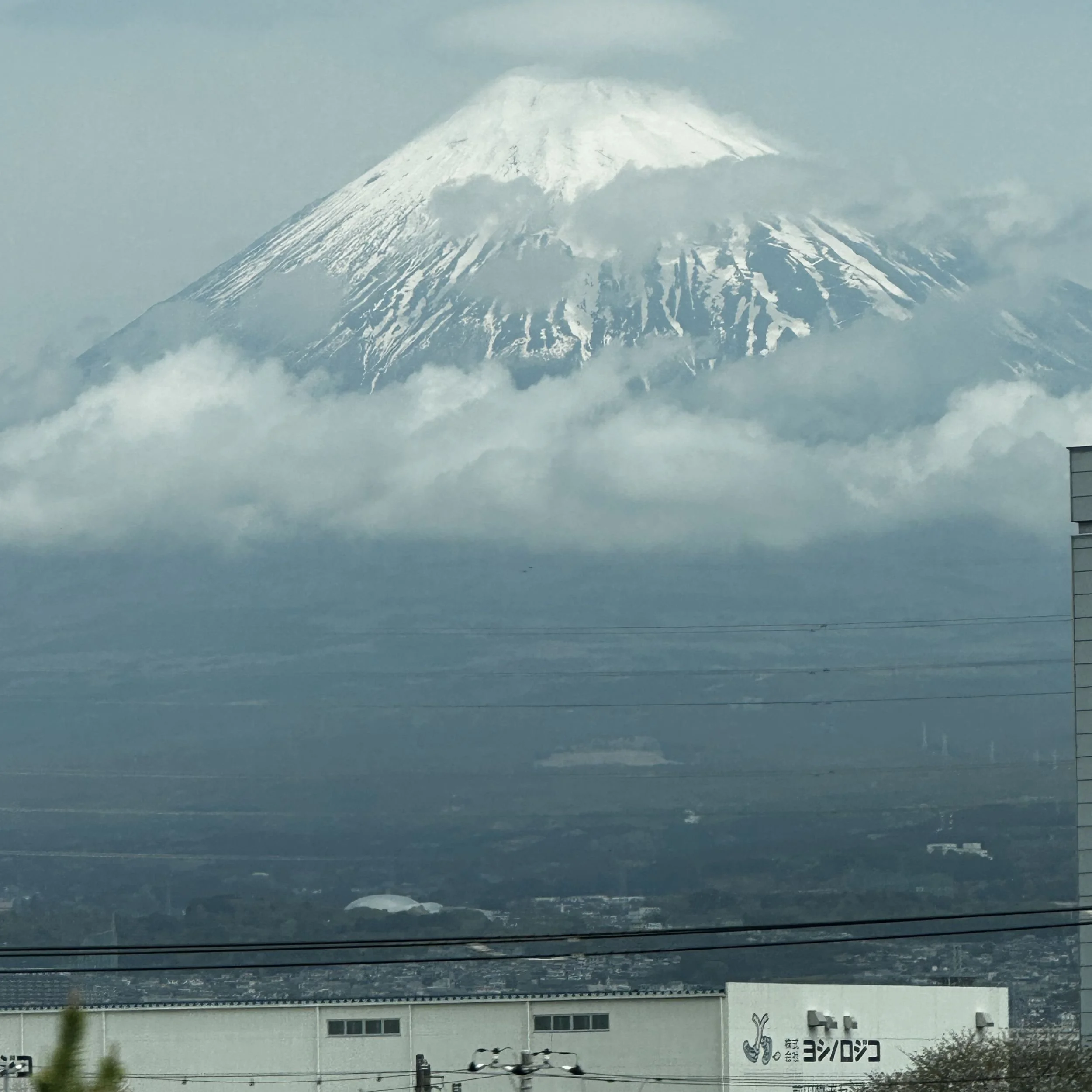
Can you see Mount Fuji from the bullet train?
If you are travelling from Tokyo towards (or back from) Kobe, the train line will give you a view of the mountain (if it’s a clear day). Be ready as you will only see if to for thrity seconds!

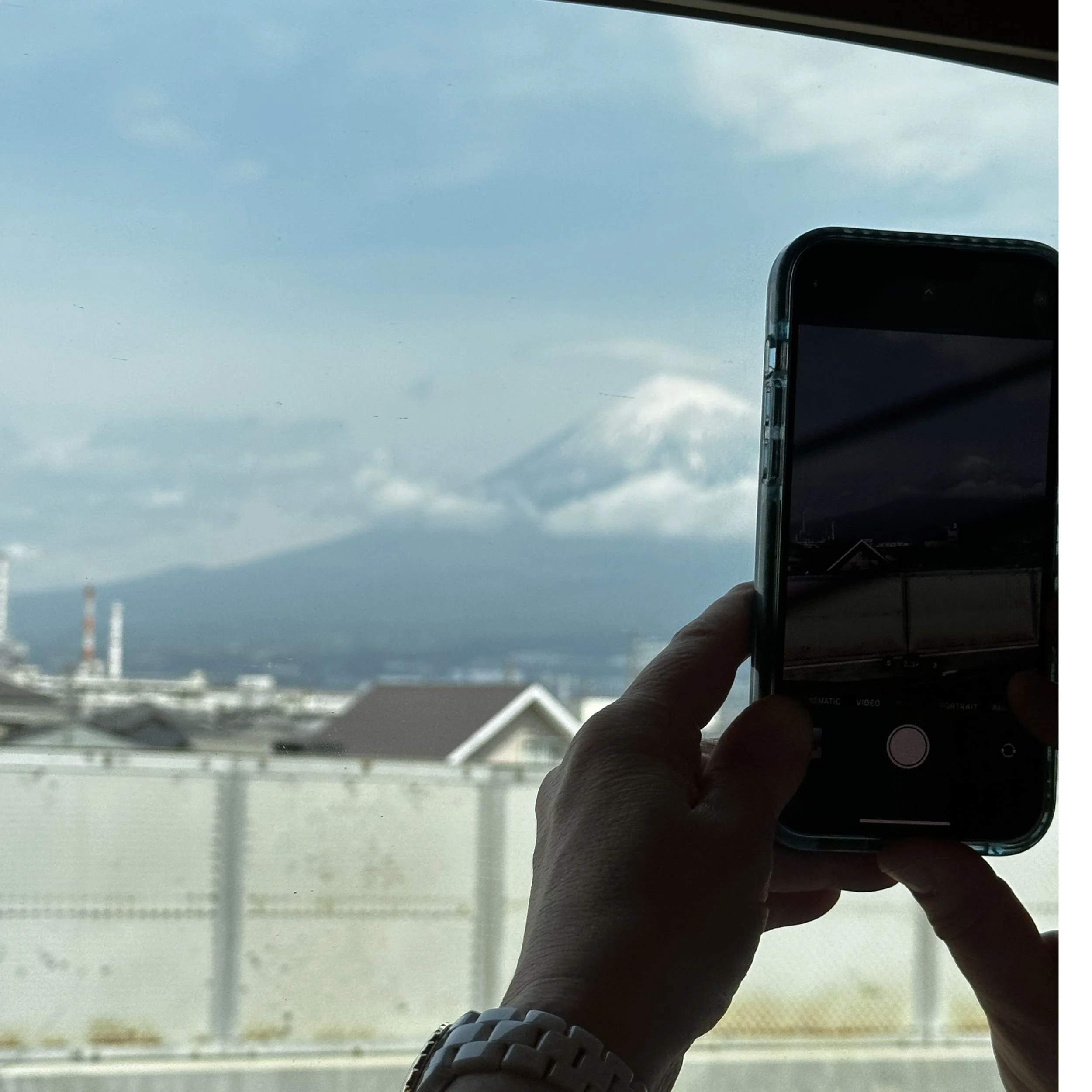
Taking the Shinkansen was one of the highlights of our time in Japan. It was fast, smooth and much less daunting than it can seem when you are planning from abroad.
If you are using it for the first time, the main things to remember are simple: allow extra time, check where to stand, and sort out large luggage in advance. Once those basics are covered, you can relax and enjoy it.
And you probably will. Because beyond the practicalities, the Shinkansen is one of those travel experiences that really does live up to the idea of it.
A few useful Japanese rail words can make stations and ticket areas easier to follow, especially if you are taking the Shinkansen for the first time.
Our own Shinkansen journeys took us from Tokyo to Kobe, then later from Osaka back to Tokyo, as part of our cruise around Japan in April 2023. Travelling by bullet train at either end of the voyage gave us a useful first-hand sense of how it works in practice, from stations and luggage to the small details that are easy to miss when planning from home.