Thomas Glover and Glover Garden in Nagasaki
Perched high above the harbour, Glover Garden preserves some of the best-known Western-style buildings in Japan. At its centre stands the Former Glover House, built in 1863 for Scottish merchant Thomas Blake Glover, whose influence on trade and industry helped shape Nagasaki during Japan’s transition into the modern world.
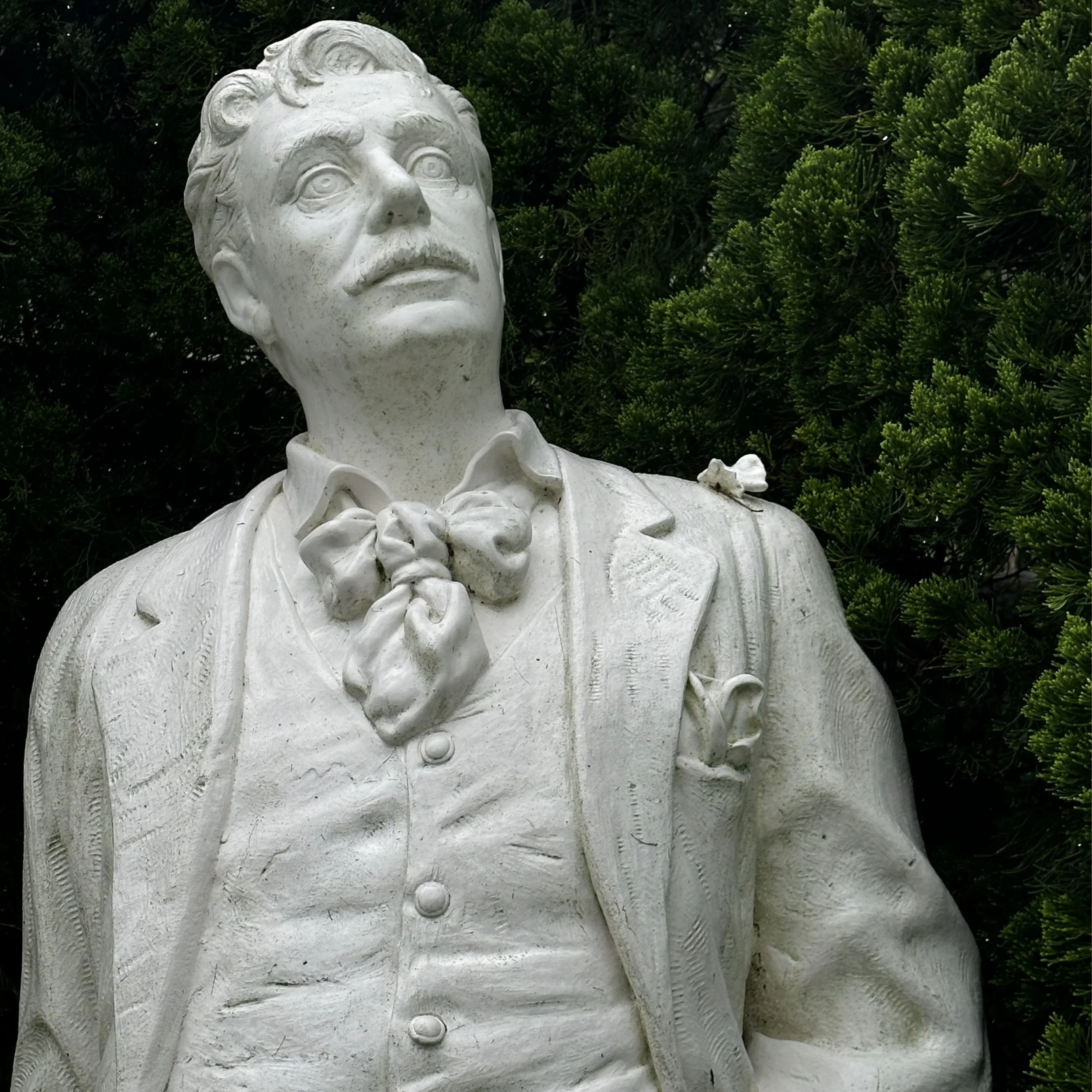
A statue of Thomas Glover stands in the gardens today. Look closely and you will notice a small butterfly resting on his shoulder, a quiet reference to Puccini’s opera Madama Butterfly, which was inspired by the encounters between Western merchants and Japanese society in nineteenth-century Nagasaki.
Thomas Glover and Nagasaki
Thomas Blake Glover arrived in Nagasaki in the 1850s as Japan was beginning to open its ports to foreign trade. Working initially as a merchant, he became deeply involved in the commercial life of the city during a period of enormous change.
Dejima Trading Post
Dutch merchants restricted to Dejima during Japan’s isolation
1641 ──────────────── 1859
Thomas Blake Glover
Scottish merchant in Nagasaki during Japan’s reopening to the world
1859 ──────────────── 1911
Japan Opens to the World
End of the Edo period and start of the Meiji era
1868
Glover traded in a range of goods including tea, ships and industrial equipment, but his influence extended well beyond commerce. He played a role in supporting the development of modern shipbuilding and industry in Japan and maintained close connections with Japanese entrepreneurs who would later build some of the country’s most important companies.
Among the businesses connected with his network were the foundations of what would later become Mitsubishi and Kirin Brewery, both of which remain global companies today.
Glover Garden
Today the hillside above Nagasaki harbour has been preserved as Glover Garden, a collection of historic Western-style residences that once belonged to foreign merchants and traders living in the city.
The most famous of these buildings is the Former Glover House, recognised as the oldest surviving Western-style wooden house in Japan. Built with a mixture of European and Japanese design elements, it reflects the cultural exchange that defined Nagasaki during the late nineteenth century.
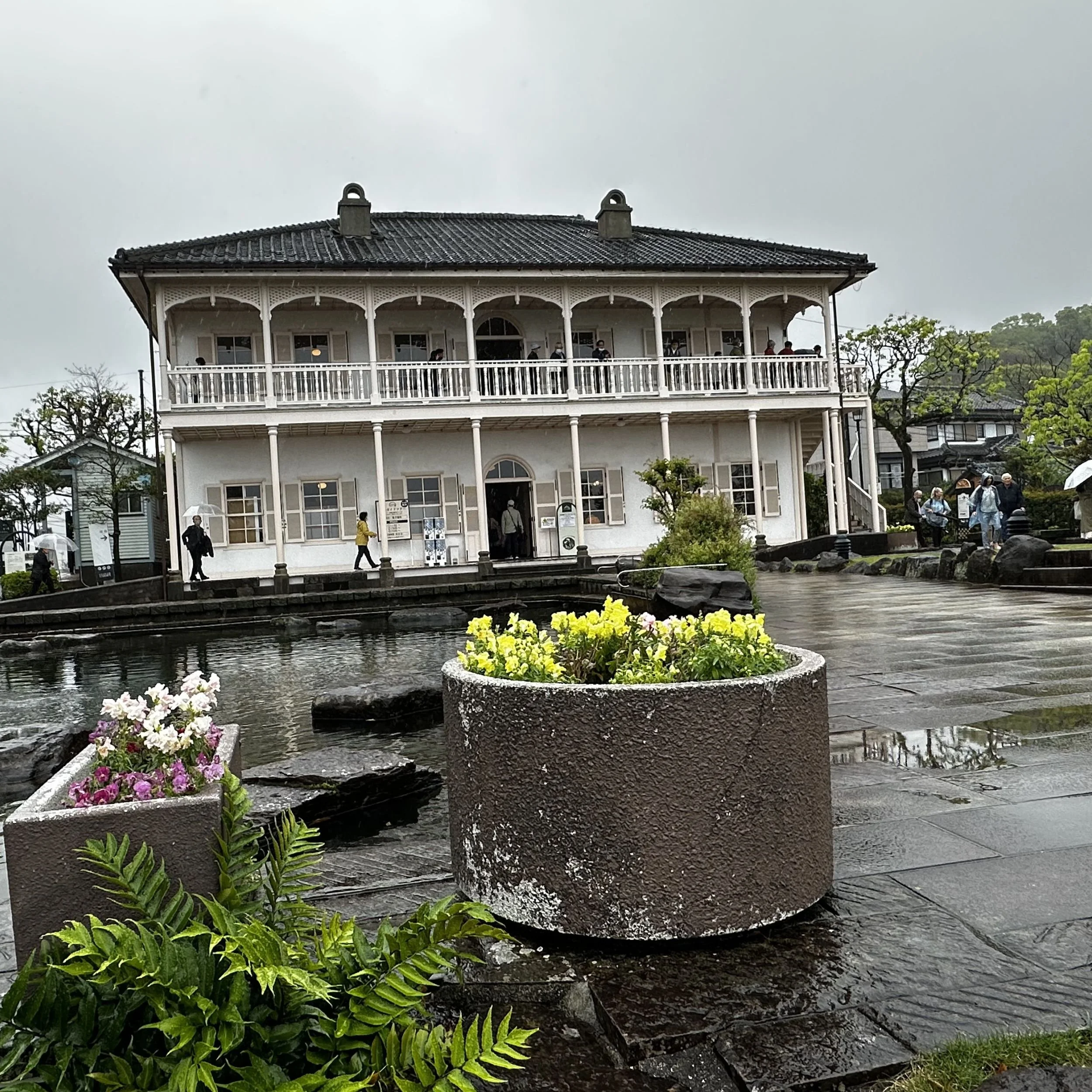
Glover Garden preserves several Western-style homes built by foreign traders in the late nineteenth century, reflecting Nagasaki’s role in Japan’s opening to the outside world.
Walking through the house, the blend of styles is easy to see. Wide verandas open towards the harbour, tatami rooms sit alongside Western parlours, and the craftsmanship shows influences from both traditions.
Views over Nagasaki Bay
Part of the appeal of Glover Garden is its setting. The terraces of the garden step down the hillside, providing sweeping views across Nagasaki harbour and the surrounding hills.
Even under grey skies the location is impressive. Looking out across the bay, it becomes clear why this site was chosen for the homes of foreign merchants who lived and worked in the city during its years as Japan’s most international port.
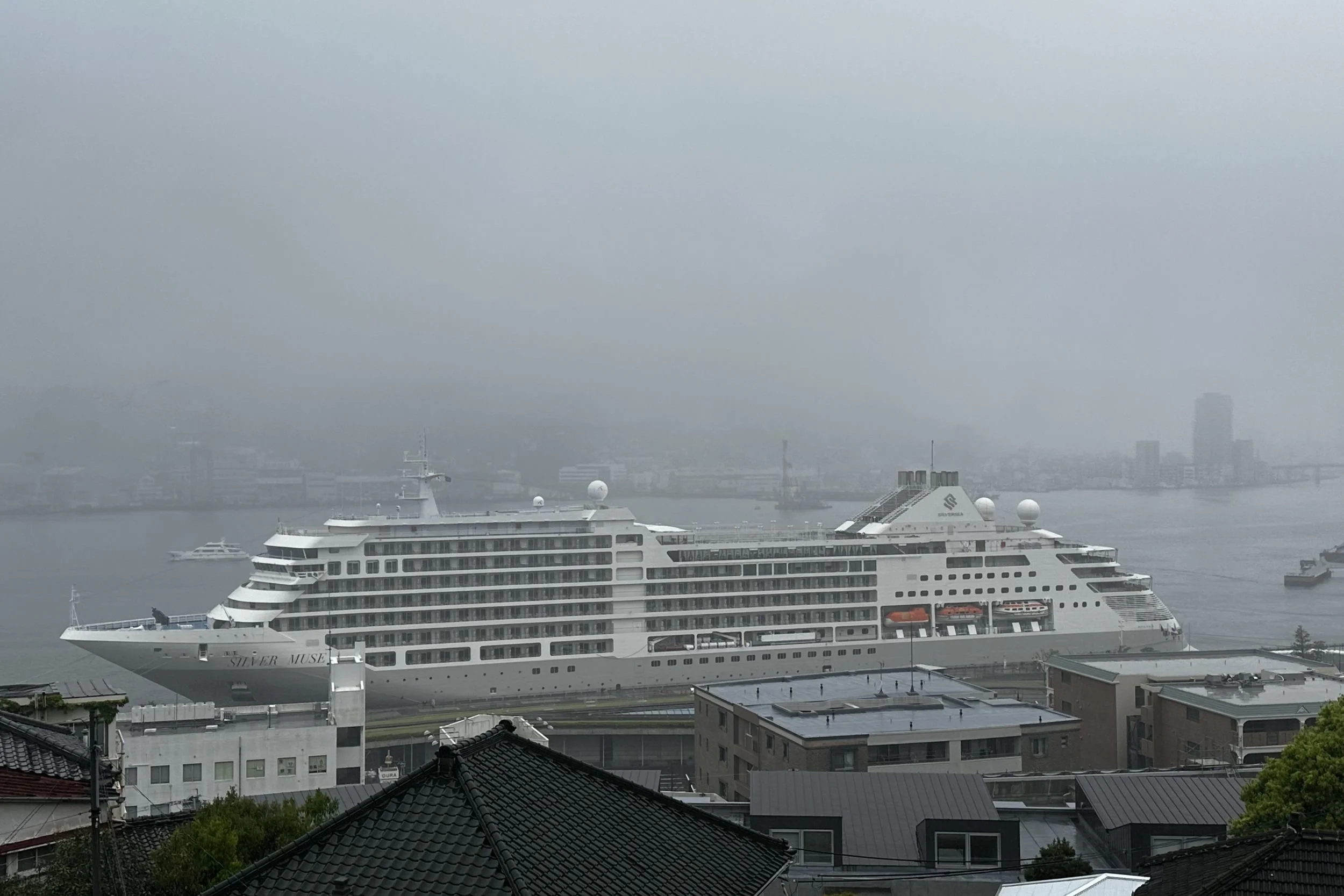
From the terraces of Glover Garden we could look down over Nagasaki harbour and see our ship, the Silver Muse, waiting below during our cruise around Japan.
Today Glover Garden remains one of the most visited sites in Nagasaki, offering both a glimpse into the city’s international past and one of the best viewpoints over the harbour.
We visited Glover Garden during our stop in Nagasaki on a cruise around Japan, where the city’s international history and hillside views made it one of the most memorable ports on the itinerary.
You can read more about the city in our Nagasaki travel guide.