The Beatles Statue in Liverpool: Where It Is, What to Look For, and How to Visit
The Beatles statue in Liverpool stands at Pier Head on the city’s waterfront and has become one of the most photographed Beatles landmarks in the city. This guide covers where to find it, the hidden details on each figure, and what to know before you visit.
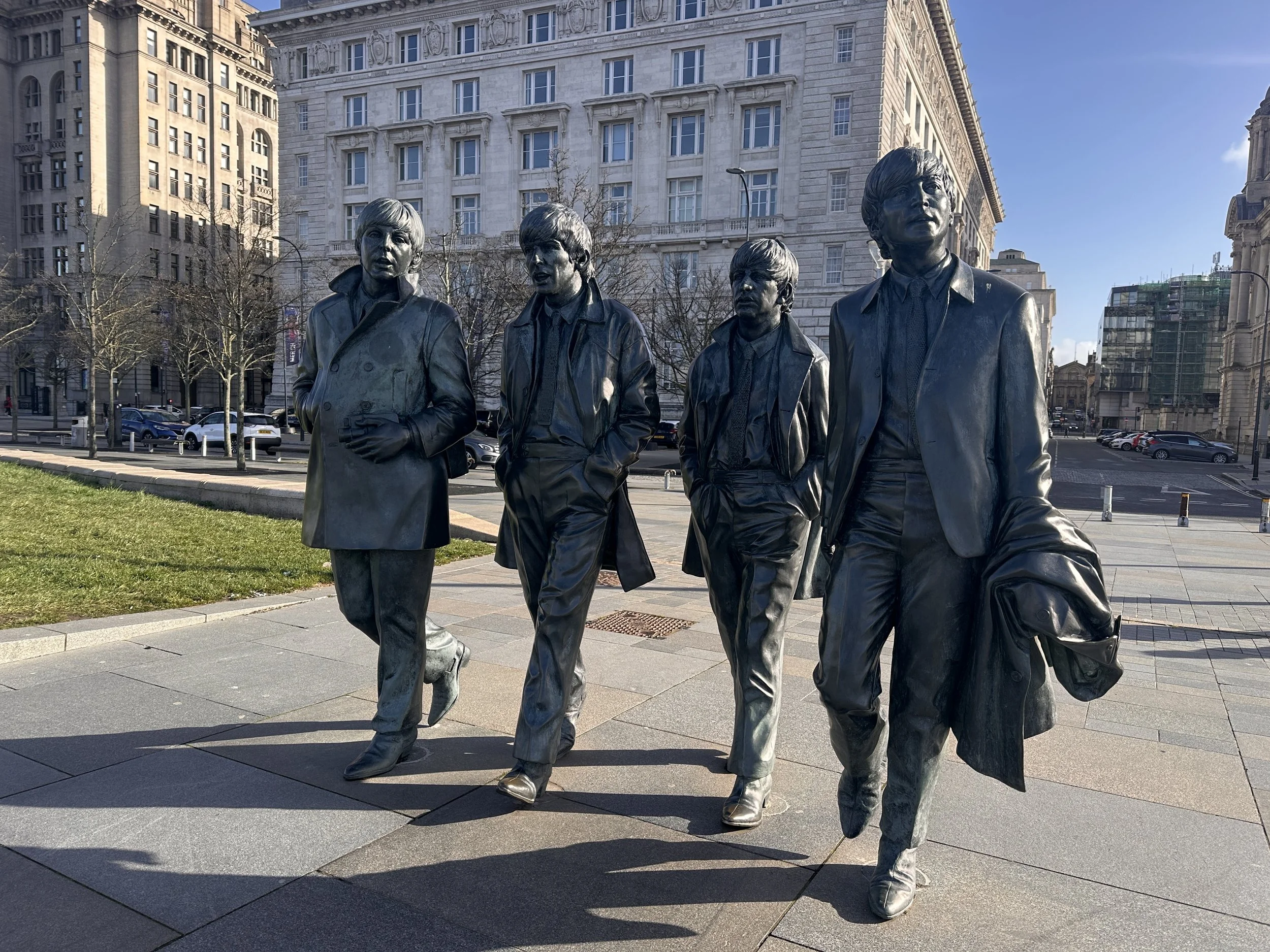
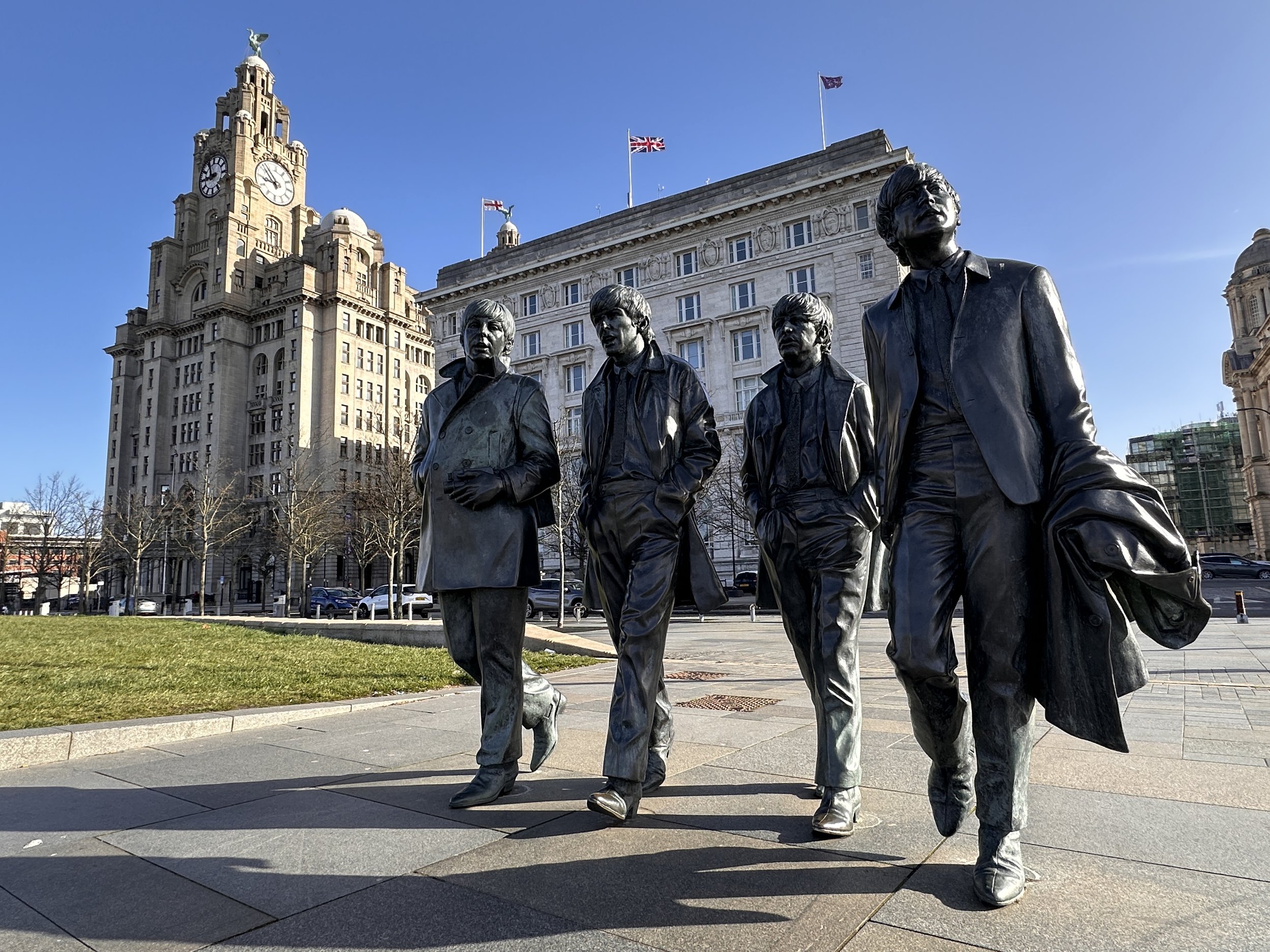
Located on Liverpool’s renovated Pier Head, the Beatles Statue stands between the Three Graces – the Royal Liver Building, the Cunard Building and the Port of Liverpool Building – with the Mersey Ferries building just behind it on the waterfront.
It was unveiled in 2015 after the Cavern Club owners felt there was no single place for Beatles fans to gather in Liverpool to celebrate the band. London had the Abbey Road Crossing, while the narrow street outside the Cavern Club offered little space for large groups.

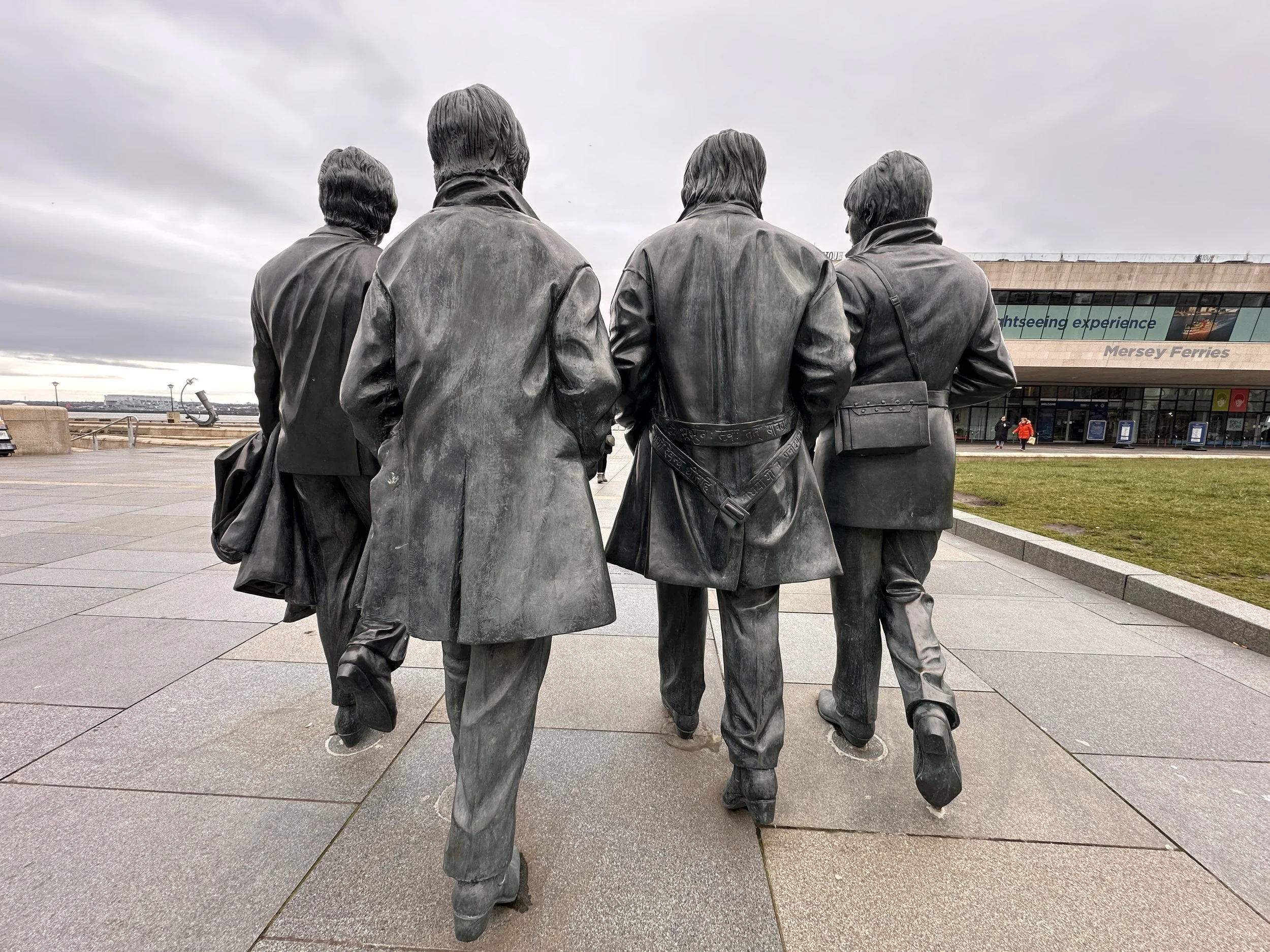
The Beatles Statue from Behind
Details to Look For on Liverpool’s Beatles Statue
If you look closely, each one of the band has a small detail personal to their history.

Can you see the secrets from each Beatle?
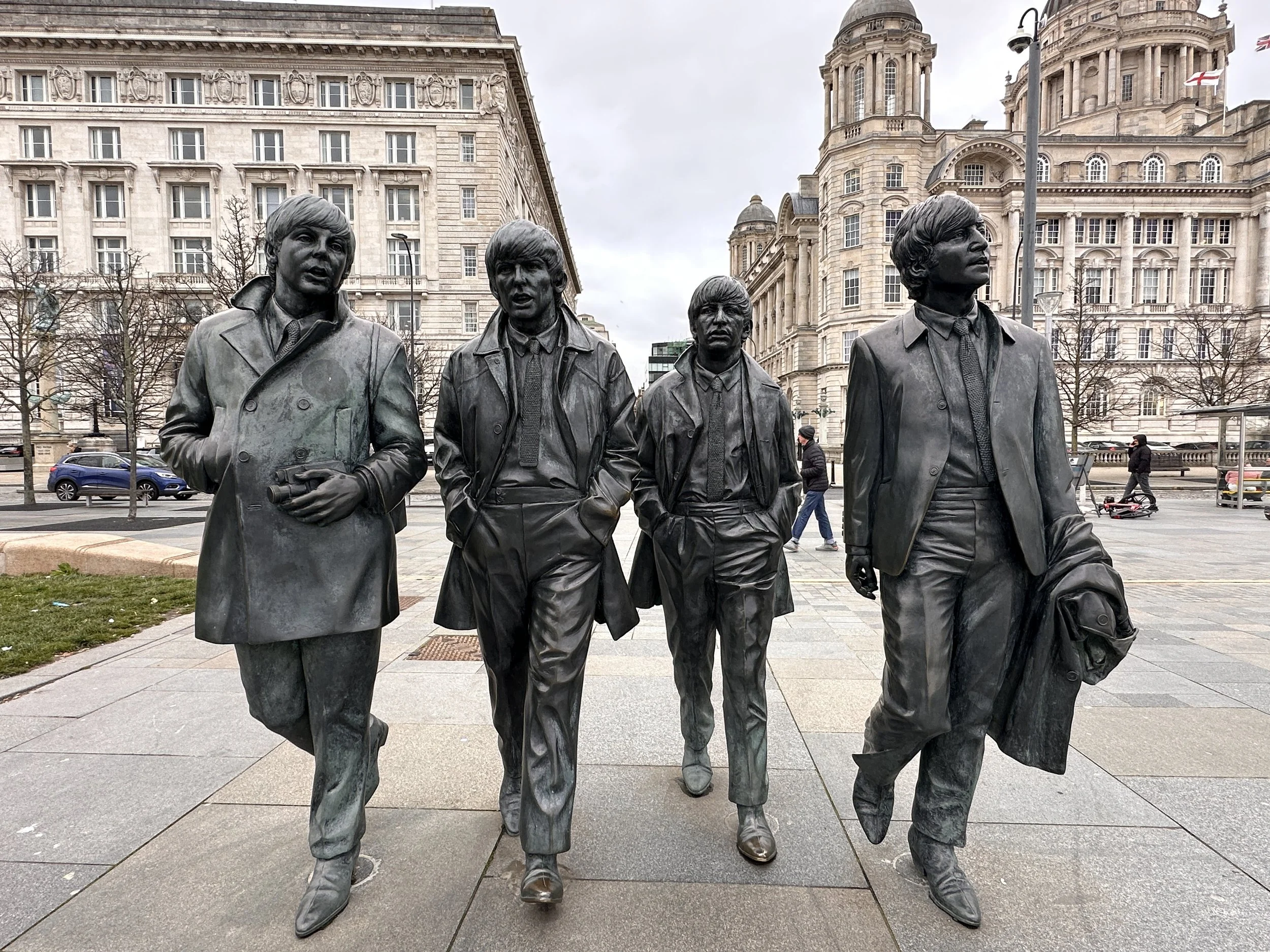
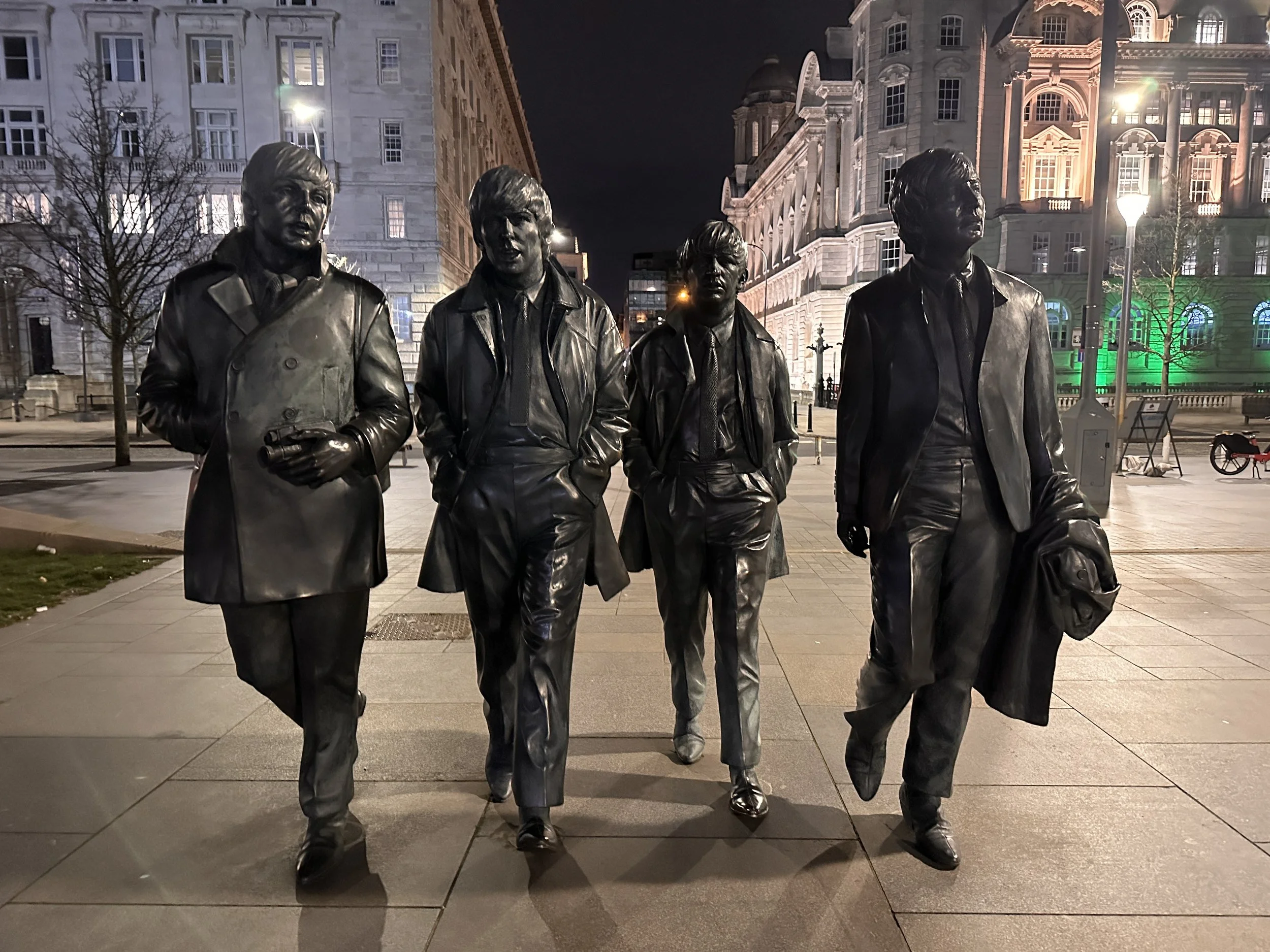
Paul McCartney’s Camera – The Most Obvious Detail to Notice
Paul McCartney is shown carrying a camera, the most immediately noticeable personal detail on the statue. It reflects his long-standing interest in photography and his close creative connection with Linda Eastman, who photographed the band extensively before becoming his wife.
Why John Lennon Holds Acorns – A Forgotten Symbol of Peace & Protest
John Lennon has two acorns in his cupped hand. In June of 1968, Yoko Ono and John Lennon planted two acorns in the garden of Coventry Cathedral, England. The seeds, they said, represented their wish for world peace. After marrying in 1969, the couple sent a pair of acorns to leaders across the world asking that the “living sculptures” be planted as a symbol of world peace.
Ringo’s Boot – The Hidden Number Most Fans Never Notice
Ringo Starr has the number '8' printed on the sole of his boot. The '8' references L8, his childhood Postcode in Liverpool. You'll need to kneel down and flip your camera if you want a picture of this secret!
George’s Belt – The Sanskrit Mantra and Its Hidden Meaning
George Harrison has Sanskrit writing on the belt of his coat. According to the Cavern Club, it is a mantra that roughly translate to "The Infinite Beyond Conception, we meditate upon that Light of Wisdom, which is the Supreme Wealth of the God."
The statue has beautiful movement. In the morning the sun is on their backs making it harder to get the right photo, but as the sun sets across the Mersey, the band are bathed in light.

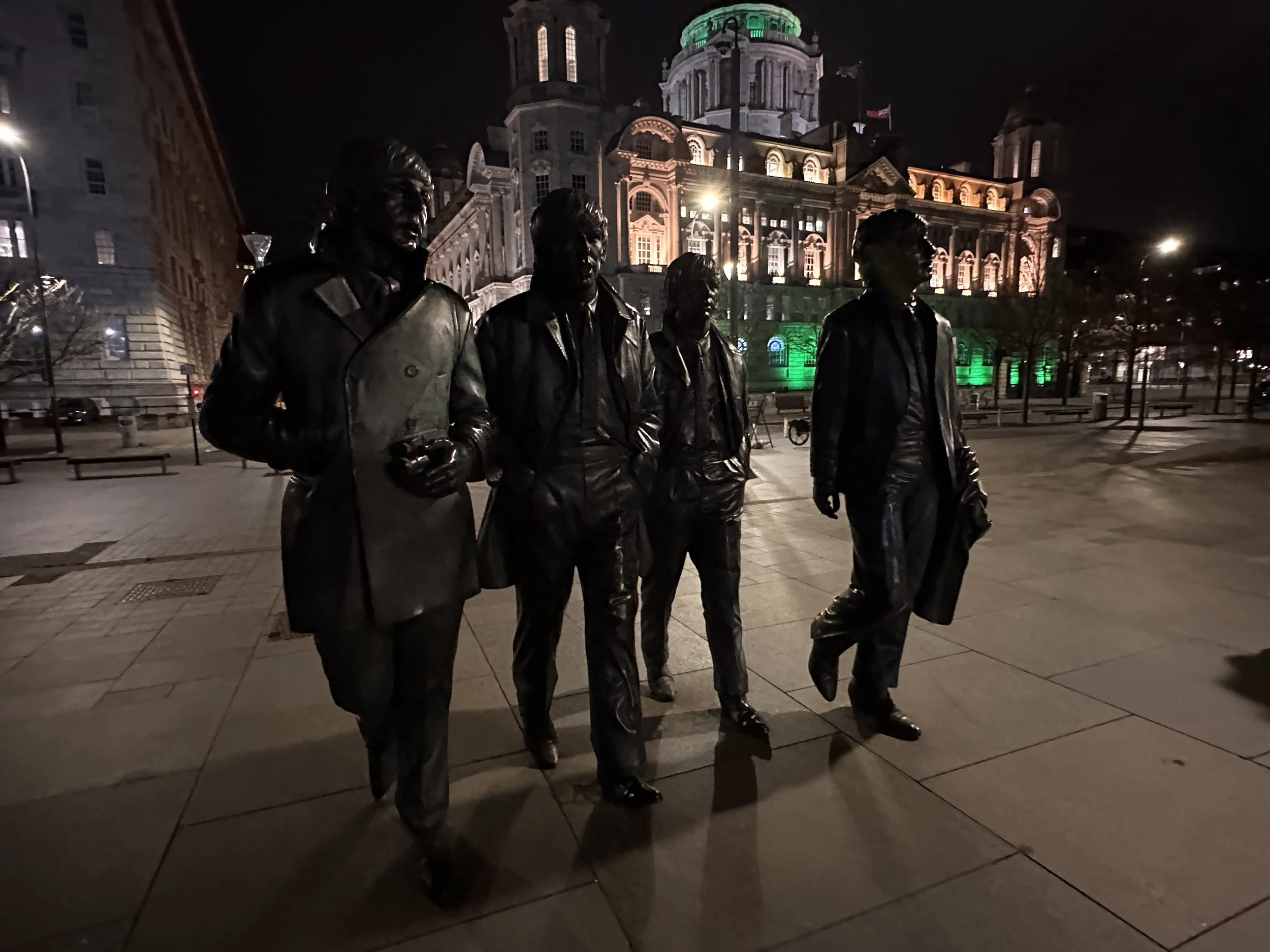
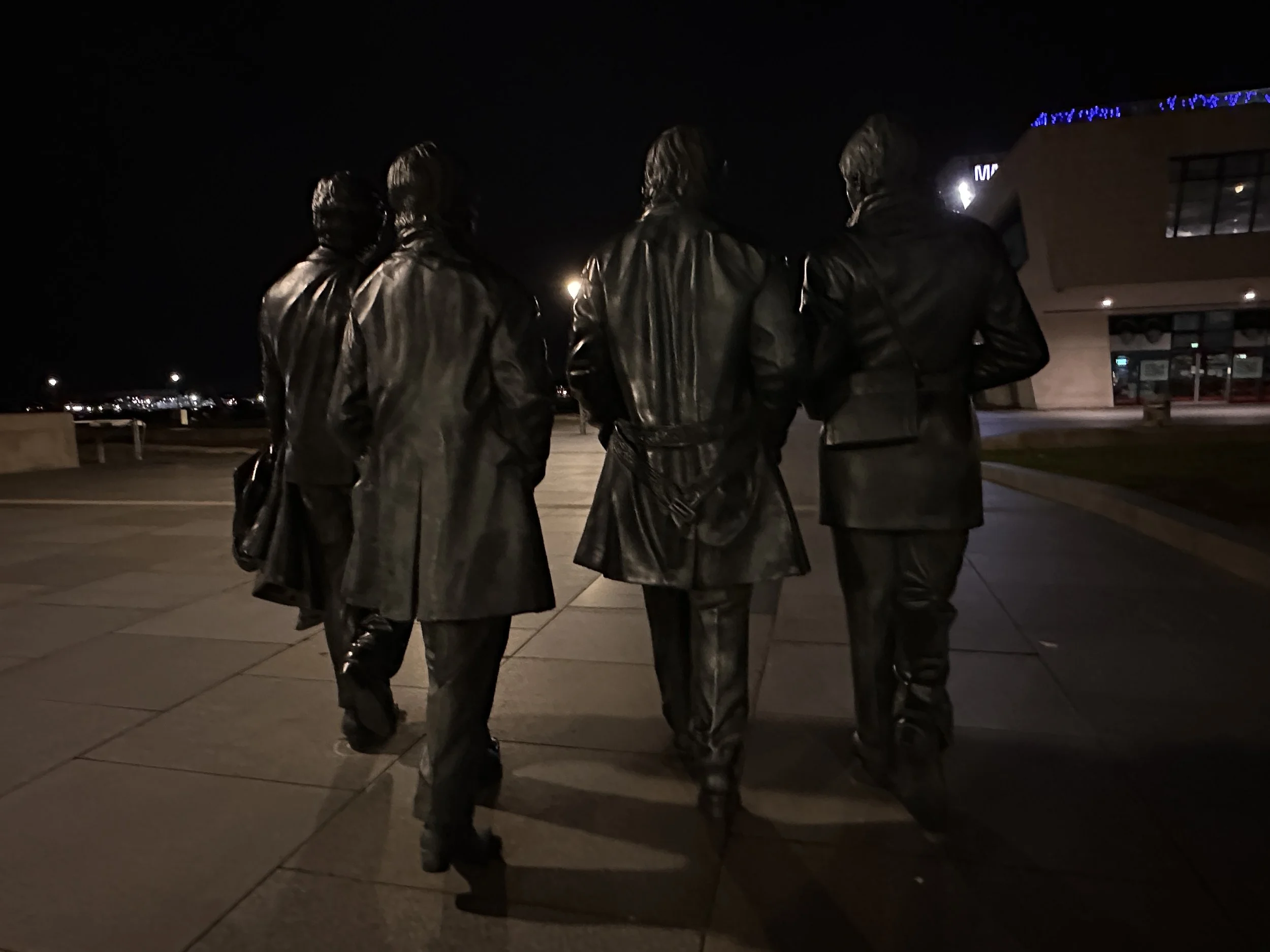
The Beatles Statue at night
The Beatles Statue – A Meeting Point for Fans Visiting Liverpool
The idea of creating a focal point for Beatles fans clearly works. During visits in March 2024, I met people from Germany, Sweden and Brazil, all of whom had come to Liverpool with the same intention, to see the Beatles Statue and have their photograph taken there. Conversations started easily. People compared journeys, swapped memories and took turns so everyone could get a picture.
Some talked about seeing the band live, others about a favourite song, album or Beatle. For a few minutes, this small stretch of Liverpool’s waterfront became a shared space, brought together by music and place rather than language or background.
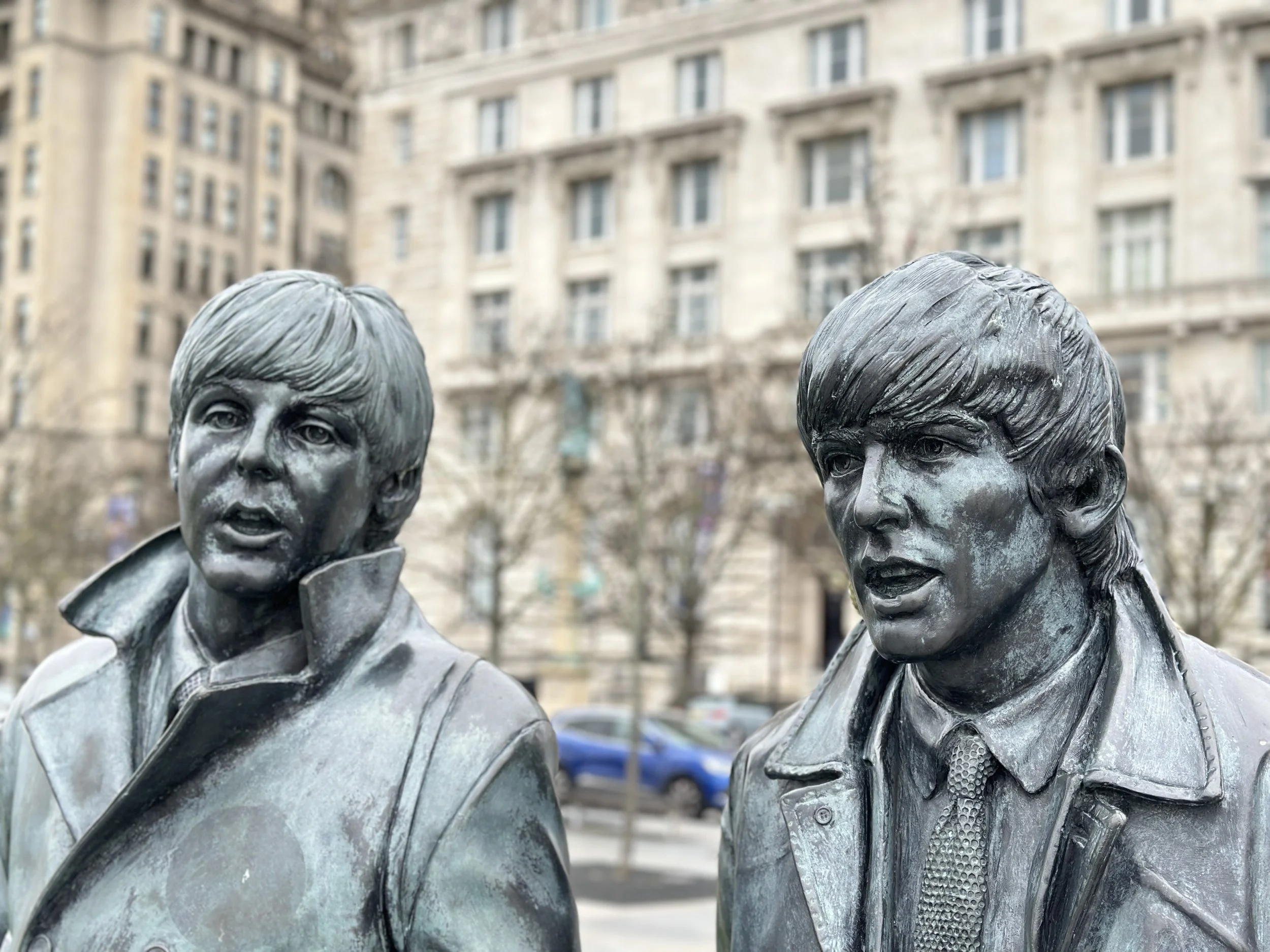
The statue itself shows the signs of that connection. Certain details have developed a shine from repeated touch. Some visitors tap Paul on the nose, others reach for the acorns in John’s hand. I have been told that flowers are sometimes left on John Lennon’s birthday. These small rituals are not organised or advertised, but they continue to form naturally around the statue.
The Beatles Statue Photos
The Beatles Statue is one of the most photographed music landmarks in Liverpool, with visitors stopping throughout the day to capture it from different angles. The images below show the statue in varying light and weather conditions, as well as close-up details that are easy to miss when passing by.
Visiting the Beatles Statue – What You Need to Know
Where is The Beatles Statue in Liverpool?
You can find the statue at Liverpool's Pier Head
Located in the newly renovated Pier Head, the 'fab four' are dressed in the style around the time of 'Hard Days Night' about ten minutes walk from the Beatles Story.
The statue was the meeting point for a Beatles Walk I took one weekend. The 90-minute guide explained those finer points about the statue (which I had not read elsewhere) before taking us on a short pilgrimage to iconic locations in the city's Beatles history. I highly recommend If you want to get a sense of the commercial and cultural history of the city.
Do you need to book in advance to visit Beatles Statue?
No! it's a free statue in Liverpool. You may need to hang around to get your own picture without anyone else but you don't need to book or pay to see the statue!
How to Get the Best View of Liverpool’s Beatles Statue
For great pictures you want to see the statue in the afternoon. The Beatles face west towards the water, which means the sun will be behind the fab 4 until the afternoon. If you don't want to take pictures into the sun, pop along after lunch. Maybe visit the Beatles Story or Liverpool Museum before heading across to the statue.
Who Sculpted the Beatles Statue?
The statue was sculpted by Andy Edwards. You can see a model of Paul, with some behind the scenes photographs on display at the Beatles Museum on Matthew Street.
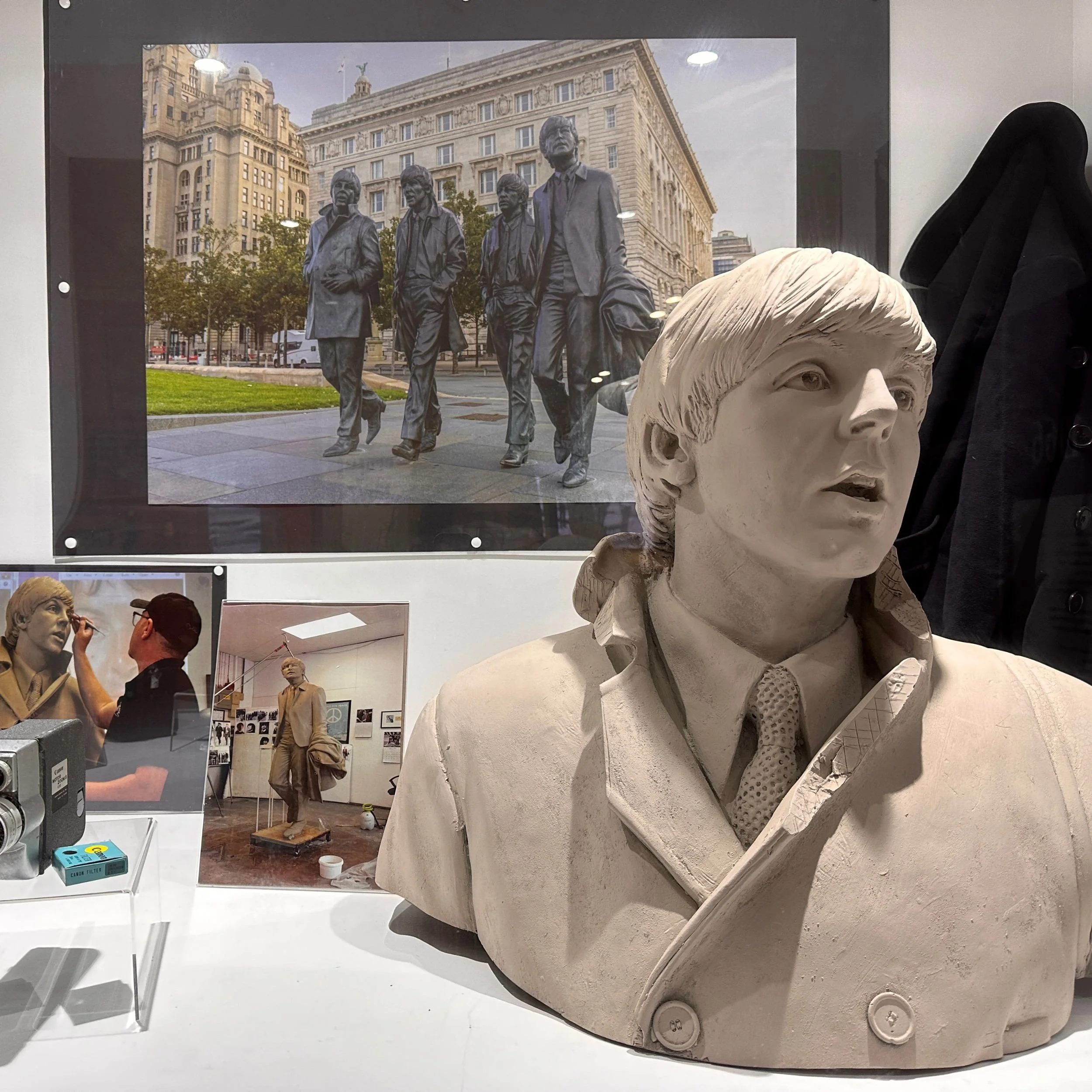
Behind the Scenes - Sculpting Paul at the Beatles Museum
More Beatles Statues & Landmarks in Liverpool
The iconic 'Fab Four' is not the only Beatles Statue in Liverpool but it may be the best... In Matthews Street, home of the legendary Cavern Club you can see an almost life-size statue of John Lennon, leaning against the wall (map link)

John Lennon Statue near the Cavern Club
Two minutes up the road on Stanley Street, you can also find a statue to Eleanor Rigby.
The bronze statue casts a lady sitting on a stone bench. She has a handbag on her lap, a shopping bag on her right, and a copy of the newspaper the Liverpool Echo on her left.

Eleanor Rigby Statue
For many visitors, Liverpool is just the beginning. London has its own Beatles landmark in the form of the Abbey Road Crossing, a place that has become a global meeting point in much the same way as the statue at Pier Head. Beyond that, the city opens out into a wider map of studios, streets and venues that shaped British music, many of which are explored in our guide to London’s music landmarks. Together, these places form a loose but powerful trail for anyone interested in where music history was made.