London Calling: A Guide to London’s Music Landmarks
"Winding your way down on Baker Street, light in your head and dead on your feet"...
London has always been one of the world’s great music cities. Bands were formed here, classic albums were recorded here, and some of the most famous album covers in history were shot on these streets. As a local music fan, I have spent years walking these London music landmarks, always looking for the stories behind the studios, pubs and corners that appear in songs and on sleeves.
This guide is for anyone looking for music attractions in London or things to do in London for music lovers. We will visit Beatles landmarks, Pink Floyd locations, David Bowie’s London, Led Zeppelin sites and more, with practical details to help you find each place yourself.
Soho’s Music History: Tin Pan Alley and Ronnie Scott’s
Soho remains the undeniable engine room of London's musical legacy, with historic venues and recording studios woven into the fabric of almost every corner. A music tour of the capital naturally begins on Denmark Street, affectionately known to music history as Tin Pan Alley. Throughout the twentieth century, this narrow strip housed a dense ecosystem of songwriters, instrument shops, music publishers, and visionary designers.
It was here, in a local publisher's office, that a young Elton John first met lyricist Bernie Taupin. Just down the street at No. 6, designers Aubrey Powell and Storm Thorgerson established their legendary studio, Hipgnosis, where they conceptualized iconic album art for Pink Floyd's The Dark Side of the Moon and Animals, alongside seminal covers for Led Zeppelin.
The street’s musical output spanned all genres; a young Paul Simon once walked these pavement blocks trying to pitch his early acoustic material, only to be rejected as "uncommercial." Undeterred, he later returned with Art Garfunkel to track songs at Regent Sounds Studio at No. 4.
Turning down Frith Street reveals Ronnie Scott’s Jazz Club, an institution that has anchored London’s late-night jazz and avant-garde scenes since 1959 (moving to its current location at No. 47 in 1969). The basement room has welcomed global icons including Miles Davis, Nina Simone, Ella Fitzgerald, Prince, and Charlie Watts.
Just a short walk away lies Soho Square, the tranquil green space that serves as the administrative heart of Paul McCartney’s publishing empire, MPL Communications, located at No. 1. The private townhouse features an occasional apartment at the top and a recording studio in the basement where tracks for Back to the Egg were laid down.
Further down at 22 Frith Street, Bar Italia has been serving authentic coffee to Soho’s midnight crowd since 1949, drawing artists, musicians, and subcultural figures through its doors. Pulp’s track "Bar Italia" captures the raw atmosphere of a post-rave comedown, while the café appears in the video for Sade’s "Smooth Operator." Sade herself belonged to the earlier Blitz scene, an subcultural incubator that heavily shaped the style and electronic sound of the capital during the late 1970s and early 1980s.
Tucked away in St Anne’s Court sits the former site of Trident Studios. This subterranean room was a crucible for groundbreaking records, acting as the birthplace for The Beatles’ "Hey Jude," David Bowie’s Ziggy Stardust, Carly Simon’s No Secrets, Elton John's Tumbleweed Connection, and Lou Reed’s Transformer.
On nearby Wardour Street, the legendary Marquee Club (now converted into trendy apartments) evolved from its early jazz and skiffle roots into the ultimate launchpad for emerging talent. The Rolling Stones performed their first gig here, and many of the emerging blues bands of the sixties would play here including Alexis Korner, Long John Baldry and the Yardbirds. In subsequent eras, Mark Knopfler and Dire Straits, U2, REM and Guns N’ Roses would grace the stage.
Finally, no visual tour of Soho is complete without a walk down Berwick Street, the vibrant market street chosen by Oasis as the setting for the album cover of What’s the Story Morning Glory.
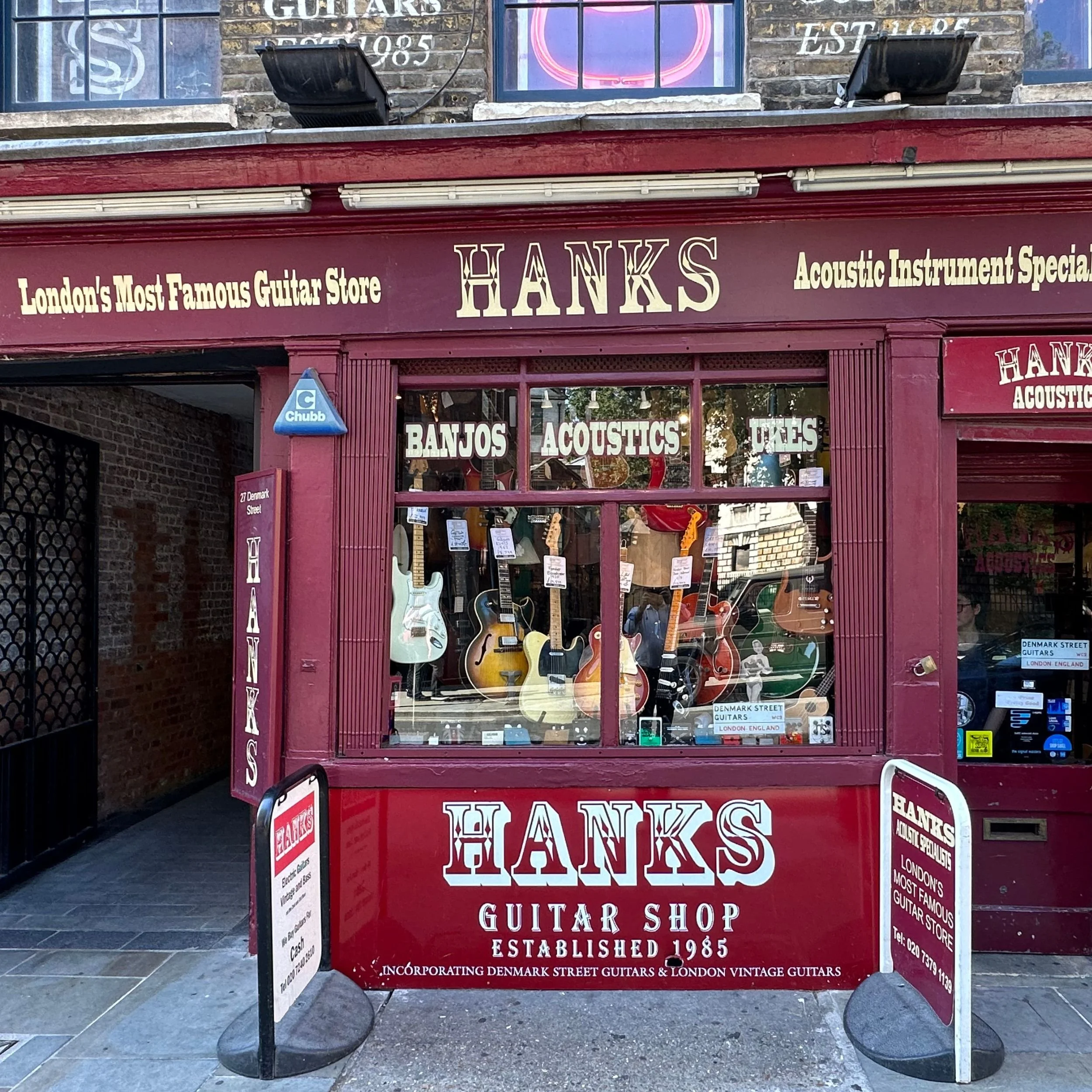
One of the few remaining music shops on London’s Denmark Street
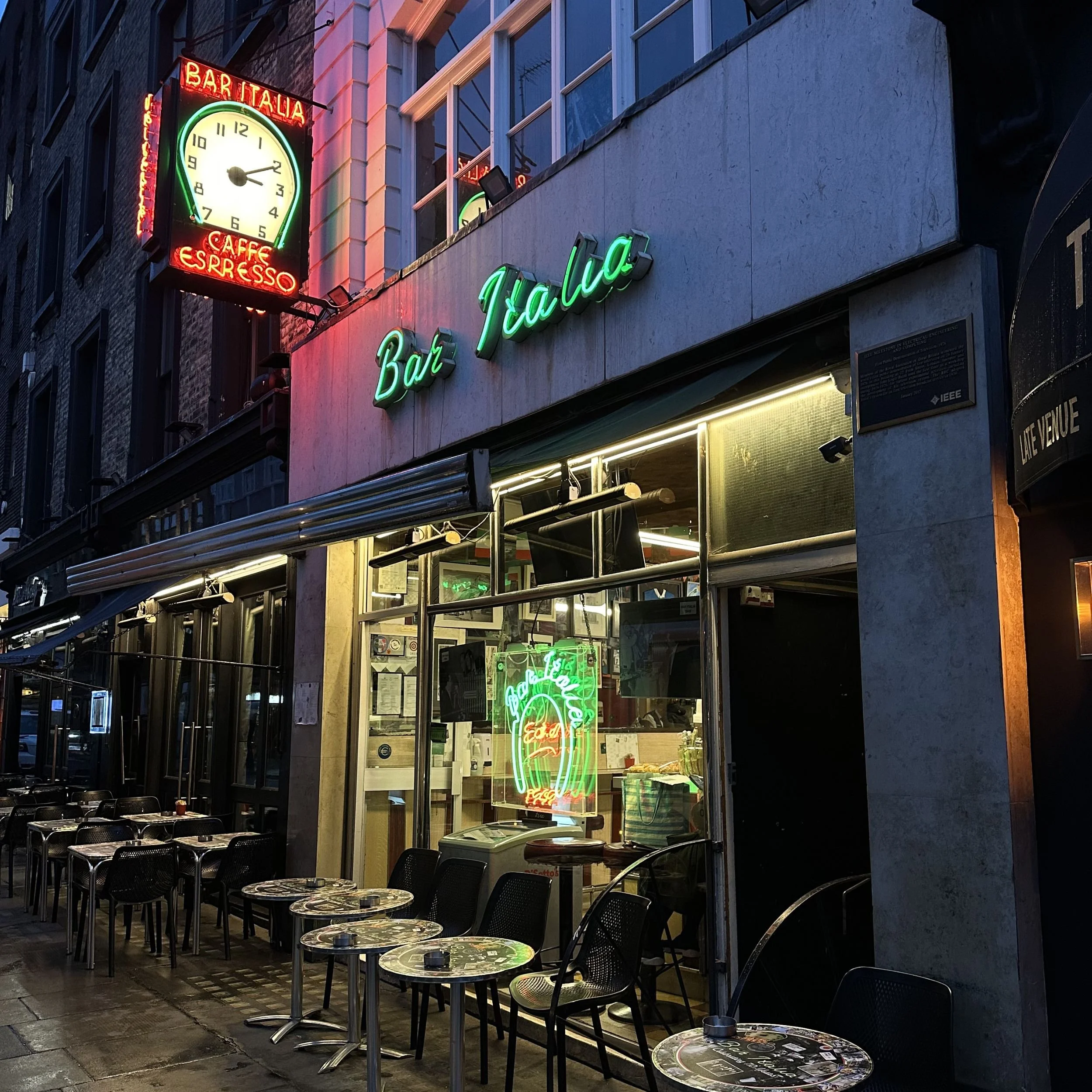
Bar Italia, Soho
David Bowie’s London: Heddon Street and Piccadilly Circus
Piccadilly Circus sits as one of the capital's most visible transit landmarks, famously serving as the backdrop for early, surreal promotional photographs of Pink Floyd in 1967. A five-minute walk from the neon screens leads into the quiet cul-de-sac of Heddon Street, a site of global musical pilgrimage.
This is the exact alleyway where photographer Brian Ward captured David Bowie in the rain for the front cover of The Rise and Fall of Ziggy Stardust and the Spiders from Mars. Visitors today can still spot the architectural lines of the street and look for the location of the famous "K. West" sign that hung above the doorway. After capturing your photographs, stop for a drink at the Starman pub, which pays tribute to Bowie's chameleonic career with beautifully curated artwork and memorabilia.

Two photo opportunities for Bowie fans on Heddon Street
The Jimi Hendrix Flat in Mayfair
At 23 Brook Street in the heart of Mayfair, Jimi Hendrix lived for a brilliant, highly creative spell between 1968 and 1969, in the flat that now forms a core part of Handel Hendrix House. The address holds a unique historical novelty: the German baroque composer George Frideric Handel lived and composed next door at No. 25 over two centuries earlier. For music lovers, the Hendrix flat offers a rare, intimate look at the guitarist away from the glare of concert amplifiers—a domestic space where he wrote new material, entertained fellow musicians, and conducted legendary press interviews.
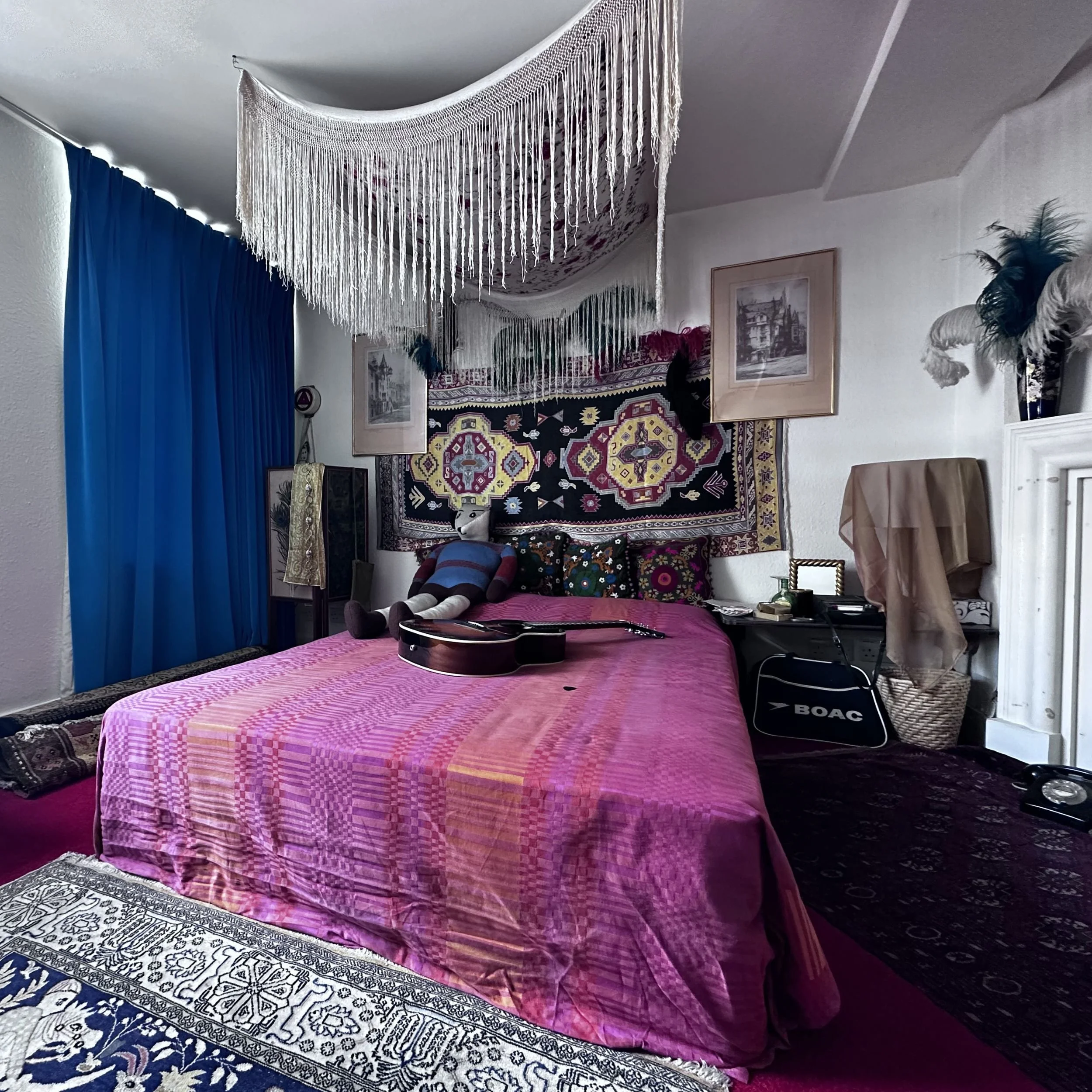
Jim Slept Here!
The neighbourhood holds another deeply poignant Hendrix connection near Marble Arch. The guitarist was a regular resident at The Cumberland Hotel, and it was from his room here that he granted his final interview to Keith Altham of the NME on September 11, 1970, just days before his tragic passing. Today, the hotel honours this profound connection with a dedicated Hendrix-themed suite and its vibrant Sound Cafe, keeping his stylistic legacy alive opposite the Moco Museum.
Savile Row: Apple HQ and The Beatles’ Rooftop Concert
While Savile Row is universally renowned as the global home of bespoke tailoring—frequently dressing style icons like Charlie Watts—it also hosted one of the most significant moments in pop culture history.
The elegant townhouse at 3 Savile Row served as the headquarters for Apple Corps, The Beatles’ eclectic multimedia company and record label. If you had stood on this pavement on a freezing January day in 1969, you would have looked up to hear an unannounced live performance echoing across the rooftops. This was, of course, The Beatles’ legendary final public concert, beautifully documented during the Let It Be sessions. Looking forward, the building’s musical lineage is set to be permanently preserved, with plans underway to transform the site into a dedicated Beatles museum by 2027.
For more Beatles landmarks, head further north to Marylebone, the Old Marylebone Town Hall (Registry Office) stands as a quietly iconic site for Beatles folklore, having hosted the weddings of John and Yoko, Paul and Linda, and later Ringo and Barbara Bach. Just around the corner sits 34 Montagu Square, a basement flat leased by Ringo Starr that briefly served as a creative sanctuary for John and Yoko in 1968, marked today by a blue plaque.
To see where the madness truly spilled into the public eye, head toward Oxford Circus to find The London Palladium—the historic theatre where the band’s legendary 1963 appearance on Sunday Night at the London Palladium caused such massive crowds that the Britih press coined the term “Beatlemania” as a national front-page headline.
The Hard Rock Café London on Park Lane
While a modern iteration of the Hard Rock Café sits near Piccadilly Circus, the global music-themed chain actually traces its entire lineage back to the opposite end of the boulevard. The original Hard Rock Café at 150 Old Park Lane is where the global phenomenon truly began. Beyond dropping in for a meal, visitors can request a guided descent into "The Vault" located in the basement. This highly secure room protects a museum-grade collection of music history, including foundational instruments, iconic stage props, and original, handwritten contracts signed by The Beatles.
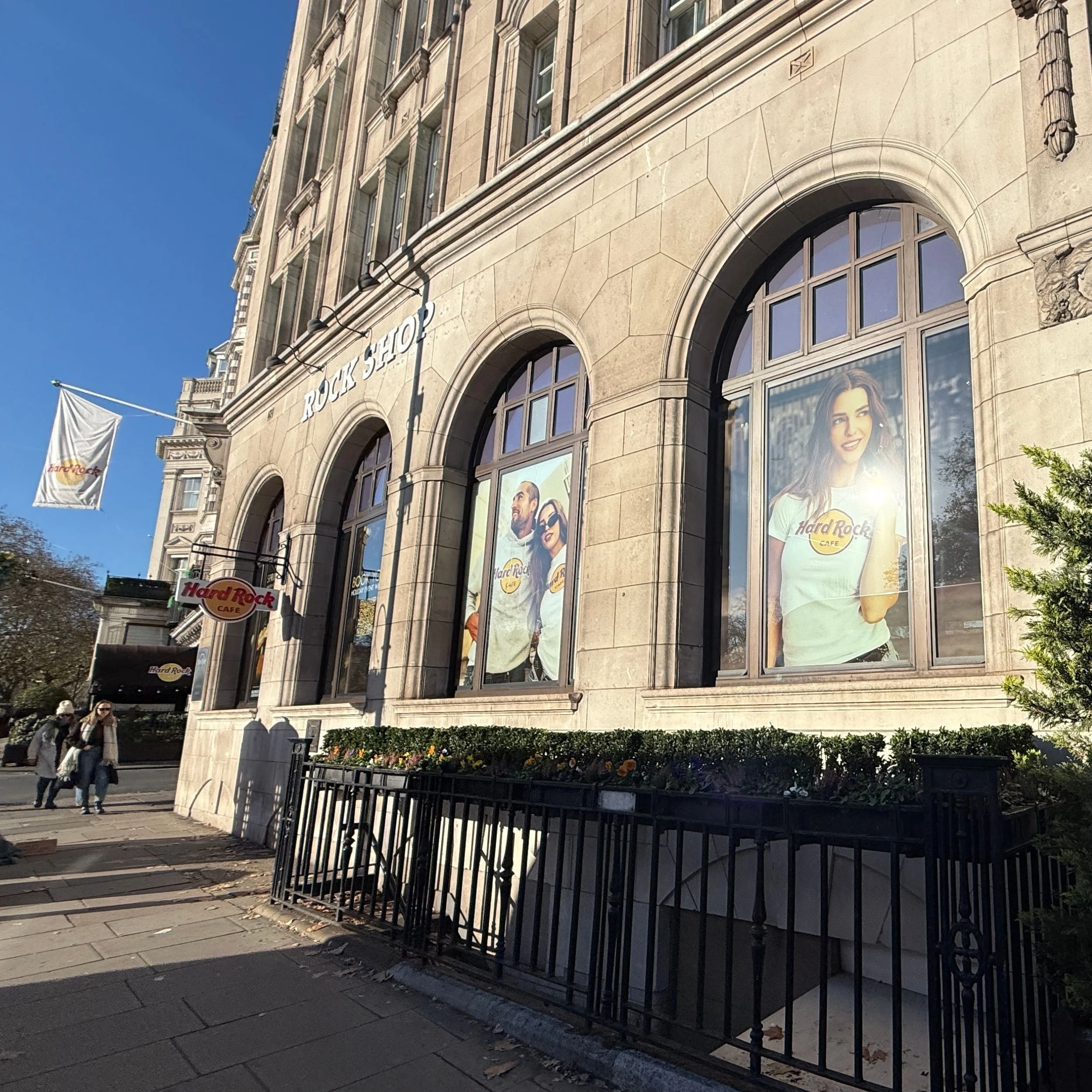
The original Hard Rock Café 150 Old Park Ln, London W1K 1QZ
Carnaby Street: The Fashion and Sound of the Swinging Sixties
Renowned globally as the epicenter of cutting-edge fashion shops in the 1960s, Carnaby Street shares a history inextricably tied to the emergence of British rhythm and blues. Today, that connection is permanently anchored at No. 9 Carnaby Street by RS No.9, the official flagship retail and exhibition space for The Rolling Stones. Regularly updated with exclusive album promotions, art installations, and new apparel lines, the storefront features an unmistakable tongue sculpture in the window.
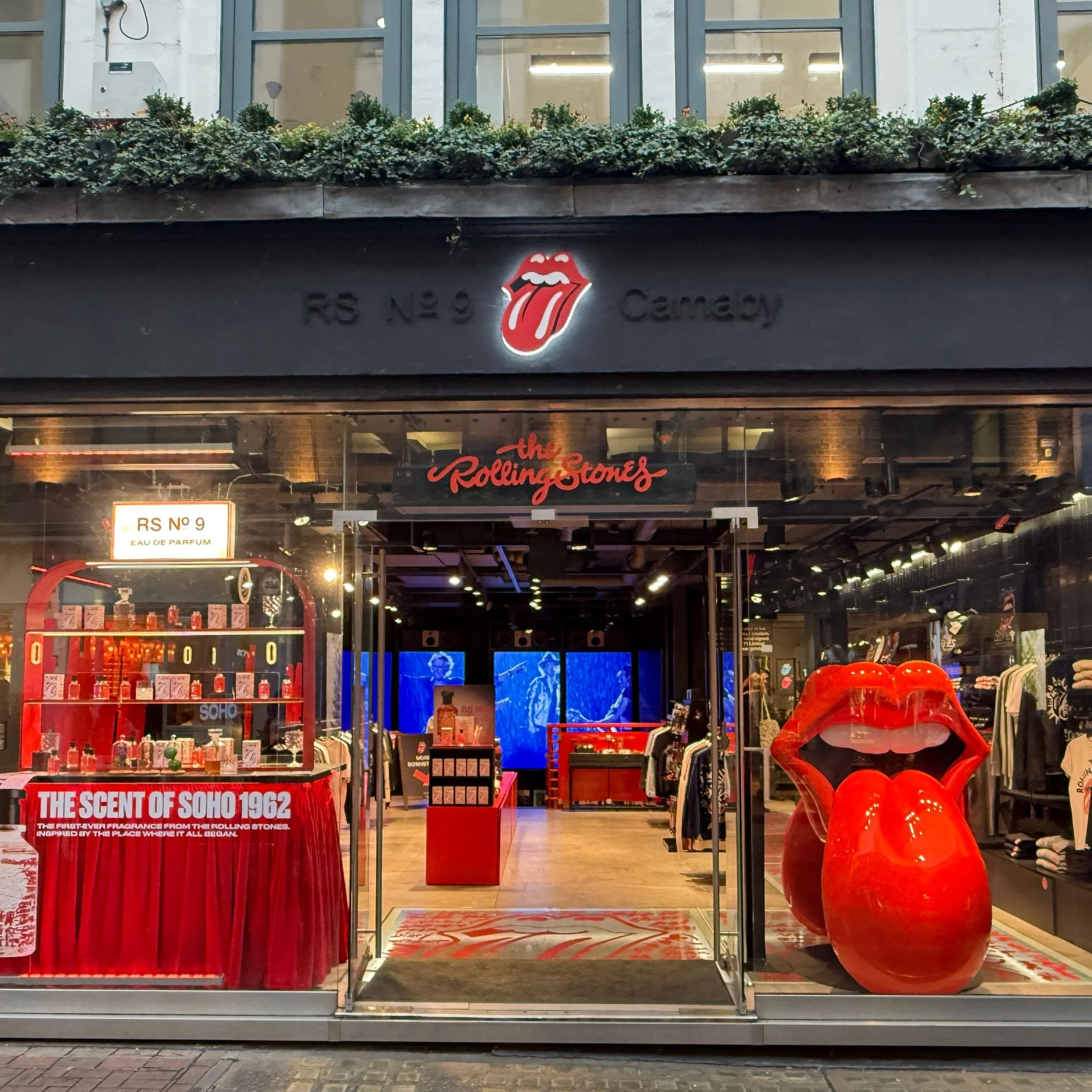
The Rolling Stones at RS9
Abbey Road Studios: London’s Most Famous Music Landmark
Arguably the most universally recognized location in global music history, the Abbey Road zebra crossing in St John’s Wood remains a primary site of pilgrimage. Featured on the cover artwork for The Beatles' penultimate studio album, the crossing draws thousands of fans looking to step into the footsteps of the Fab Four. How to find Abbey Road
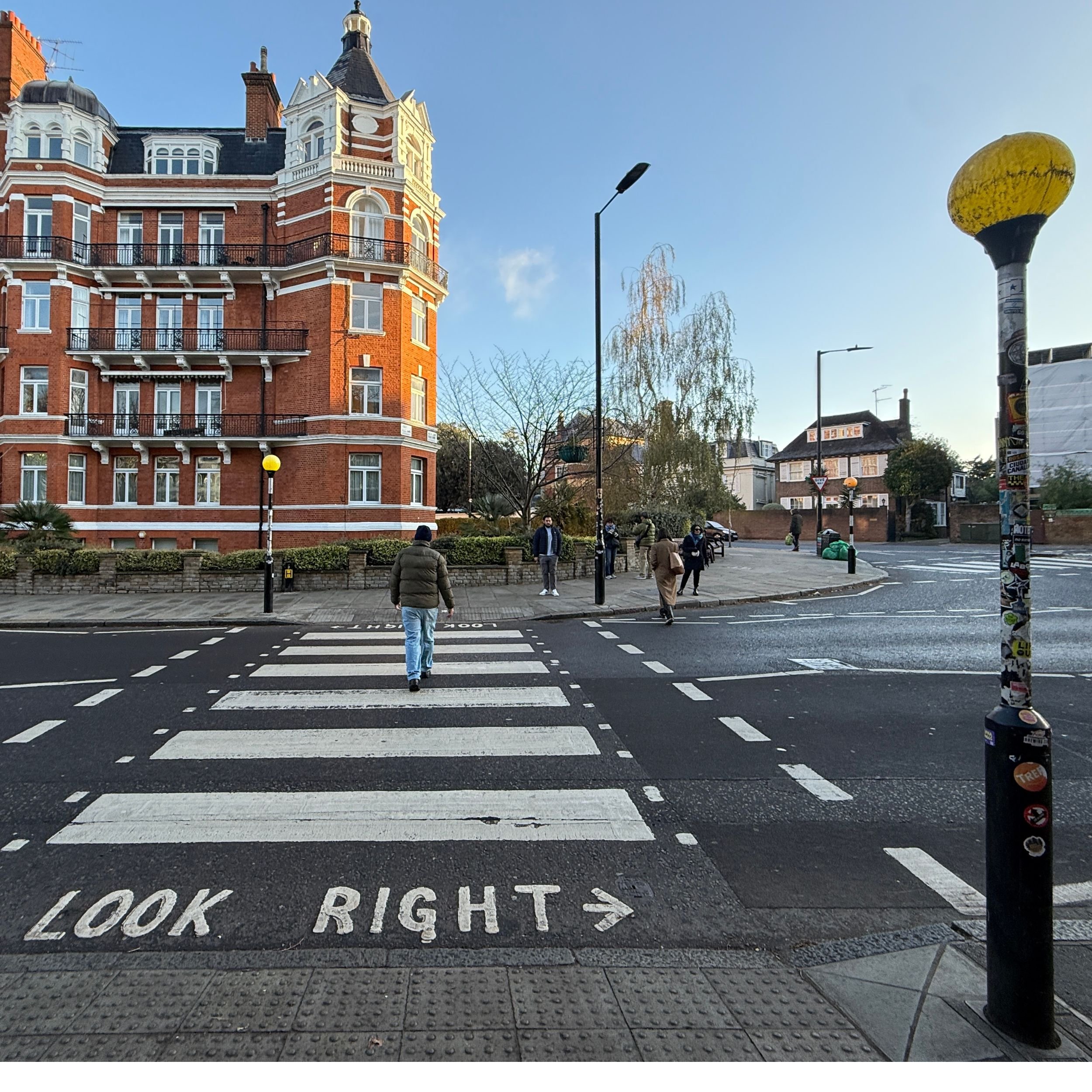
Crossing Abbey Road - November 2025
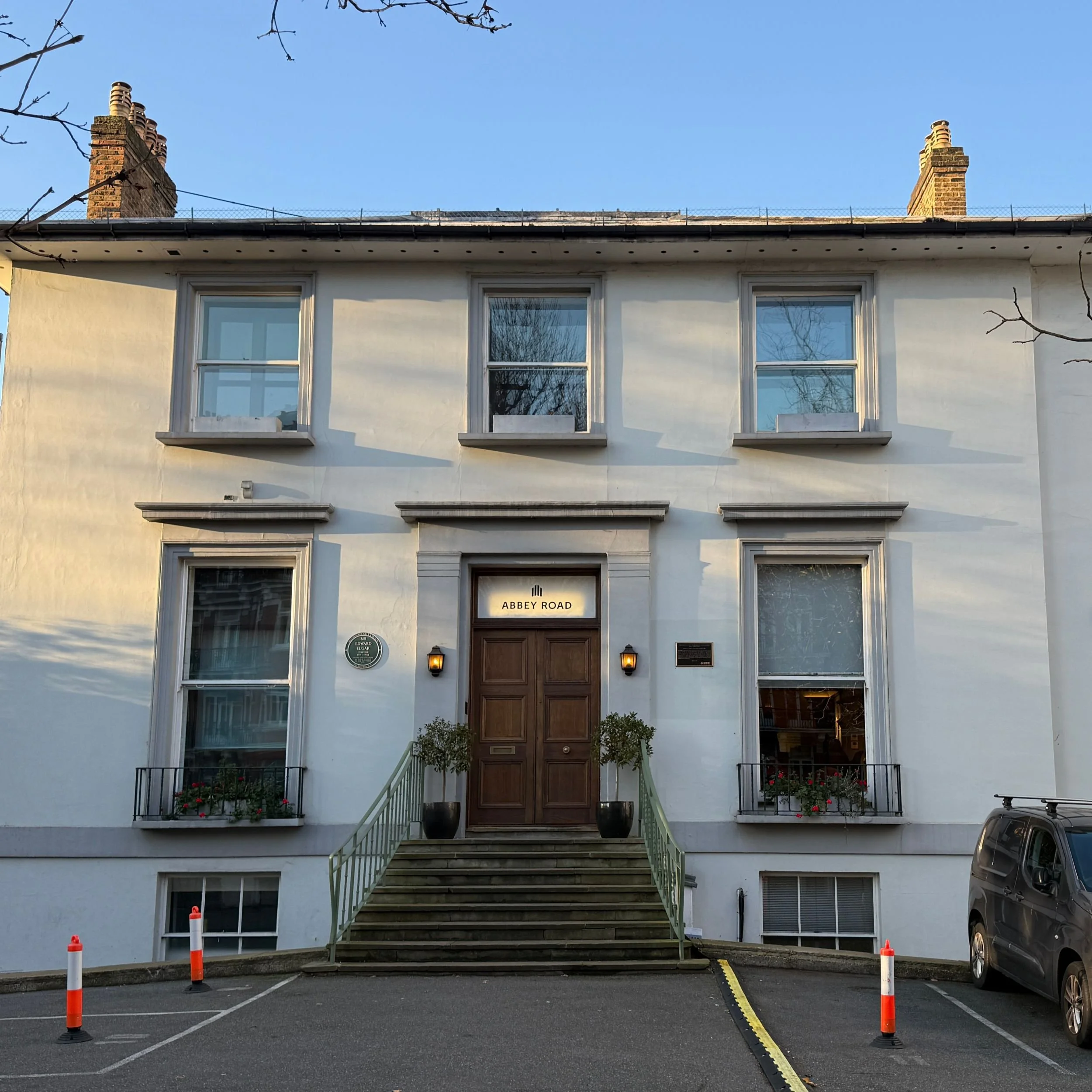
The World Famous Abbey Road Studios
Pink Floyd and Battersea Power Station
Second only to Abbey Road in its visual recognition, Battersea Power Station stands as an industrial masterpiece immortalized on the front cover of Pink Floyd’s 1977 album, Animals. The image of the rogue, inflatable flying pig drifting between the towering art deco chimneys permanently stamped the building into rock iconography. Following a massive architectural restoration, the old power station has been entirely reborn as a premium shopping, dining, and entertainment destination. Inside the cavernous turbine halls, among modern cafes and boutiques, a small historical plaque recalls the structure's profound place in global music folklore.

Battersea Power Station Lit in Blue and Red for the Animals Remix Promotion
While Battersea represents the visual identity of Animals, the band took full control of their physical production by building Britannia Row Studios in Islington. Constructed immediately after the release of Wish You Were Here, this private recording base is where the band tracked the entirety of Animals and laid down foundational elements for their magnum opus, The Wall. Sadly there isn’t much to see there today.
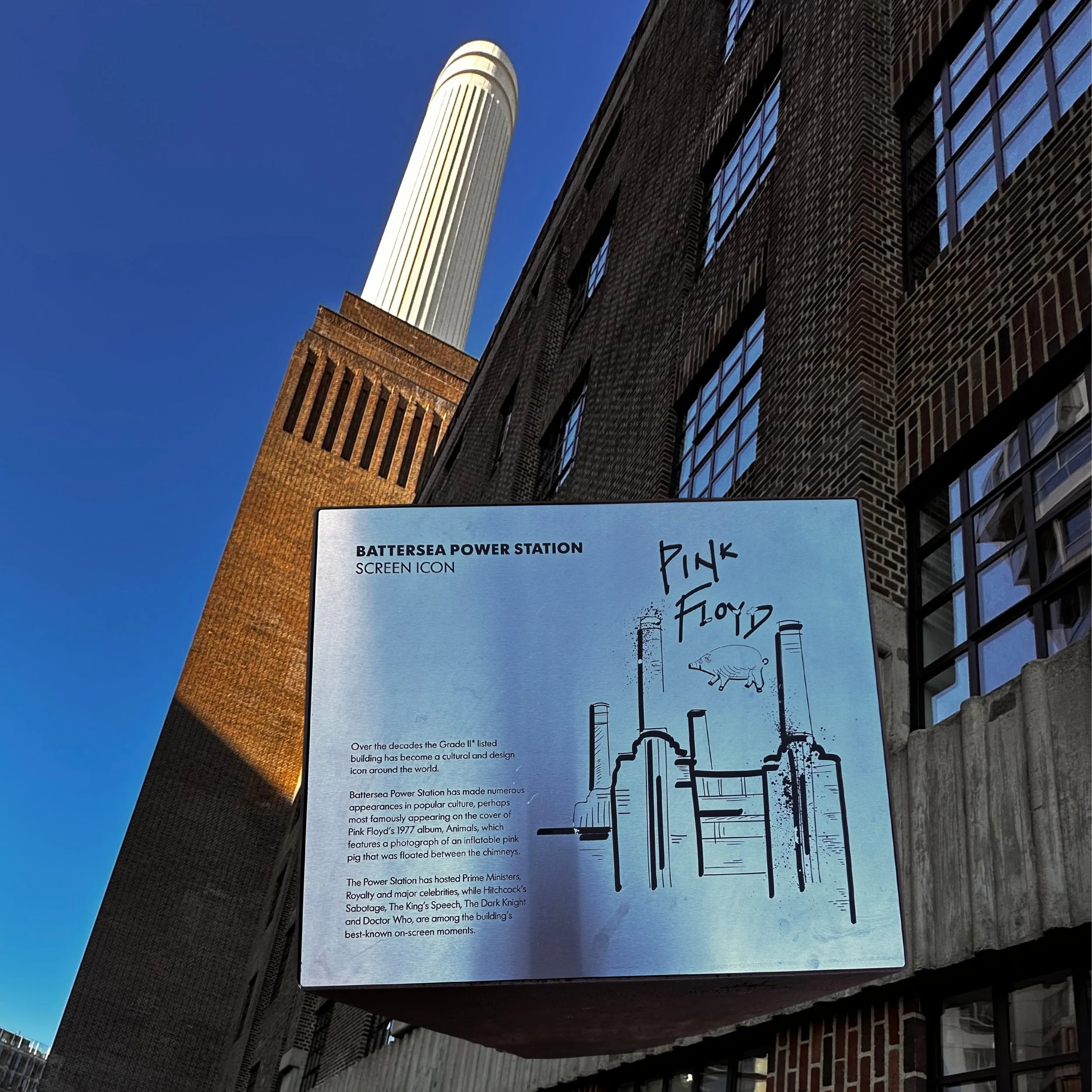
Battersea Power Station Chimney and Pink Floyd Plaque
Camden Town: Amy Winehouse and the Modern Indie Scene
Camden has long maintained a reputation as London's premier counter-culture music hotspot. The historic Dublin Castle pub continues to serve as an active launchpad for rising alternative acts, while The Hawley Armsremains forever linked to Amy Winehouse. The singer spent countless hours at the pub, and the interior walls still display intimate personal polaroids alongside memorabilia from resident alternative musicians. Directly around the back of the building, a towering painted mural pays tribute to her legacy, mirrored by a bronze statue dedicated to her memory inside the nearby Camden Market.


Brixton History: The Bowie Mural and O2 Academy

The Bowie Mural on Brixton Road
In South London, the vibrant neighborhood of Brixton traces deep links to visionary home-grown talent. On Brixton Road, directly opposite the singer's childhood home, the famous David Bowie Mural stands as a magnificent artistic landmark. Following his passing in 2016, the glass-fronted depiction of Bowie's Aladdin Sane persona instantly transformed into a worldwide, spontaneous memorial space.
While exploring the neighborhood, a short walk down Electric Avenue—the historic first market street in London to receive electric street lighting—connects visitors to the message behind Eddy Grant’s foundational 1980s reggae-pop track.
Closer to the station, the O2 Academy Brixton has reigned as a definitive concert hall since 1983. Featuring a unique, gently sloping floor structured like a shallow indoor amphitheater, the space offers an unparalleled live viewing experience. The stage holds a poignant place in alternative history as the exact venue where The Smiths delivered their final live public performance.
The Royal Albert Hall: London’s Historic Concert Venue
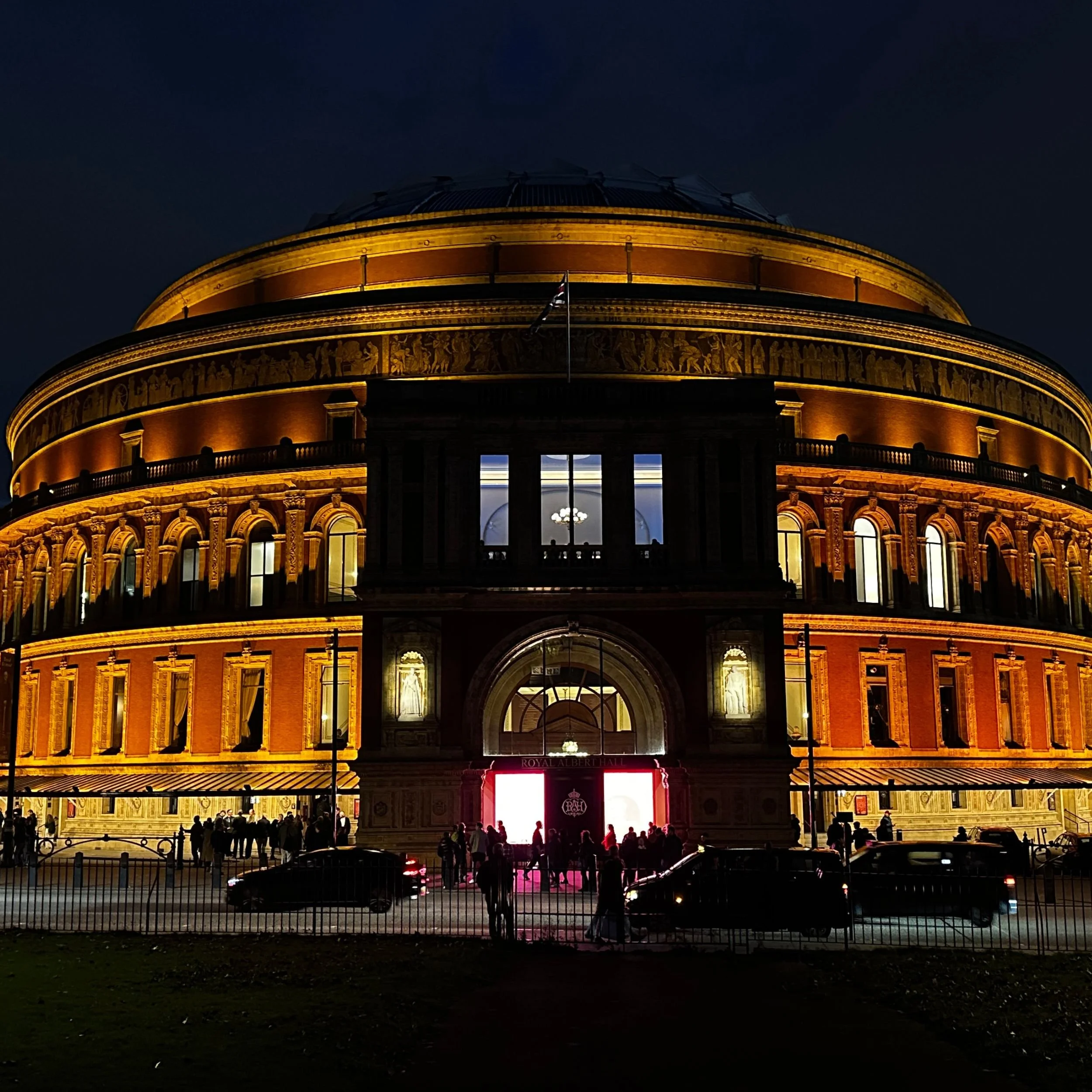
The Royal Albert Hall - Autumn 2024
For a grander concert experience we look to the Royal Albert Hall. An iconic entertainment venue that recently played host to a sell out week from David Gilmour. This beautiful building first opened in 1871 and has remained a popular venue ever since. Eric Clapton is the artist with the most concerts at this one location, headlining over 180 concerts across his career.
Hammersmith Odeon: Legendary Live Performance History
The Hammersmith Odeon (now operating as the Eventim Apollo) ranks as one of the capital's largest and most atmospheric concert venues. The room acts as a sacred space for David Bowie devotees, serving as the setting for the final, shocking Ziggy Stardust performance in July 1973, where Bowie announced the permanent retirement of his chameleonic stage persona.
In 2014, the art deco venue hosted Kate Bush for her historic Before the Dawn residency, marking her return to the live stage for 22 consecutive nights after a twenty-year absence. The building's beautiful exterior and classic marquee sign are also immortalized on the sleeve photographs of The Who's landmark rock opera, Quadrophenia.
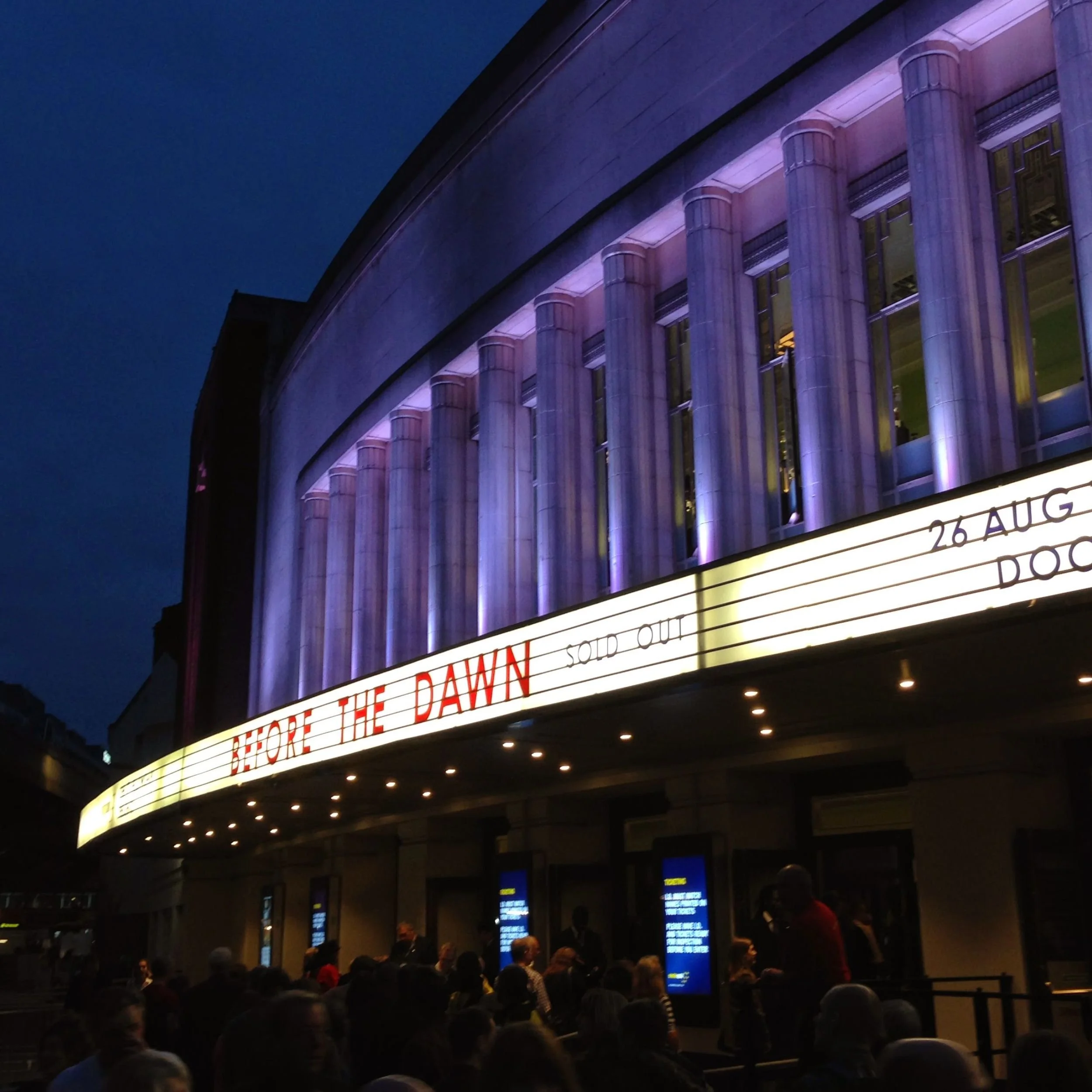
A sold out series of concerts at the Hammersmith Apollo
Hidden Folklore: From Chelsea Basements to Waterloo Sunsets
London's musical history is so dense that crucial landmarks frequently hide in plain view across diverse residential boroughs. In West London, the historic Troubadour Club on Old Brompton Road has hosted intimate acoustic and rock sets since 1954. It anchored the sixties folk boom, welcoming performances from John Martyn, Joni Mitchell, Led Zeppelin, and a young Bob Dylan performing under the pseudonym "Blind Boy Grunt" in 1962. The room was so influential that a visiting promoter from Los Angeles was incredibly impressed by the club, taking the name back to California to establish his own iconic West Hollywood venue.
To understand the grit that fueled the early British rhythm and blues movement, a trip south of the river to 102 Edith Grove in Chelsea reveals the infamous, squalid flat shared by Mick Jagger, Keith Richards, and Brian Jones in 1962. While there is little to see from the pavement today, this flat serves as the undisputed birthplace of the band's identity.
Chelsea holds even stranger chapters of pastoral music history just off the main drag; up until the mid-twentieth century, cows were still kept at the old Wright’s Dairy on Chelsea Manor Street to supply fresh milk to the King's Road. That very same dairy building was later transformed into the legendary Sound Techniques Recording Studio. Bypassing the more clinical commercial spaces of the era, the studio's warm acoustic rooms became a sanctuary for acoustic innovators and underground legends, capturing the fragile, timeless recordings of Nick Drake, early Pink Floyd, and Vashti Bunyan. You can read the full, fascinating history of the cows of King's Road and Sound Techniques over on The Vinyl Historian.
The city's geography even shapes the literary and lyrical landscape. Fans of classic track references can track down the former location of Lee Ho Fook restaurant in Chinatown—immortalized by Warren Zevon in "Werewolves of London" as the place where a werewolf was spotted with a Chinese menu in his hand. The site now operates as Dumplings Legend, located directly across the street from the original Ronnie Scott's jazz club plaque.
Similarly, the basement of the Hilton Hotel on Park Lane once housed the original Trader Vic's, where the chameleonic characters of Zevon's lyrics were spotted sipping piña coladas with their hair perfectly in place.
To bring a music tour of the capital to a perfect close, wait until the daylight starts to fade and walk out across the concrete span of Waterloo Bridge. As the sun dips below the Westminster skyline, you can look down upon the Thames, gaze on a Waterloo sunset, and experience the exact, timeless atmosphere captured in The Kinks' masterpiece.