10 Classic Albums Recorded in London
London has shaped some of the most important albums of the past sixty years. From the engineered clarity of Abbey Road Studios to the quiet corners of Sound Techniques in Chelsea, the city’s rooms and engineers helped define the sound of modern music. With so many classic albums to choose, we’ve picked ten of our favourites to showcase some of the great music that came out of the Capital.
Why London Became a Recording Capital
For much of the twentieth century, London offered a concentration of studios, engineers and session musicians unlike anywhere else in Europe. Labels invested heavily in purpose-built rooms. New technology often arrived here first. Artists could move between Abbey Road, Trident, Olympic, RAK and dozens of smaller spaces within a single day. The result was a city where ideas travelled quickly and where some of the most recognisable records in rock history took shape.
Our Pick of the Classic Albums
- The Beatles, Abbey Road (1969)
- Pink Floyd, The Dark Side of the Moon (1973)
- David Bowie, The Rise and Fall of Ziggy Stardust and the Spiders from Mars (1972)
- The Rolling Stones, Let It Bleed (1969)
- The Who, Quadrophenia (1973)
- Phil Collins, Face Value (1981)
- George Michael, Faith (1987)
- Joy Division, Closer (1980)
- Al Stewart, Year of the Cat (1976)
- Nick Drake, Five Leaves Left (1969)
Studio: Abbey Road Studios, St John’s Wood
A defining moment in British music. Recorded during the summer of 1969, Abbey Road was the last album the Beatles completed together. The polished tunes hide a period of strain within the band, yet the record sounds unified. The Moog synthesiser added new colour while George Martin’s engineering ensured remarkable clarity. George Harrison came of age as a songwriter, delivering two of their most loved songs - Here Comes the Sun (recorded in Eric Clapton’s garden) and Something, a love song to Pattie Boyd.
The Abbey Road crossing that features on the album cover continues to draw fans every day to this North London studio, one of London’s most significant musical landmarks. If ever there was a classic album associated with London, it would be this.

The Abbey Road crossing in November 2025
Studio: Abbey Road Studios
Still one of the biggest selling albums of all time, the ‘Eclipse sessions’ drew on everything Abbey Road could offer in terms of tape manipulation, vocal layering and controlled acoustics. The movie ‘live at Pompeii’ captures scenes of the band experimenting in the the Abbey Road studios.
The sales juggernaut catapulted the band to true global stardom and wealth. It paved the way for the creation of their own Brittania Row Studios where they recorded Animals and a shift to the South of France for much of The Wall.
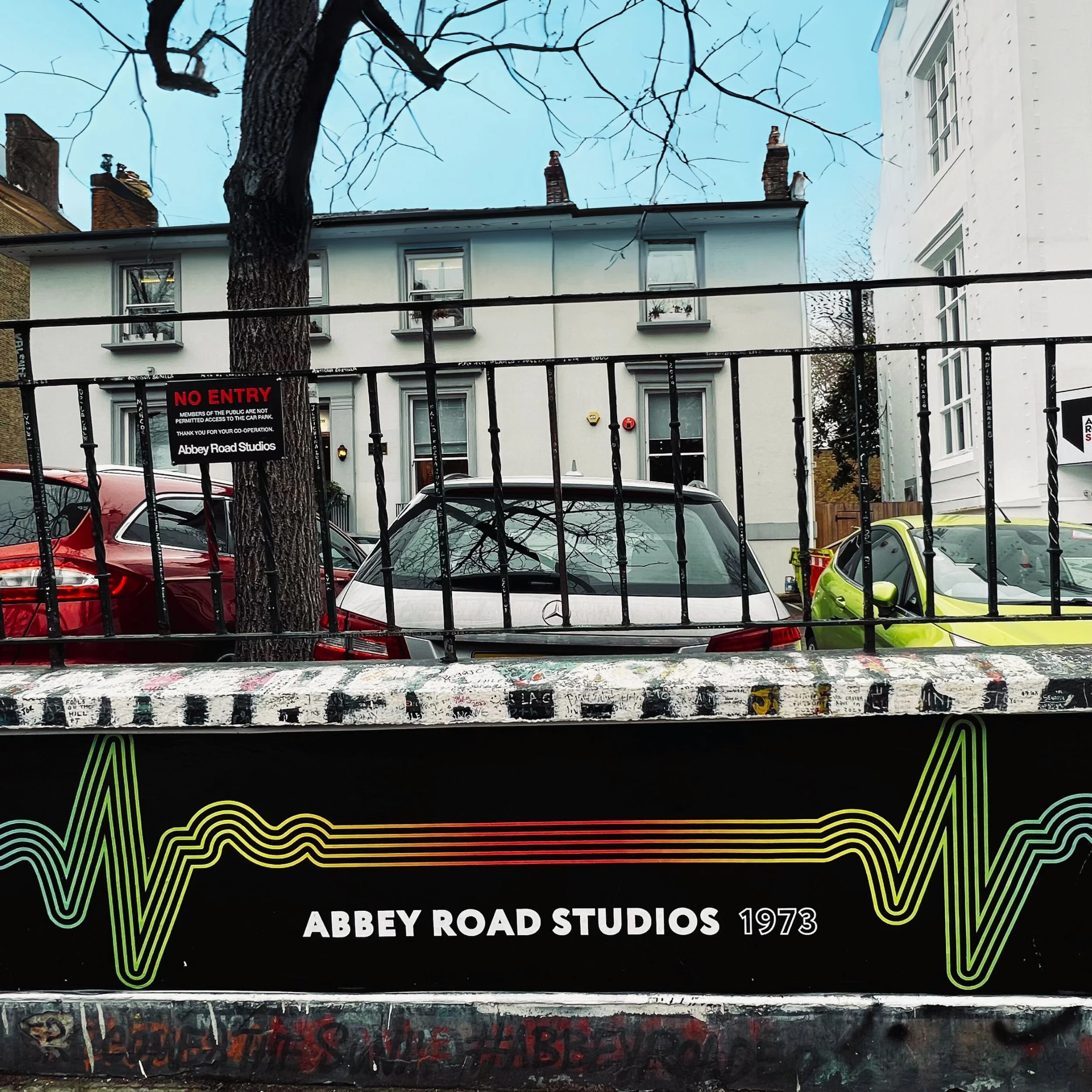
Abbey Road celebrating the Dark Side of the Moon
Studio: Trident Studios, Soho
Recorded over several late-1971 and early-1972 sessions, Ziggy Stardust is the album where Bowie’s songwriting, Ronson’s arrangements and the Spiders’ energy aligned. The record balances gritty, guitar-led tracks with moments of theatrical drama. Starman introduced the character to a wider audience. Moonage Daydream and Hang On to Yourself captured the immediacy of the band’s live sound. Rock and Roll Suicide brought the story to a close with a sense of finality that Bowie rarely revisited.
Trident Studios added the clarity Bowie was chasing during this period. The room was known for its high-end equipment, disciplined engineering and a brightness that suited Mick Ronson’s guitar tone and the precision of Trevor Bolder and Woody Woodmansey. Several takes were recorded quickly, which kept the album sharp and uncluttered.
Trident also sits at the centre of the album’s physical geography. It is a short walk from Heddon Street, where the cover photograph was taken, placing the Ziggy character directly into the London streets Bowie knew. Just steps away is the Marquee Club, one of the city’s most important rock venues. The Marquee later hosted the 1980 Floor Show and had already staged countless Bowie performances, including the final appearance of Ziggy Stardust in July 1973. The proximity of these locations ties Ziggy Stardust to a very specific corner of Soho that shaped Bowie’s early career.
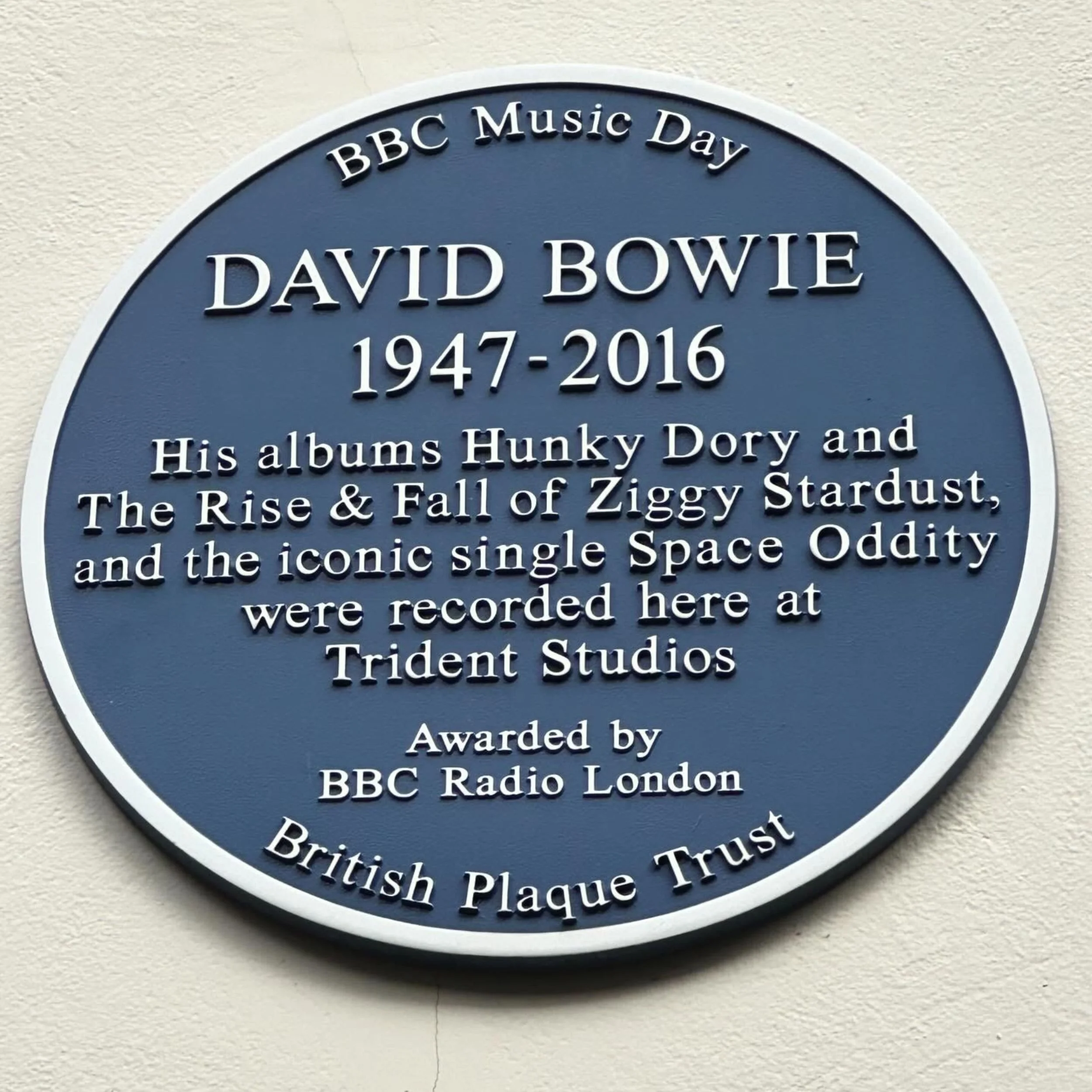
Located in St. Anne’s Court, Soho
Studio: Olympic Studios, Barnes
et It Bleed arrived at the end of a turbulent decade for the Rolling Stones and marked the start of their strongest run of albums. Recorded at Olympic Studios, it captured a darker, heavier sound that would carry the band into the seventies. Gimme Shelter set the mood with its apocalyptic opening. You Can’t Always Get What You Want closed the album with scale and ambition. Tracks like Midnight Rambler showed how the band were tightening their songwriting whilst Monkey Man remains an overlooked banger.
Let It Bleed also sits at a pivotal point in the band’s history. It was the last of their major sixties albums recorded fully in London before they shifted their base to warmer, less tax-punitive locations. Within a few years they would be working in the South of France, first at Olympic’s mobile unit and later at Villa Nellcôte for Exile on Main St. In that sense, Let It Bleed marks the end of their London studio era and the beginning of the creative run that would define the band’s seventies identity.
Quadrophenia is the Who at full scale. Pete Townshend had already explored the idea of a rock opera with Tommy, but here he built something far more grounded. The story of Jimmy, the disillusioned mod searching for identity along the English coast, gave the band a framework to write some of their most disciplined and emotionally charged music.
Most of the sessions took place at Ramport Studios in Battersea, a space the band built for themselves so they could work without interruption. The room allowed Townshend to layer brass, synths, guitars and sound effects with a precision that still feels impressive. The Real Me and 5:15 show the band at their most energetic. Bell Boy captured Keith Moon’s chaotic brilliance. Love Reign O’er Me brought the album to an enormous, cathartic close.
Olympic Studios played a supporting role, providing additional recording and a level of technical refinement the band trusted. The combination of Ramport’s freedom and Olympic’s engineering helped Townshend realise the scale of the project.
Quadrophenia also marked a turning point for the Who. It was the last album where the classic line-up worked together at their peak, and the last time they produced something this ambitious before shifting into a more straightforward rock direction. The album’s focus on British youth culture, the South Coast, Brighton and London nightlife places it firmly within the geography of the band’s formative years.
Face Value marked the beginning of Phil Collins’s solo career and quickly became one of the most recognisable albums of the early eighties. Although known for the explosive drum entry on In the Air Tonight, the record covers far more musical ground than a single moment suggests. The writing reflects a period of personal upheaval for Collins, but the production is confident and inventive.
Much of the album’s character comes from the Stone Room at The Townhouse. Its natural reverb shaped the drum sound that became a hallmark of the decade. The room allowed Collins to record drums with power and sharpness without relying heavily on effects, giving the album a sense of space that still feels distinctive.
There are quieter, more reflective moments too. The Roof Is Leaking features Eric Clapton on guitar, one of many Clapton/Collins collaborations in the Eighties. Across the record, Collins combined emotional songwriting with precise studio craft. Face Value set the mould for his solo sound and established The Townhouse as one of London’s most forward-thinking studios of the period. He’d return to record much of his next two albums. Queen would use the Townhouse to record Flash Gordon & A Kind of Magic with Freddie also using it to record Barcelona.
Studio: Sarm West Studios, Notting Hill
Faith marked George Michael’s shift from pop star to fully fledged songwriter, producer and multi-instrumentalist. He was familiar with Trevor Horn’s Notting Hill studio, recording the vocals for Careless Whisper (the rest of Make it Big was recorded in the South of France) and briefly popping in to record Do They Know it’s Christmas?
Working largely alone at Sarm West, often through the night, he shaped the album with a level of control that defined his solo career. Father Figure, One More Try and Kissing a Fool show how confidently he blended soul, pop and late-night introspection, with vocals layered and refined until they felt effortless.
Sarm West suited this approach. Its layout and equipment supported the kind of detailed, incremental work Michael was increasingly drawn to. The studio gave him the freedom to build tracks from the ground up, shaping every drum pattern, harmony line and keyboard part until the record felt complete.
Faith remains one of the key London-recorded albums of its decade, and a defining statement from an artist moving into full creative independence.
Studio: Britannia Row Studios, Islington
Closer is one of the most striking British albums of its era. Recorded at Britannia Row Studios in Islington, it captures a clarity and stillness that shaped the band’s sound in their final months together. Whereas Unknown Pleasures carried a darker, more abrasive energy, Closer feels stark and controlled. The production gives space to every part of the arrangement, which allows the emotional weight of the album to sit in plain view.
Isolation sets the tone with its sharp drum pattern and detached vocal. Twenty Four Hours is one of the band’s most powerful pieces, shifting from quiet reflection to a sudden, tightly wound intensity. The Eternal brings the album to a slow, uneasy close, supported by the studio’s clean acoustic environment. The precision of Pink Floyd’s Britannia Row studios helped the band create an album that feels suspended between calm and collapse.
Closer was both an ending for one group, and the beginning of another. Released two months' after Ian Curtis Suicide it would be the last album as Joy Division. Ahead lay New Order and global attention.
Year of the Cat is Al Stewart’s strongest and most enduring album, shaped by the polished production style that RAK Studios had refined throughout the mid seventies. Produced by Alan Parsons (who engineered the Dark Side of the Moon), the record pairs Stewart’s narrative writing with arrangements that feel spacious, melodic and quietly ambitious.
The title track became the album’s signature moment. Its long instrumental passages, shifting time feels and distinctive saxophone break set it apart from the prevailing singer-songwriter sound of the period. On the Border brought a sharper, rhythmic edge, while Lord Grenville showcased Stewart’s interest in historical storytelling.
RAK Studios played a central part in the album’s clarity. Founded by producer Mickie Most, RAK had quickly established a reputation for clean, detailed recordings. The room’s balanced acoustics helped Parsons build layered arrangements without crowding the mix, keeping Stewart’s vocal at the centre with guitars, piano and saxophone arranged naturally around it.
Year of the Cat remains closely associated with RAK’s mid seventies output and stands as one of the clearest examples of how a London studio could shape the character of a singer-songwriter record.
Sound Techniques on London’s Sloane Street
Five Leaves Left introduced a voice that felt out of step with the late sixties and has only grown in stature since. Recorded at Sound Techniques, off Sloane Street in Chelsea, the album paired Nick Drake’s quiet intensity with arrangements that were carefully shaped rather than grandly presented. The studio’s warm, natural acoustics suited Drake’s soft guitar style, allowing every note to sit clearly in the mix without losing its intimacy.
River Man remains one of his most distinctive recordings, built around a winding string arrangement that sits in gentle contrast to Drake’s calm vocal. Cello Song and Three Hours show the influence of the room itself, capturing the late night quality that became a hallmark of Drake’s early work. Engineer John Wood and producer Joe Boyd kept the sessions focused on clarity and performance, giving the album a tone that feels close and unforced even decades later.
Sound Techniques was a small room, but it became central to the English folk sound of the period. Five Leaves Left stands among its finest achievements and remains one of the most quietly influential albums ever to come out of a London studio.
London’s Recording Rooms and Their Influence
These ten albums show how much of modern music was shaped in a relatively small group of London studios. Abbey Road refined the clarity of classic rock. Trident pushed artists towards sharper, more precise arrangements. Olympic captured the Stones at the turning point between their sixties and seventies identities. RAK helped bring a new polish to British singer-songwriting. Sound Techniques offered intimacy when the rest of the period was heading towards scale.
Each room had its own character, its own engineering style and its own circle of artists who relied on it. Together they form a map of how music moved through the city, from St John’s Wood to Chelsea and across the wider London landscape. Whilst some iconic studios, not least Abbey Road, remain many have closed. The advent of easy mobile recording has opened up the opportunity to record almost anywhere. From a houseboat on the Thames to a country house outside Bath we may never again associate locations with albums, which is a shame.