In Search of the Division Bell
A first-hand journey into the Cambridgeshire Fens to pinpoint the location of Pink Floyd’s The Division Bell album cover, exploring where the iconic heads once stood, why Ely Cathedral mattered, and how the landscape still holds the image together today.
Between Christmas and New Year 2025, we returned to the Cambridgeshire Fens to revisit one of the most recognisable images in rock history. With The Division Bell by Pink Floyd firmly in mind, we headed towards Ely to stand in the landscape where its album cover was created. On an overcast winter morning, the Fens revealed themselves exactly as the photograph suggests: flat, open, and expansive, with Ely Cathedral rising from the horizon.

Checking the Division Bell Album Cover for the right location
For Pink Floyd’s penultimate studio album, Storm Thorgerson, working independently but credited under the Hipgnosis name, chose Ely Cathedral as the visual anchor for the sleeve. Two giant heads (or is it one?) were constructed and placed in a field, carefully aligned so that the Cathedral appeared in the space between them.
In total, four different versions of the cover were created – two with stone heads, and two with iron heads.

Replica ‘Heads’ - with the author’s head
Where Was the Division Bell Album Cover Photo Taken?
The Division Bell album cover was photographed in the fields off Quanea Drove, on the western outskirts of Ely, in the Cambridgeshire Fens.
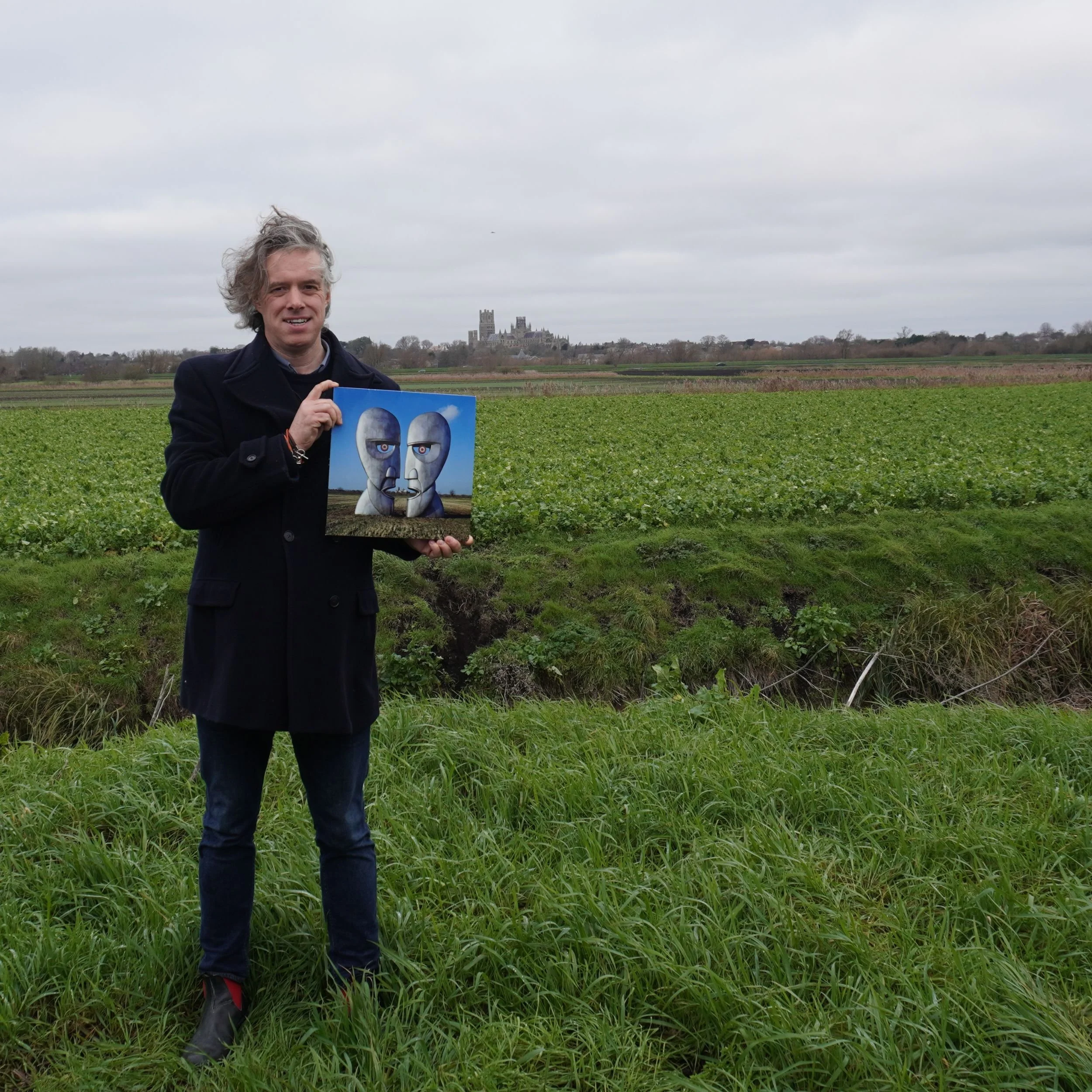
The Division Bell Album Cover Location, Ely Cambridgeshire
The famous cover shot was staged in open agricultural land just outside Ely, with the sculptures fabricated by John Robertson to a concept devised by Storm Thorgerson, credited under the Hipgnosis name. By positioning the opposing heads so they appeared to face one another, with Ely Cathedral framed in the gap between them, the photograph balanced the monumental and the personal, turning a quiet English landscape into one of rock’s most enduring images.
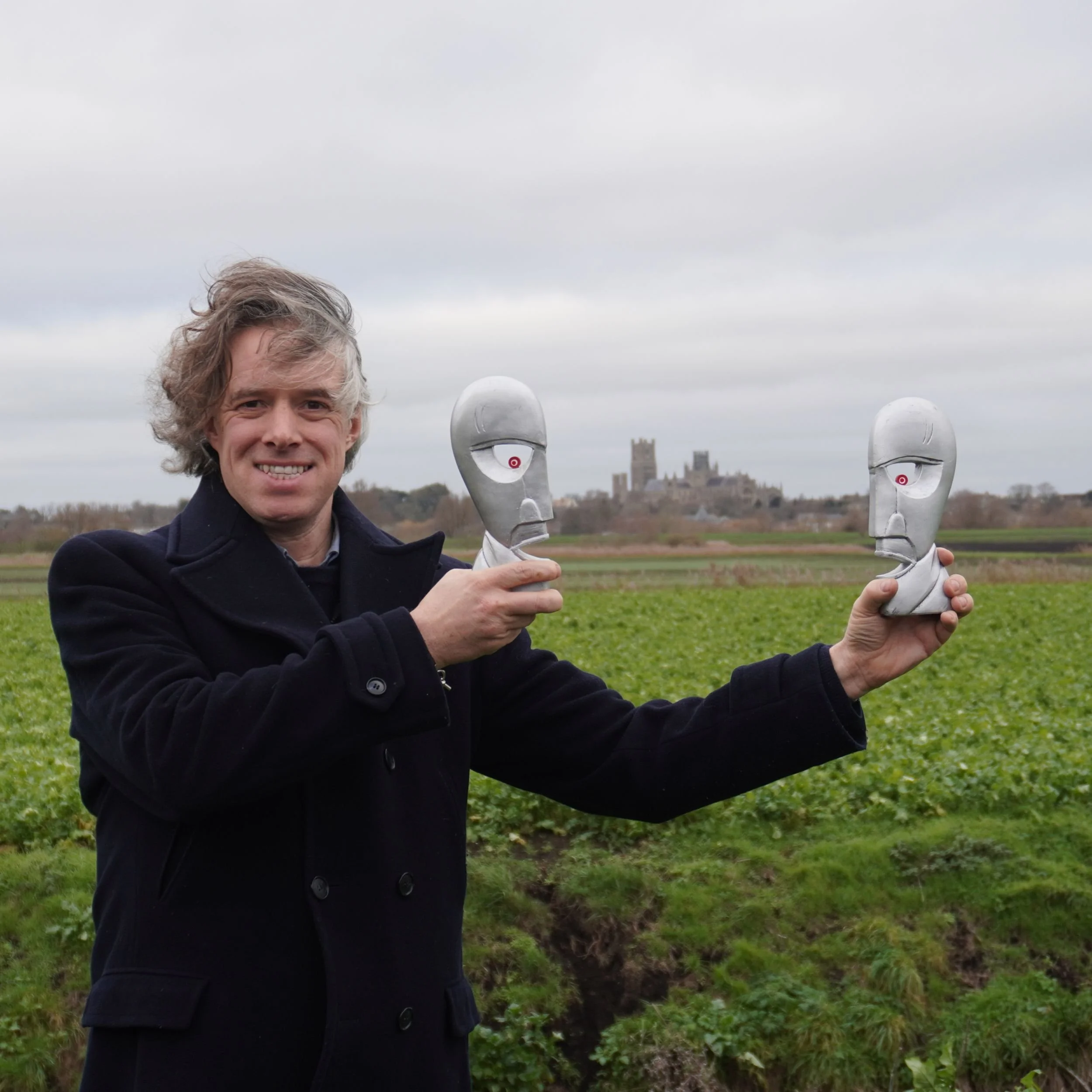
Replica Division Bell Heads with Ely Cathedral between them - December 2025
Earlier suggestions place the shoot along the A1122, driving east from Stretham, an idea referenced by David Roberts in Rock Atlas. Having visited the area, that location feels too distant. At that range, the cathedral loses its visual weight, and the surrounding land is broken up by roads, drainage features, and modern clutter that simply do not appear in the original photograph.
Visiting Quanea Drove, just outside Ely, makes the composition immediately clear. The land here is dead flat fenland, uninterrupted to the horizon, with no pylons, hedgerows, ditches, or roads breaking the skyline. The field is purely agricultural rather than suburban edge land, and crucially, it sits close enough to Ely Cathedral for the building to retain its mass and presence relative to the sculptures.
On the ground, the fields off Quanea Drove align precisely with the scale, openness, and sightlines of the original photograph, allowing us to confidently identify them as the location of the Division Bell head sculptures for the album cover.
How to Visit the Division Bell Album Cover Location
The Division Bell album cover was photographed in open fenland fields off Quanea Drove, just west of Ely.
Approach via the A142, turning onto Quanea Drove. At the first bend there is space to pull in safely and turn around. From this point, you can clearly see the landscape used for the album cover shoot and understand the original sightlines towards Ely Cathedral.
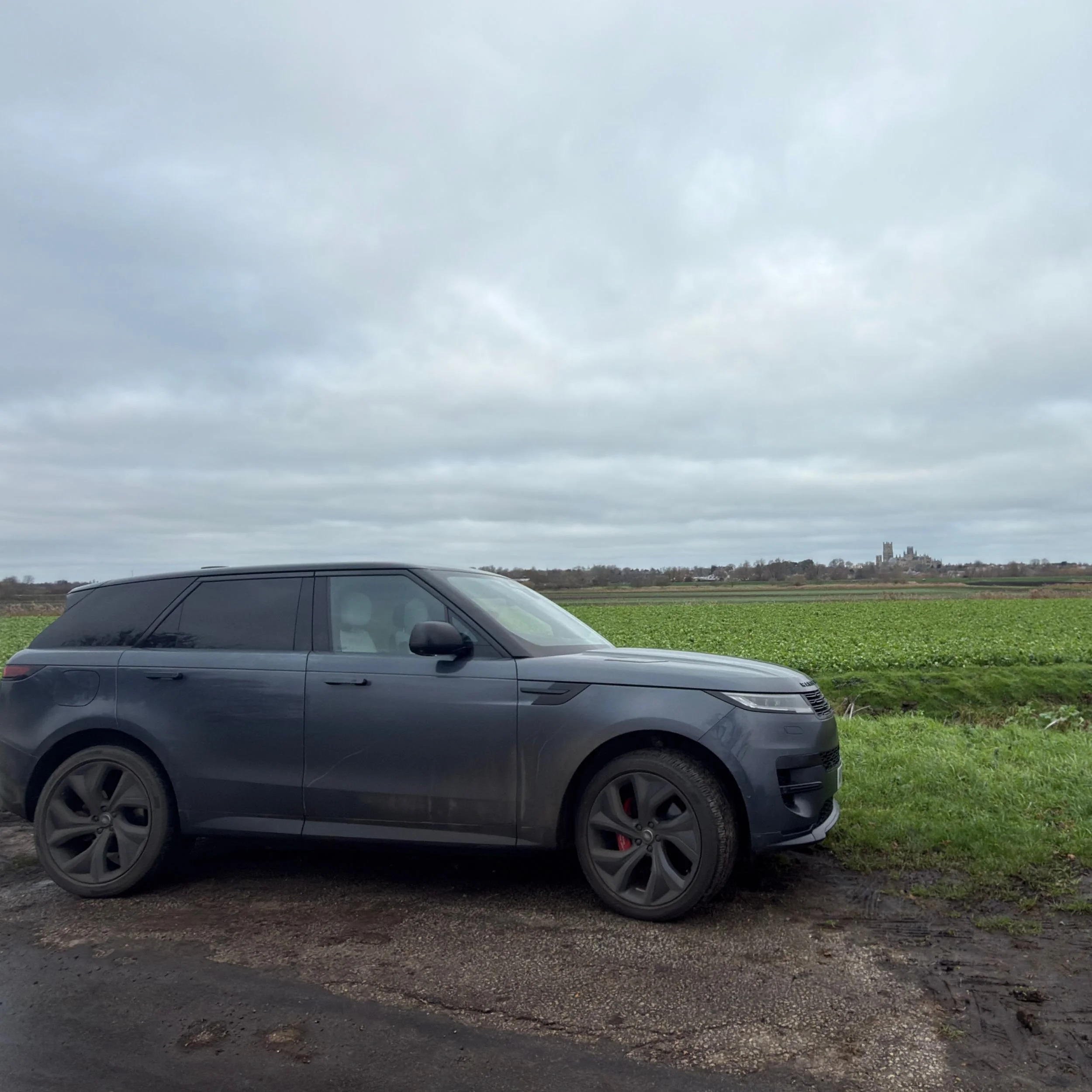
Space to park and take pictures of Ely Cathedral on Quanea Drive
The original photographs were taken in the fields themselves, which are private farmland. Please do not enter the fields and be mindful of the large drainage ditch that runs between the road and the land.
What3Words location:
Use the map below to orient yourself on Quanea Drove and identify the viewing point from the roadside.
What Does the Division Bell Mean?
The original “Division Bell” itself has nothing to do with Ely. That bell can be found in the Houses of Parliament, where its chimes once signalled Members of Parliament to vote.
The overarching theme of the album is communication – or the lack of it. Nick Mason described it as people making choices, “the yays or the nays.” Many listeners read it as a commentary on the fractured relationship between David Gilmour, Richard Wright, Nick Mason and their former bandmate Roger Waters.
Songs such as Poles Apart and High Hopes circle around distance, memory, and disconnection. The heads on the cover echo this idea: two faces locked in silent confrontation, yet also forming one.
Where are the Division Bell heads now?
The original Division Bell head sculptures are not permanently on public display, and their current location is unclear.
After the album’s release, the metal heads were exhibited at the Rock and Roll Hall of Fame in Cleveland, before later appearing at the Victoria and Albert Museum as part of the Pink Floyd exhibition Their Mortal Remains. That exhibition has since toured internationally, including a recent run in Buenos Aires.
Since then, no confirmed permanent home for either the metal or stone versions of the heads has been announced. Like many large-scale works created for album photography, they appear to exist primarily as exhibition pieces, resurfacing occasionally rather than occupying a fixed location

The Division Bell Metal Heads at London’s ‘Their Mortal Remains’ exhibition
If tracing the physical places behind iconic music images appeals, there are other landscapes worth seeking out. Solsbury Hill is inseparable from the hillside above Bath that inspired it, while the video for Cloudbusting was filmed around the Uffington White Horse, Dragon Hill, and the nearby Wayland’s Smithy. The landscape here has changed little for centuries, making it easy to recognise where many of the scenes were shot. Like the fields outside Ely, these places show how music, image, and location can remain quietly intertwined long after the moment has passed.