5 of the the Most Beautiful Restaurants in Paris
Paris has no shortage of restaurants, but only a few offer the combination of history, presence and architectural detail that define the city’s great dining rooms. This is a curated selection based on where we have eaten and where we plan to go next. Two of these restaurants are familiar to us from past visits. The remaining three sit high on our list for a future trip.
An introduction
Parisian dining is often described through trends, yet the restaurants that hold our attention tend to be the ones with history in their walls. Rooms built for the Belle Epoque, brasseries shaped by decades of regulars, and places where the design still carries the original ambition.
We have eaten twice at Le Train Bleu and enjoyed a memorable evening at Le Cinq. Maxim’s, La Fermette Marbeuf and Brasserie Fouquet’s are three classics we have not yet visited, but they are firmly on our list for an upcoming trip.
This selection brings together first-hand experience with the places we view as essential for anyone interested in the most beautiful dining rooms in Paris.
5 of the the Most Beautiful Restaurants in Paris
Le Train Bleu, Gare de Lyon
Bofinger, Bastille
Le Cinq, Four Seasons George V
Brasserie Fouquet’s, Champs Élysées
Maxim’s, Rue Royale
Le Train Bleu, Gare de Lyon
Le Train Bleu is one of the most recognisable dining rooms in Paris. Opened in 1901 for the Exposition Universelle, it sits above the platforms at Gare de Lyon, yet once inside, the station falls away entirely.

Le Train Bleu
The ceilings rise high above the room, covered in frescoes that depict romanticised scenes from across France. Gilded plasterwork frames each panel, and the chandeliers cast a soft, golden light across the linen and polished brass below. The space unfolds across several adjoining rooms, each with its own rhythm, but all sharing the same Belle Epoque grandeur. Wood-panelled booths, etched mirrors and deep navy runners contribute to the sense that this was once part of the journey south to the Riviera.
].his is a restaurant where dressing up feels appropriate, though you will see everything from suits to worn band T-shirts. The room accommodates both without losing its identity.
Although this article focuses on the beauty of each dining room rather than the food itself, a few plates are worth mentioning. The white asparagus is a seasonal highlight when available, served simply and allowing the produce to speak for itself. The crab salad pairs fresh, sweet crab with a crisp, golden preparation. Main courses such as roast lamb, sea bass or the classic fillet of beef keep to tradition. The crepes Suzette prepared at the table brings a welcome sense of theatre.
Le Train Bleu remains a time capsule of the Belle Epoque, yet it still feels alive rather than preserved. Few restaurants in Paris offer such scale, history and atmosphere in one place. It earns its place on any list of the city’s most beautiful dining rooms.
https://www.le-train-bleu.com/en/
Gare de Lyon, Pl. Louis Armand hall 1, 75012 Paris, France
Bofinger, Bastille
Bofinger is often described as the Alsatian brasserie of Paris, but it earns its place here for one reason above all: the stained-glass dome. Step inside from the bustle of Bastille and the room opens up around you, with curved banquettes, polished wood, mirrored walls and a ceiling that lifts your gaze before you have even sat down. It feels like entering a different era, quieter and more deliberate, where white tablecloths and soft lighting still mean something.
Founded in 1864, Bofinger is one of the city’s oldest brasseries, and much of its charm comes from the way the room has been preserved. The stained glass throws a warm, honeyed glow across the space, giving even a weekday lunch the feel of an occasion. It is a large restaurant, but the layout of booths, partitions and mirrors keeps it intimate. Conversations seem to soften the moment you arrive.
The menu leans towards the Alsatian classics the brasserie is known for, including choucroute, snails, razor clams, onion soup and flammekueche. There is also plenty for the pescetarian or lighter eater. Dishes such as parsnip velouté, endive and clementine salad, razor clams in parsley sauce or shellfish platters offer variety, and the seafood section is surprisingly broad. The menu is not designed around spectacle. It fits the room by offering comfort, choice and tradition.
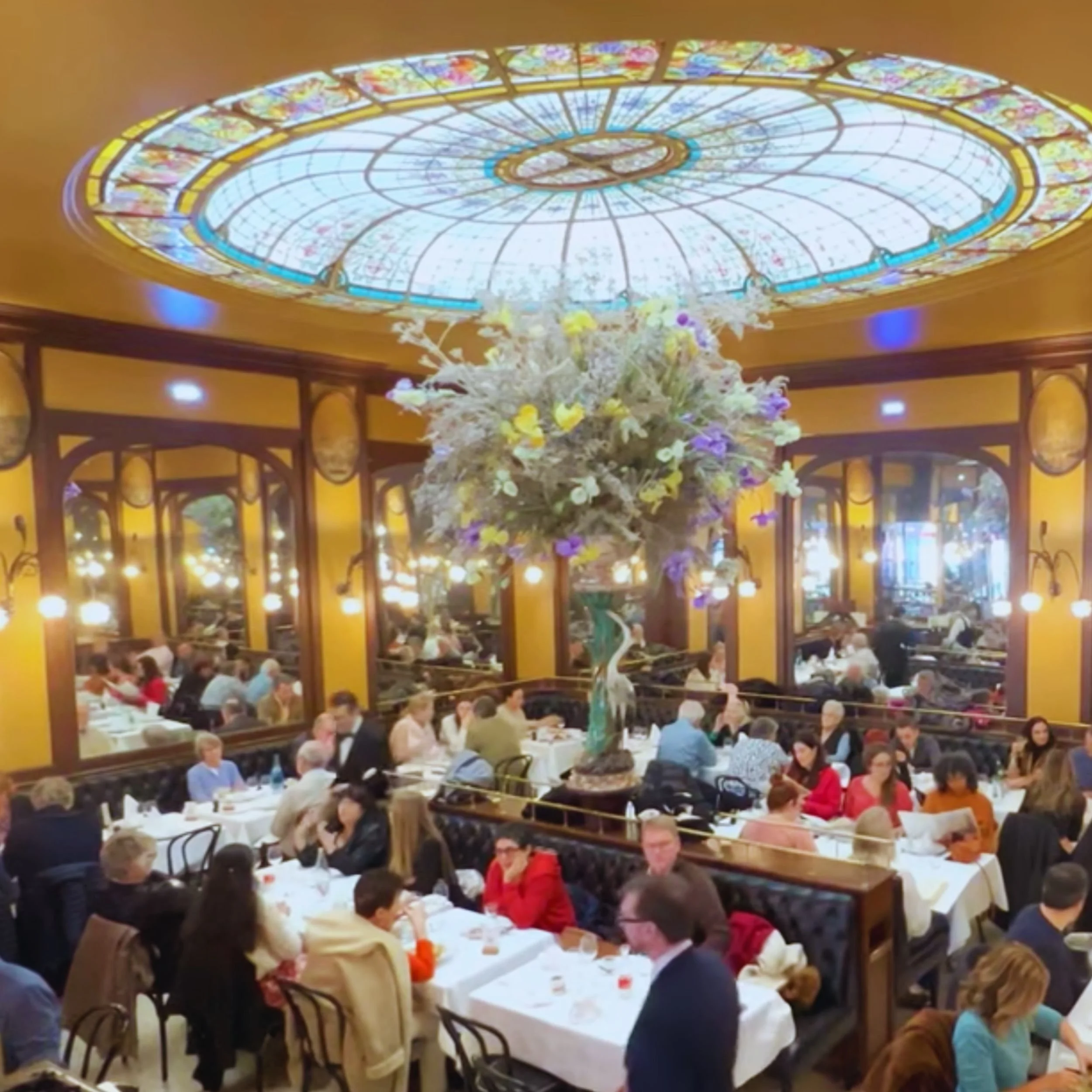
For such a beautiful Paris restaurant, it is hard to find a good picture!
Bofinger has no formal dress code, but the surroundings naturally encourage you to make a little effort. A jacket feels right, though you will not be out of place without one. Think of it as a beautiful lunch or dinner in a historic room, a chance to step slightly above the everyday without tipping into formality.
Bofinger may not have the theatrical sweep of Maxim’s or the railway setting of Le Train Bleu, but it has a character all its own. A brasserie with heritage, atmosphere and one of the most beautiful ceilings in Paris.
https://www.bofingerparis.com/en/
5-7, rue de la Bastille 75004 Paris
Le Cinq, Four Seasons George V
We have eaten at Le Cinq, and it remains one of the most refined dining rooms we have experienced in Paris. You arrive from the street into the golden calm of the George V, where the flowers are sculptural, the lighting soft and the service quietly attentive from the first moment. Inside the restaurant, the room opens into soft golds, mirrors and a gentle palette that feels warm rather than grand.
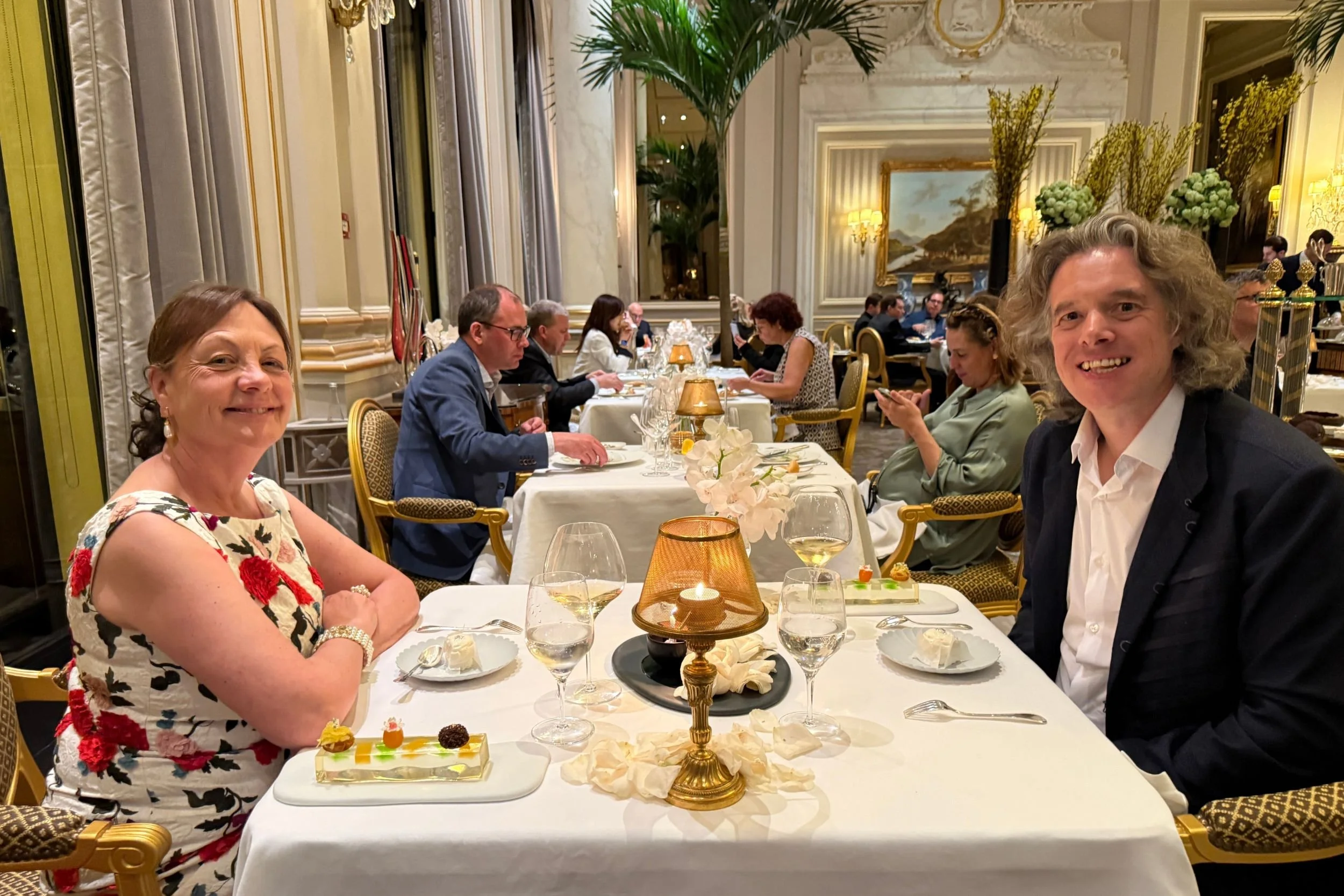
Dinner for two at Le Cinq
Le Cinq does not have the architectural drama of Le Train Bleu with its frescoed ceilings, nor the intimate, glass-lit theatre of Maxim’s. What it does have is a quieter kind of beauty. The walls are decorated with subtle detail, the floral arrangements are generous without dominating the space, and the accents throughout the room bring an understated elegance that suits the style of the hotel. Tables are spaced with intention, which gives the room a calmness that many Michelin settings cannot match. Nothing feels crowded or over-orchestrated. You can talk, take photographs, enjoy the moment and still feel entirely at home.
Our dinner was à la carte, which allowed us to choose freely rather than follow a set tasting sequence. The menu changes with the season, but the balance remains consistent. A mix of seafood, vegetables and classic French dishes, each delivered with precision and a light hand.
Little Treats after dinner at Le Cinq
Le Cinq earns its reputation through more than technique. The atmosphere is warm, the staff perceptive and the sense of occasion builds naturally throughout the evening. It is a dining room where refinement comes from ease rather than spectacle. For a more detailed review of Le Cinq, including the menu, service, price and dress code, take a look at our full write-up.
https://www.fourseasons.com/paris/dining/restaurants/le_cinq/
Le Cinq at The Four Seasons 31 Av. George V, 75008 Paris, France
Brasserie Fouquet’s, Champs Élysées
Fouquet’s has been part of the Champs Élysées for more than a century. The red awnings remain one of the defining sights of the avenue, and the dining room continues that same palette with deep red armchairs, polished wood and soft lighting. The room feels intimate despite its profile, with black and white portraits of actors and filmmakers marking its long connection with French cinema. Although you can sometimes secure a table on the terrace, it is worth booking ahead to experience the dining room itself.
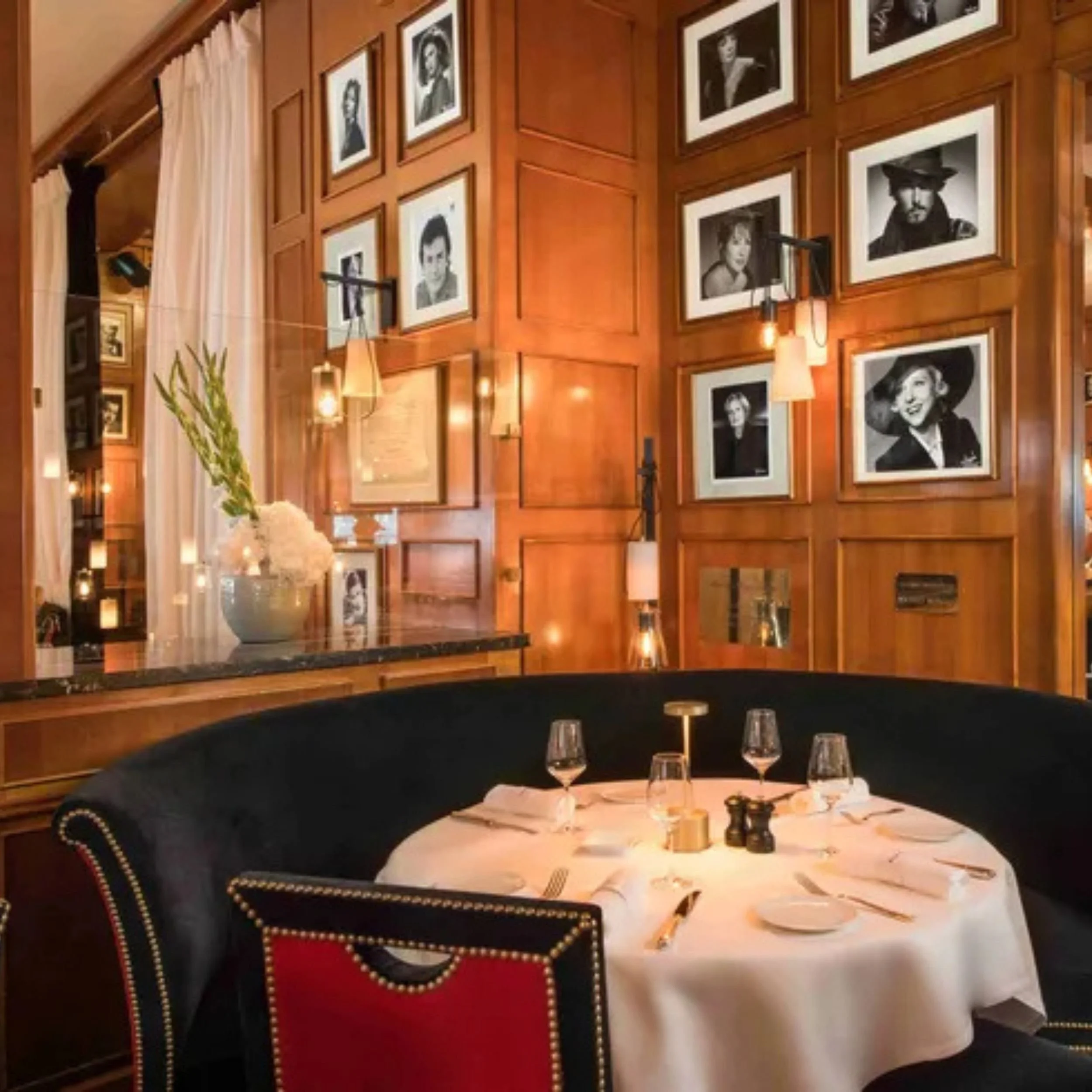
Foquet’s Wood Panelled Dining Room
Listed as a Historic Monument since 1990, Fouquet’s has hosted more than 120 years of dinners, premieres and late-night conversations. The brasserie forms part of the Barrière Group, whose properties include the Hôtel Barrière Le Majestic in Cannes, a link that brings a touch of Riviera culture into the heart of Paris. In the capital, though, we prefer to stay elsewhere. Le Sofitel Paris Le Faubourg and Hôtel de la Place Madeleine remain our hotels of choice, both offering a calmer base within easy reach of the Champs Élysées.
The menu mixes brasserie favourites with a few indulgent touches. Caviar is offered in several sizes, from a small tasting to a full 100 g of Prunier Osciètre served with blinis, egg, chives and crème épaisse. Starters include burrata with cherry tomatoes, a poêlée of mushrooms with a poached egg and a classic soupe à l’oignon. Vegetarians have solid options such as roast gnocchi with sage cream, linguine with confit tomatoes or a combination of céleri, truffe and châtaigne. Seafood plays a strong role, from a simple pavé of salmon with Tom Yum to Saint-Jacques served in their shell or a sole meunière finished at the table. Meat dishes include the hand-cut beef tartare with frites, a Wagyu cheeseburger, veal Milanese with linguine and larger cuts such as the one kilogram côte de bœuf. Desserts stay close to tradition, with millefeuille, profiteroles, crepes Suzette prepared at the table and a plate of pâtisseries.
Fouquet’s is not the most extravagant dining room in Paris and certainly not the cheapest, but it has a presence that comes from history and identity. A room shaped by culture, craft and more than a century of Parisian life.
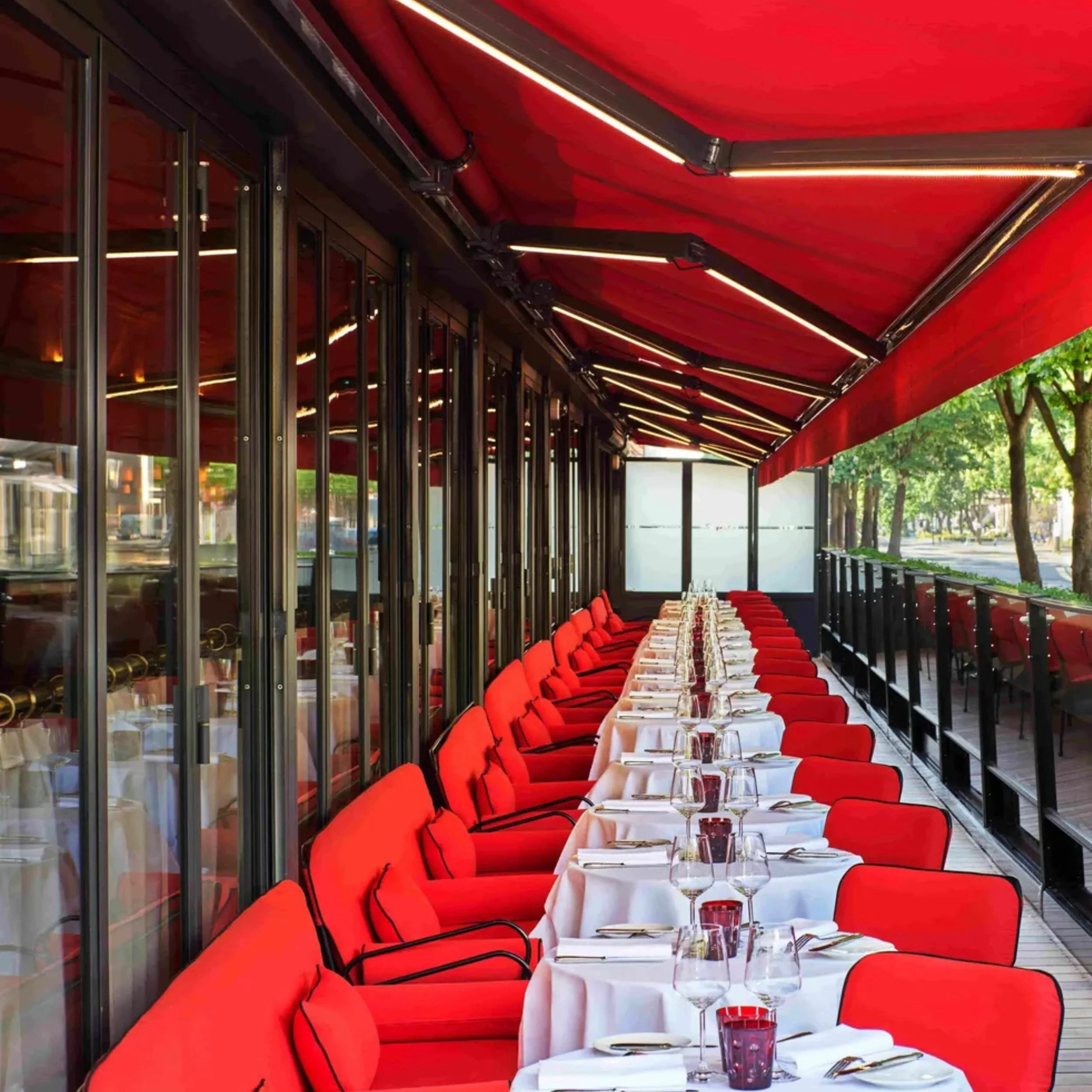
The iconic red chairs of Foquet’s Terrace Dining Tables
Dress code at Fouquet’s is informal. It is officially a brasserie, which means there is no formal requirement. Smart casual works comfortably, especially if you sit on the terrace. The main dining room, however, feels like an occasion. A jacket or a well-chosen shirt works well, and most diners take the opportunity to dress a little more thoughtfully.
https://www.hotelsbarriere.com/en/
99 Av. des Champs-Élysées, 75008 Paris, France
Maxim’s
Maxim’s is one of the last true Belle Epoque dining rooms in Paris. Walk through the door on Rue Royale and you step into a world of polished wood, mirrored panels and deep red velvet. The staircase, with its floral carpet and curving wrought iron balustrades, introduces the mood. The dining room is darker and more theatrical, with etched glass ceilings, gold-leaf details and lamps that cast a warm red light across the tables. It feels like a salon more than a restaurant, a place where you easily while away a few enjoyable hours.
Maxim’s history is well documented and often repeated, but it matters because it shapes the atmosphere today. Before you arrive, generations have already passed through. La Belle Otero, Proust, Cocteau, Gainsbourg and Birkin. Actors, writers, artists and the curious. Stories of jewellery found in banquettes and evenings that blurred the line between dinner and performance.
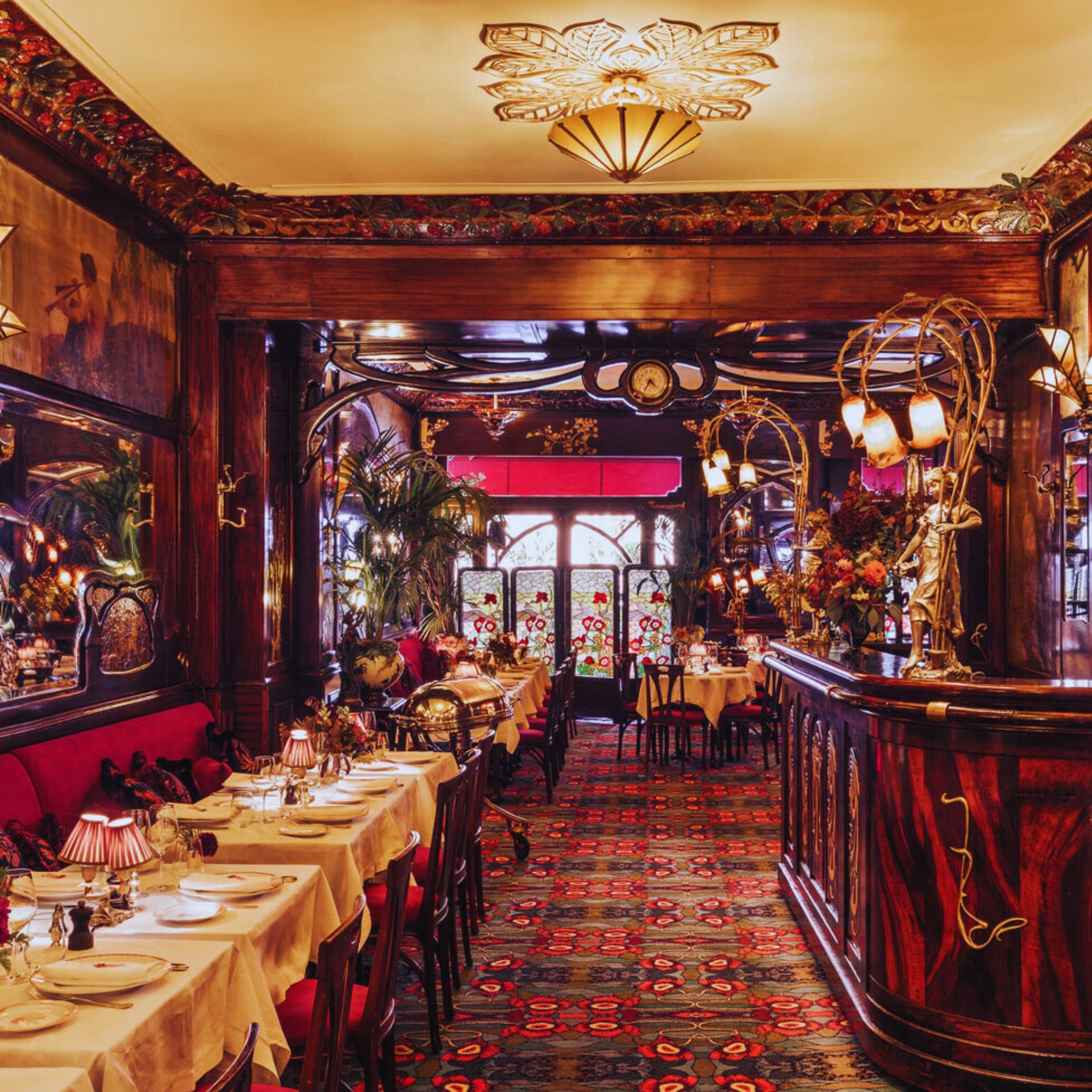
Inside Maxim’s Restaurant
The menu leans towards classic French cooking with an emphasis on mushrooms, truffles and seasonal produce. This suits us well as one carnivore and one pescetarian. There are warm leeks with truffled vinaigrette, a mushroom tart, oysters with green apple and caviar, scallops, lobster salad and an oeuf parfait with mushrooms and smoked bacon. Mains include sea bass with cockles and mushrooms, lobster with autumn vegetables, a mushroom vol-au-vent and a veal blanquette. The linguine with 30 g of caviar is one of the more indulgent choices. The Rossini-style bluefin tuna offers something substantial without tipping into steak territory. For our own visit, the whole sole à la grenobloise stands out as a dish worth considering. Desserts follow a traditional pattern, with crepes Suzette, floating island, crème brûlée, profiteroles, Mont Blanc and vacherin.
The dress code at Maxim’s is simple. Guests are asked to dress with respect for the room. It is neither formal nor restrictive, just considered. A small effort feels natural, particularly in the evening.
https://restaurant-maxims.com/
3 Rue Royale, 75008 Paris, France
Beauty on a Budget
Paris has many more restaurants with history and character, and not all require a grand setting or a long reservation. Some of the most atmospheric rooms sit quietly on street corners and boulevards, offering velvet, mirrors and soft lighting without the price tag.
Café Ruc, on Rue Saint-Honoré opposite the Comédie-Française, is one of our favourites for a simple lunch in a room that still feels elegant. Deep velvet seating, mirrors and a warm palette make it an easy choice in the 1st arrondissement.
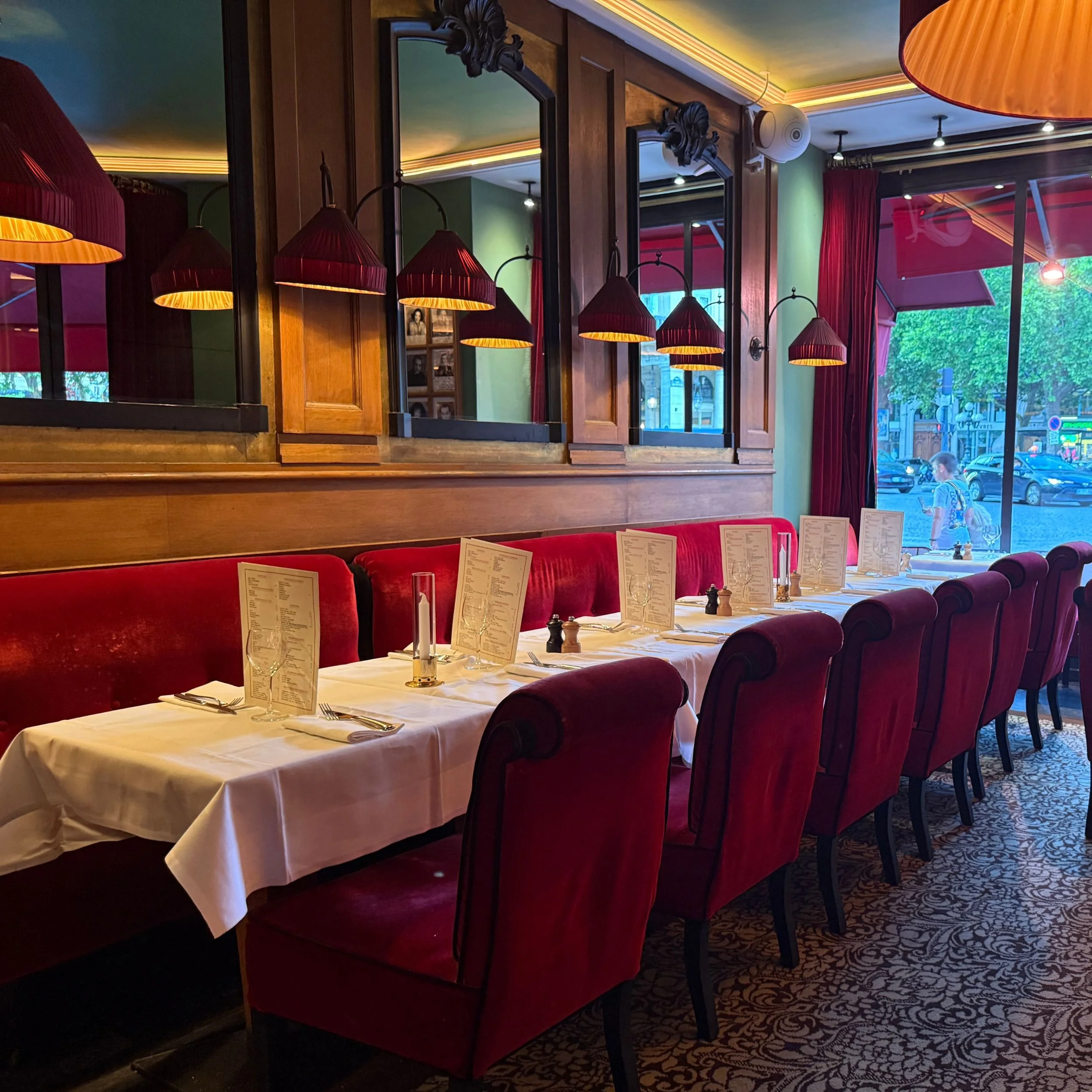
Inside Café Ruc
159 Rue Saint-Honoré, 75001 Paris, France
Grand Café des Capucines, close to Opéra, retains elements of its Art Deco sparkle even after its modernisation. The mirrored ceiling grid, patterned fabrics and warm lighting give it a lively, polished feel. It works well for a relaxed dinner before or after a performance.
Amelie’s Cafè - Café des Deux Moulins, made famous by the film Amélie, is full of character. The interior keeps much of the look from the film, with coral-red booths, chrome details, vintage mirrors and the large oval Amélie poster above one of the banquettes. It is informal, busy and entirely unpretentious, and it holds a small but important piece of Parisian pop culture.
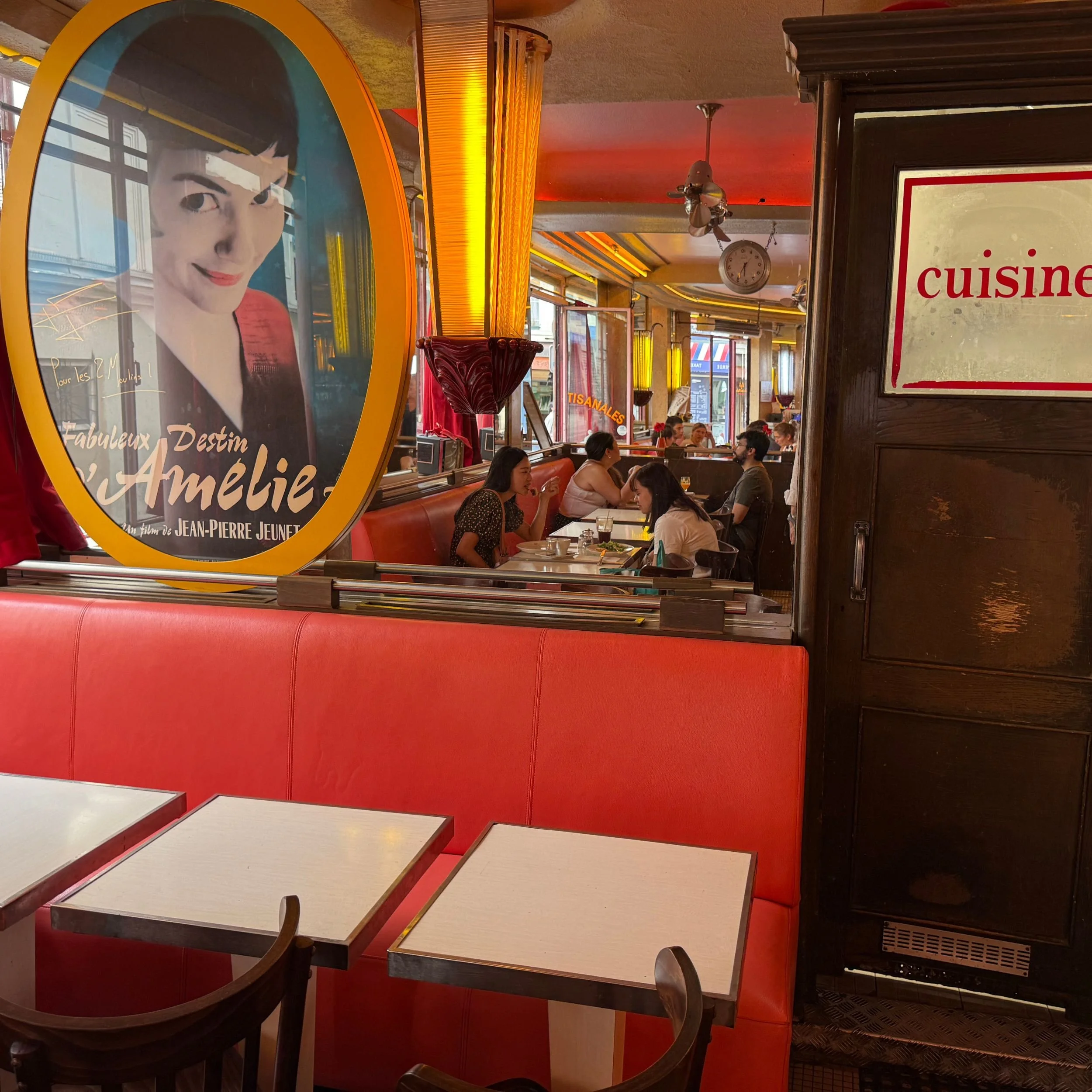
Inside the Amelie Café
https://www.cafedesdeuxmoulins.com/
15 Rue Lepic, 75018 Paris, France
For future dinners…
Paris has many more restaurants with history and character. Lipp, Bouillon Racine and Au Petit Riche all deserve attention, and we plan to include them in future trips. For now, these five represent the combination of architecture, atmosphere and heritage that make a dining room worth seeking out.