Our 10 Favourite Movies That Truly Capture Paris
Paris has inspired countless films, but not all of them really feel rooted in the city. Some simply pass through. Others rely on a polished idea of Paris rather than the place itself.
This list is more personal than definitive. These are films that let you spend time in Paris properly, on its streets, its bridges, in its cafés, apartments, bookshops and Métro stations. Some are romantic, some restless, some funny, and some quietly bruised. Together, they show a city that can feel elegant, intimate, chaotic and full of possibility.
If Paris on screen leaves you wanting more French film locations, continue with our guide to the best movies set in the South of France.
Ten Movies Capturing Paris
À bout de souffle / Breathless (1960)
Before Sunset (2004)
Amélie (2001)
Les Amants du Pont-Neuf / The Lovers on the Bridge (1991)
Le Week-End (2013)
Subway (1985)
Frantic (1988)
Intouchables (2011)
The Da Vinci Code (2006)
C’était un rendez-vous (1976)
À bout de souffle/Breathless (1960)
Jean-Luc Godard’s New Wave classic follows Michel, a small-time criminal on the run, and Patricia, the American student he tries to persuade to leave Paris with him. Jean-Paul Belmondo and Jean Seberg give the film its cool, unsettled centre.
What makes it belong here is the way Paris feels loose and alive around them. The Champs-Élysées, the hotel rooms, the streets and the cafés are not just background. They are part of the film’s pulse. This is one of the essential screen visions of modern Paris.
Before Sunset (2004)
Richard Linklater’s follow-up to Before Sunrise reunites Jesse and Céline nine years later for one afternoon in Paris. Ethan Hawke and Julie Delpy carry almost the entire film through conversation alone.
It is one of the finest films here for simply letting the city breathe. They walk, talk, drift and pause, and Paris moves with them. Bookshops, riverbanks, cafés and side streets all shape the mood. If you want a film that really spends time in Paris rather than merely pointing at it, this is one of the best.
Amélie (2001)
Audrey Tautou plays Amélie Poulain, a shy young woman who quietly interferes in the lives of others while edging towards a romance of her own. Mathieu Kassovitz plays Nino, the equally eccentric object of her affection.
This is perhaps the most stylised Paris on the list, and it earns its place because it remains so deeply tied to Montmartre. Its cafés, stairways, métro entrances and backstreets give the film its unmistakable charm. Even people who have never been to Paris tend to feel they know this version of it. Visitors to the city can experience the ‘Amelie Café’ and make your own memories.
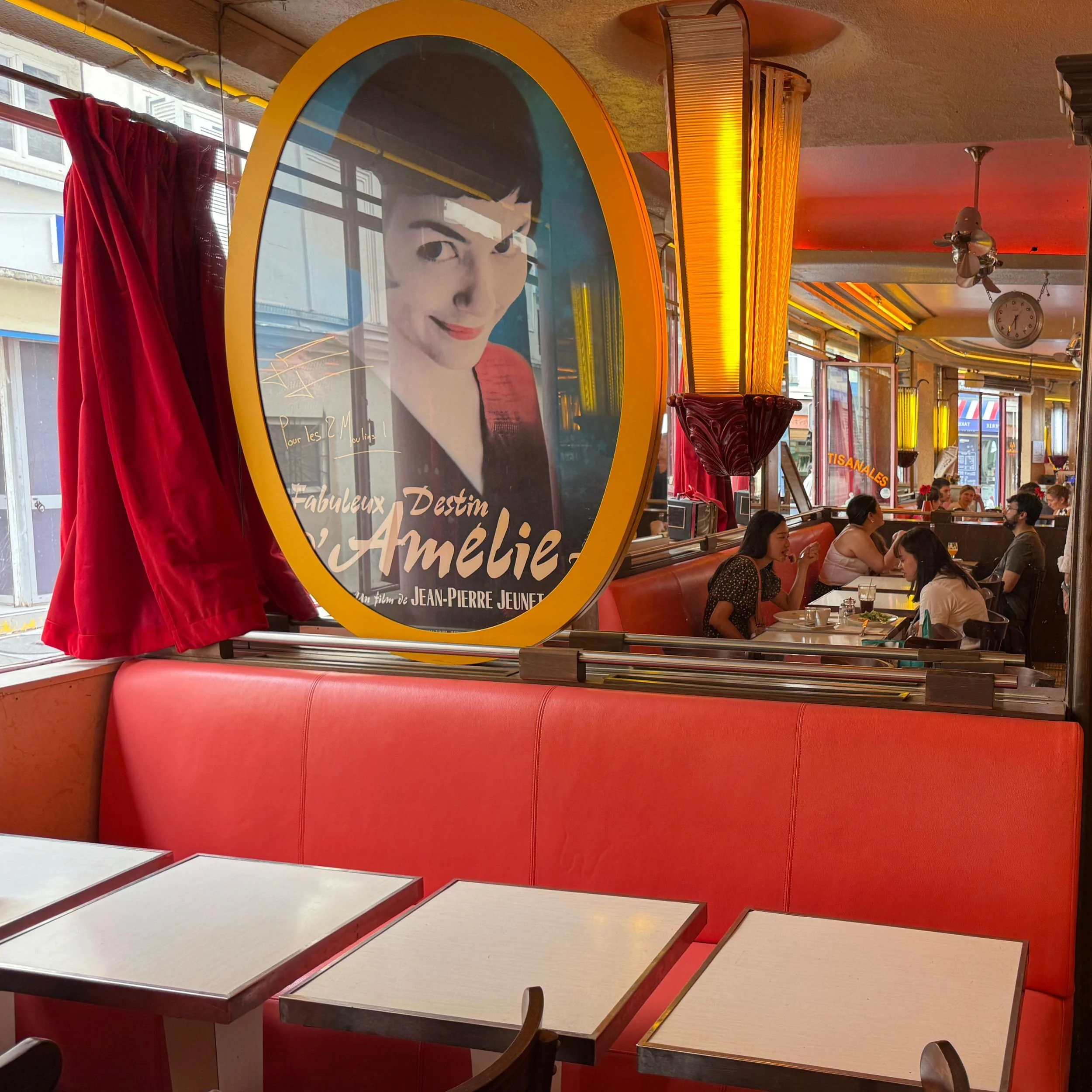
Inside Café Des Deux Moulins, Paris
Les Amants du Pont-Neuf/The Lovers on the Bridge (1991)
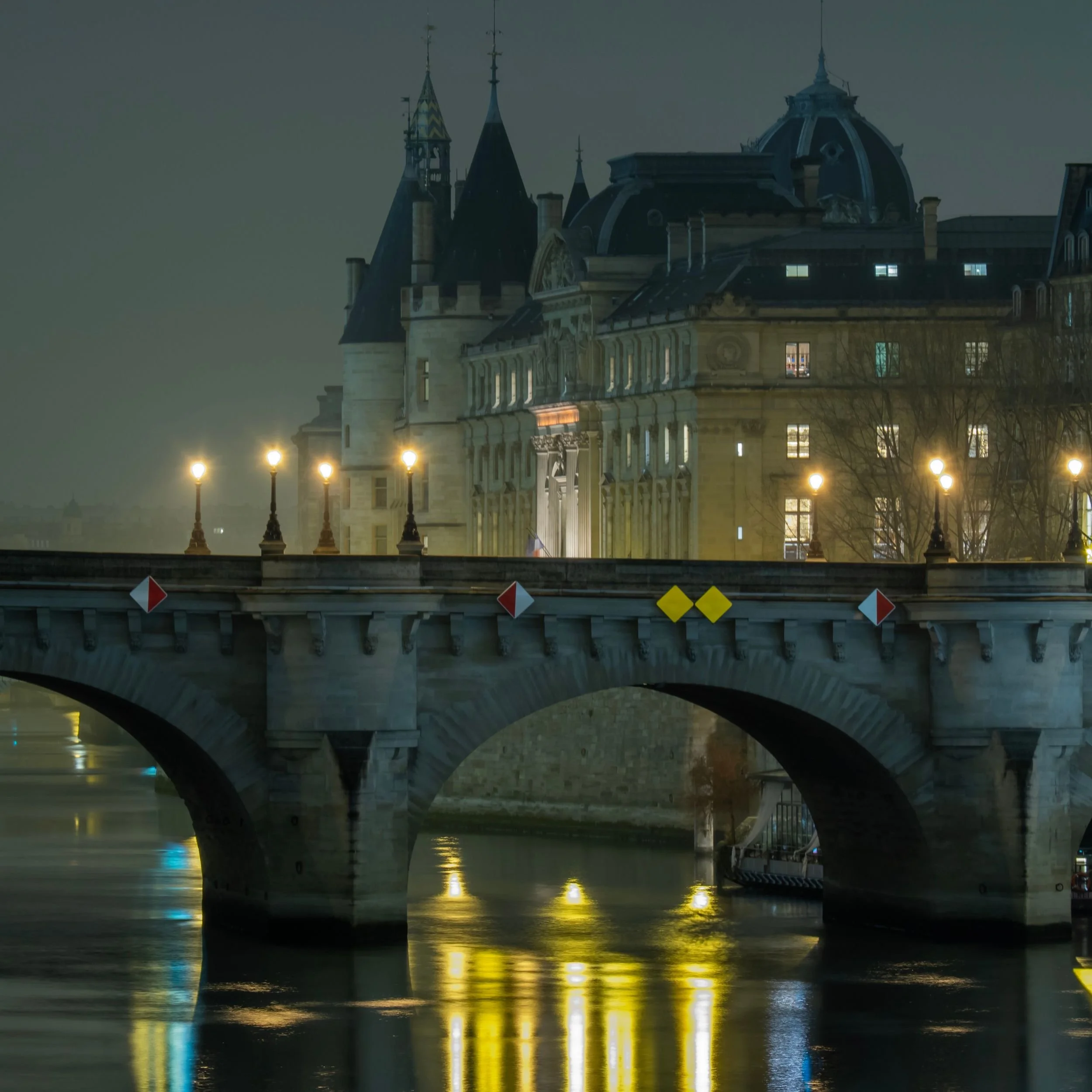
Leos Carax’s film follows Alex, a troubled street performer, and Michèle, a painter who is slowly losing her sight, as they form a volatile bond around the Pont Neuf. Denis Lavant and Juliette Binoche are raw, magnetic and unforgettable.
This is not polished postcard Paris. The opening scenes are not always easy to watch, but stay with it and you are rewarded with a messy, nocturnal, lonely and beautiful vision of the city. The bridge becomes almost a character in its own right, while night scenes around La Samaritaine and the Louvre add to its haunted, after-hours mood. That rougher view of Paris gives the list another texture and stops the city feeling too neat.
Le Week-End (2013)
Jim Broadbent and Lindsay Duncan play a long-married British couple returning to Paris in the hope of recapturing something from an earlier trip. Jeff Goldblum turns up along the way and shifts the tone in interesting directions.
This is a more mature Paris film, which is exactly why it works so well in a list like this. Paris here is bound up with memory, irritation, affection, disappointment and second chances. It is a city for grown-up reflection rather than youthful fantasy. The film even closes with a small nod to French cinema itself, as Nick and Meg’s dance recalls the famous café scene in Jean-Luc Godard’s Bande à part.
Subway (1985)
Luc Besson’s Subway gives you a very different Paris. Christopher Lambert plays Fred, a thief who disappears into the Paris Métro after stealing sensitive documents, while Isabelle Adjani plays the woman drawn into his strange world.
Much of the film unfolds underground, which gives it a claustrophobic, stylised energy far removed from river views and café terraces but the ticket halls, platforms and those seats are yet another symbol of Paris.
Frantic (1988)
Roman Polanski’s thriller begins with an American doctor arriving in Paris for a conference, only for his wife to vanish from their hotel room. Harrison Ford plays the bewildered husband trying to navigate a city he does not understand, with Emmanuelle Seigner in a key supporting role.
Paris is used brilliantly here as a place of confusion and tension. The unfamiliar streets, language barriers, hotels and late-night corners all feed the sense of panic. It is a strong reminder that Paris can feel unsettling as well as alluring.
Intouchables (2011)
Based on a true story, Intouchables follows the friendship between Philippe, a wealthy Parisian aristocrat left quadriplegic after an accident, and Driss, the carer who upends his life. François Cluzet and Omar Sy make the relationship feel warm, funny and believable.
Paris comes through in both grand interiors and the movement across the city itself. There is elegance here, but also contrast, energy and a real sense of different social worlds meeting. It gives the list heart.
The Da Vinci Code (2006)
Ron Howard’s adaptation of Dan Brown’s novel begins at the Louvre, where a murder draws symbologist Robert Langdon into a chain of clues tied to art, religion and history. Tom Hanks leads, with Audrey Tautou, Jean Reno and Ian McKellen in major roles.
This is the most overtly commercial choice on the list, but it earns its place through scale and setting. The Louvre alone gives it a strong Paris identity, and it adds a more monumental, museum-heavy version of the city to the mix.
C’était un rendez-vous (1976)
Claude Lelouch’s short film is only a few minutes long, but it may be the purest Paris entry here. A high-speed dawn drive tears through the city’s streets before ending at Sacré-Cœur.
There is barely a plot in the conventional sense, yet it captures the sensation of moving through Paris in a way few full-length films manage. It feels urgent, illicit and completely tied to the streets themselves. As a closing entry, it leaves the city humming in your head. Watch the full thing, below!
Why Paris works so well on film
What I like most about these films is the range. Paris can look romantic in one moment and exhausted in the next. It can be all bookshops and river light, or tunnels, traffic and confusion. That is what makes it such a rewarding city on screen. The best Paris films do not simply use the landmarks. They let the city shape the mood.
And when you are ready to trade boulevards, bridges and cafés for Belle Époque hotels, Riviera light and coastal glamour, continue with my guide to the best movies set in the South of France.